The Highlights of Scotland
5-Day Private Grand Tour from Edinburgh
Max 6 persons
Max 5 suitcases
Prices from £650 per day for a group of six persons. T&Cs apply.
Travelling with a larger group? Get in touch5-Day Private Grand Tour from Edinburgh
Max 6 persons
Max 5 suitcases
Prices from £650 per day for a group of six persons. T&Cs apply.
Travelling with a larger group? Get in touchThere is one tour that covers it all — every landscape, every chapter of history, every iconic sight and hidden wonder that makes Scotland one of the most extraordinary countries on earth. This is it. The Highlights of Scotland five-day private grand tour is the complete Scottish experience: designed for those who want to understand this country deeply, see it properly, and leave with memories that will last a lifetime.
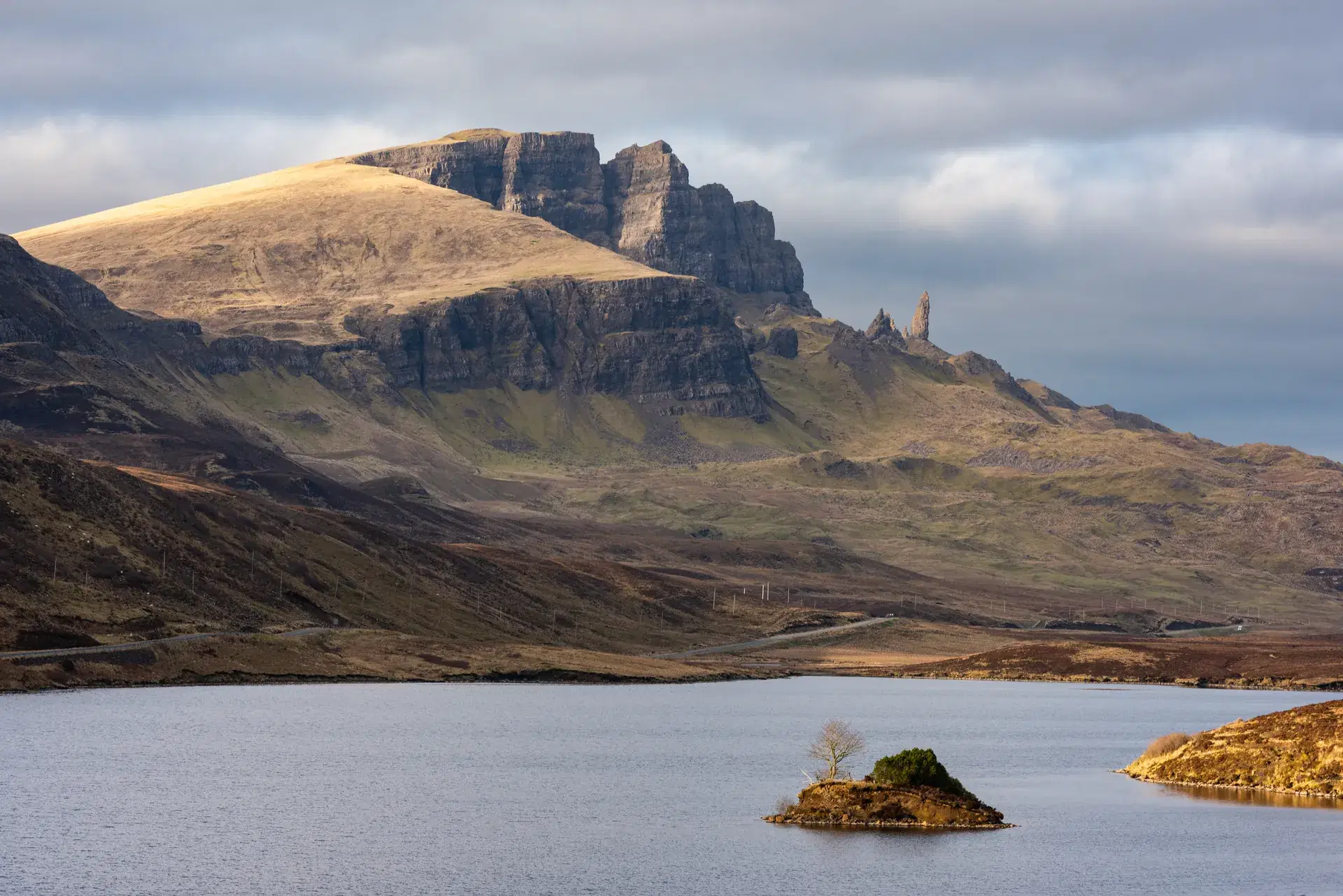
Five days. Five distinct and unforgettable regions. From Edinburgh’s medieval wynds to the seafood port of Oban on Day One — via Stirling Castle, the Kelpies, Loch Lomond, and Glencoe. Deep into the Highlands and across the sea to Skye on Day Two — via the Glenfinnan Viaduct and the Road to the Isles. A full, unhurried day on the Isle of Skye on Day Three — the Old Man of Storr, Kilt Rock, Neist Point, and the wild Atlantic edge of Scotland. South from Skye via Eilean Donan and the Great Glen to Loch Ness and Inverness on Day Four. And home on Day Five via Culloden, Clava Cairns, the Cairngorms, Blair Castle or Scone Palace, and the Forth Bridges.
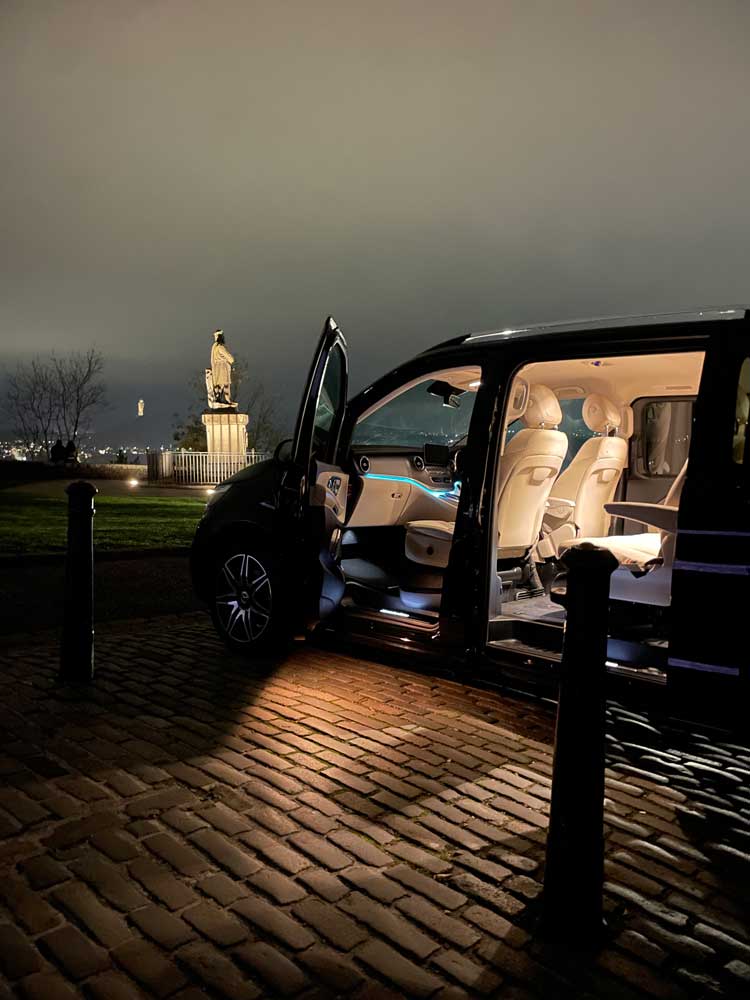
Every mile is guided by Johnny Dreczkowski MBE — honoured by His Majesty The King in June 2025, a proud Scot and professional driver-guide renowned for his storytelling, heritage knowledge, and warm Scottish hospitality — from the seamless comfort of your private new Mercedes V-Class Avantgarde. This is not a tour. This is an education in Scotland — and it is the finest way to experience this country that we know of.
Approximately 9 hours | Edinburgh to Oban | Overnight: Oban
Depart Edinburgh and head west on a day that takes you through five centuries of Scottish history before depositing you in one of the country’s most beloved and atmospheric harbour towns. Today sets the tone for everything that follows — establishing the depth, beauty, and sheer variety of Scotland’s landscape and story before the Highlands have even properly begun.
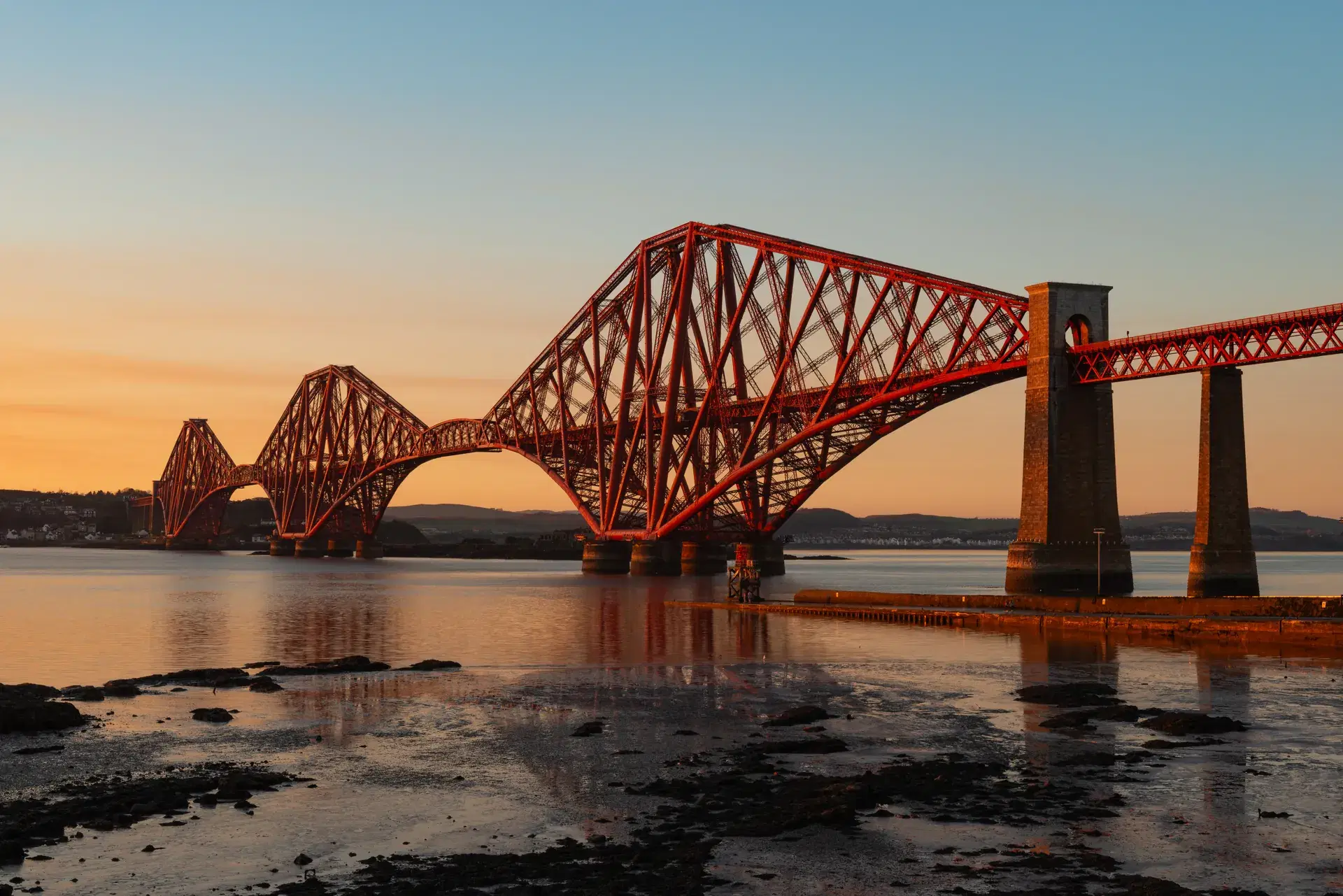
Depart Edinburgh via South Queensferry, where the three Forth crossings stand side by side in one of the most remarkable concentrations of engineering achievement in the world. The Forth Rail Bridge — completed in 1890, a UNESCO World Heritage Site, and still one of the most recognisable structures in Scotland — pioneered the cantilever construction technique that transformed bridge-building globally. Beside it, the graceful suspension arc of the Forth Road Bridge (1964) and the elegant cable-stayed Queensferry Crossing (2017) complete a trio that spans 130 years of engineering innovation. Few departures from any city begin quite so dramatically.
Pass the magnificent ruins of Linlithgow Palace — the birthplace of Mary Queen of Scots in December 1542, and one of the most important and atmospheric royal ruins in Scotland. This vast Renaissance palace, set above its own loch on the edge of the town, was a favourite residence of the Stewart monarchs for over two centuries — James IV held court here, James V was born here, and Mary herself was born in the north quarter just days before her father James V died of a broken heart after the Battle of Solway Moss. The palace was burned accidentally by the troops of the Duke of Cumberland in 1746 — on their way north to Culloden — and has stood as a magnificent shell ever since.
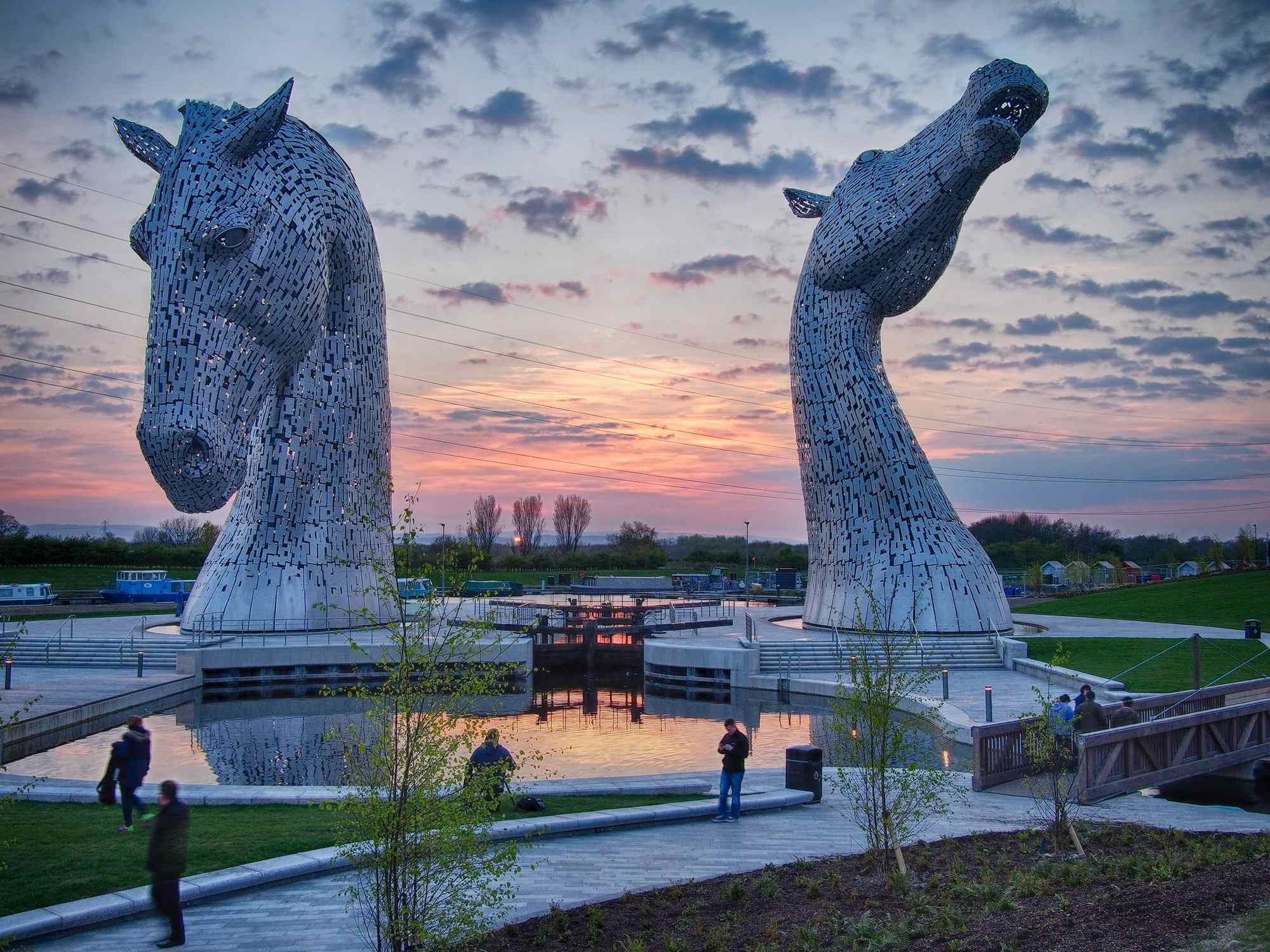
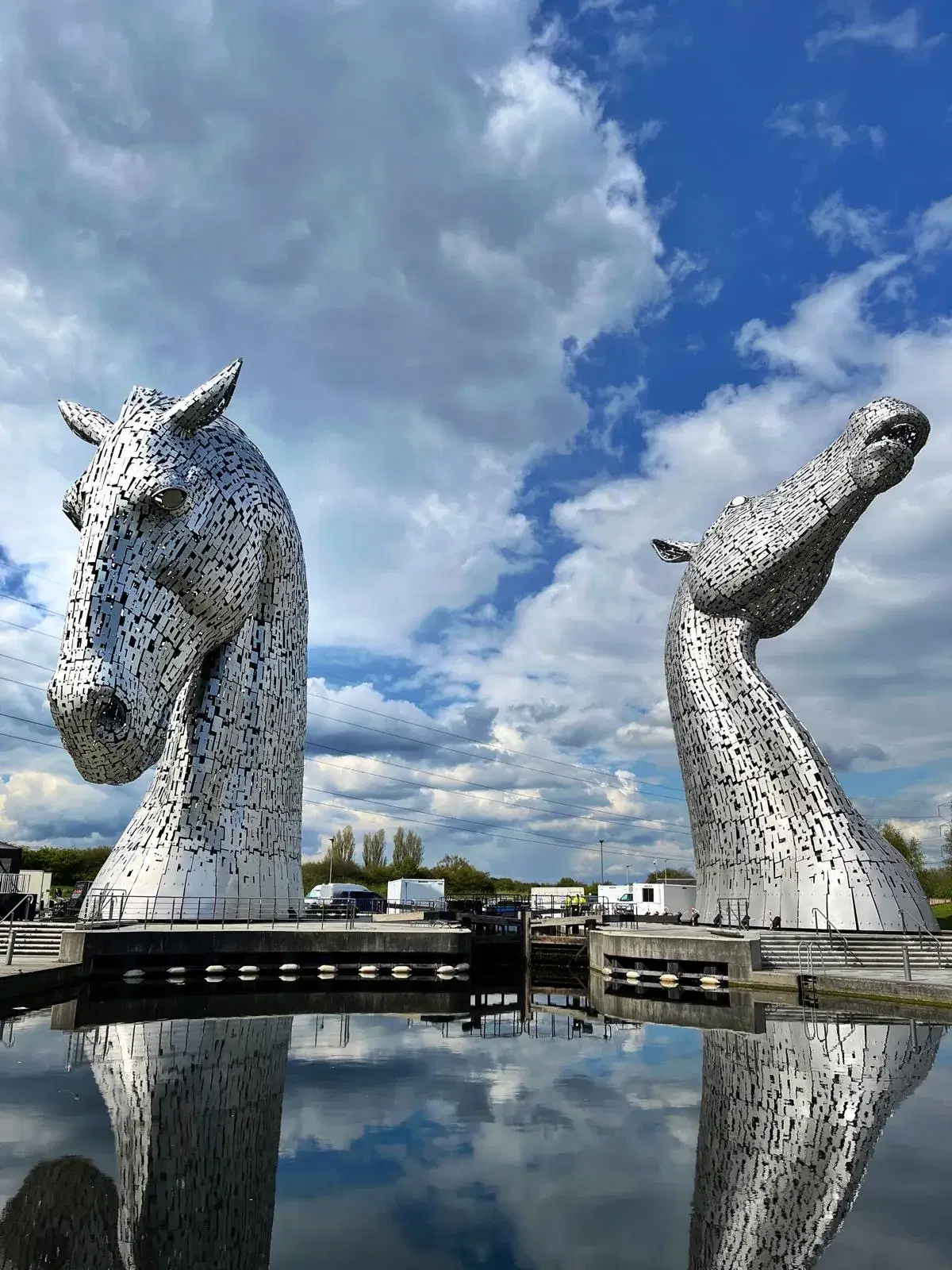
Just east of Falkirk, two horse heads of extraordinary scale rise thirty metres above the Forth and Clyde Canal — the Kelpies, Andy Scott’s monumental sculptures celebrating the horse-powered heritage of Scottish industry and the mythological kelpie of Scottish folklore: the shape-shifting water horse said to haunt the rivers and lochs of the Highlands, luring the unwary to a watery end. At 300 tonnes of steel each, they are the largest equine sculptures in the world — and the contrast between their ancient mythological subject and their gleaming contemporary form is one of the most striking visual juxtapositions in Scotland.
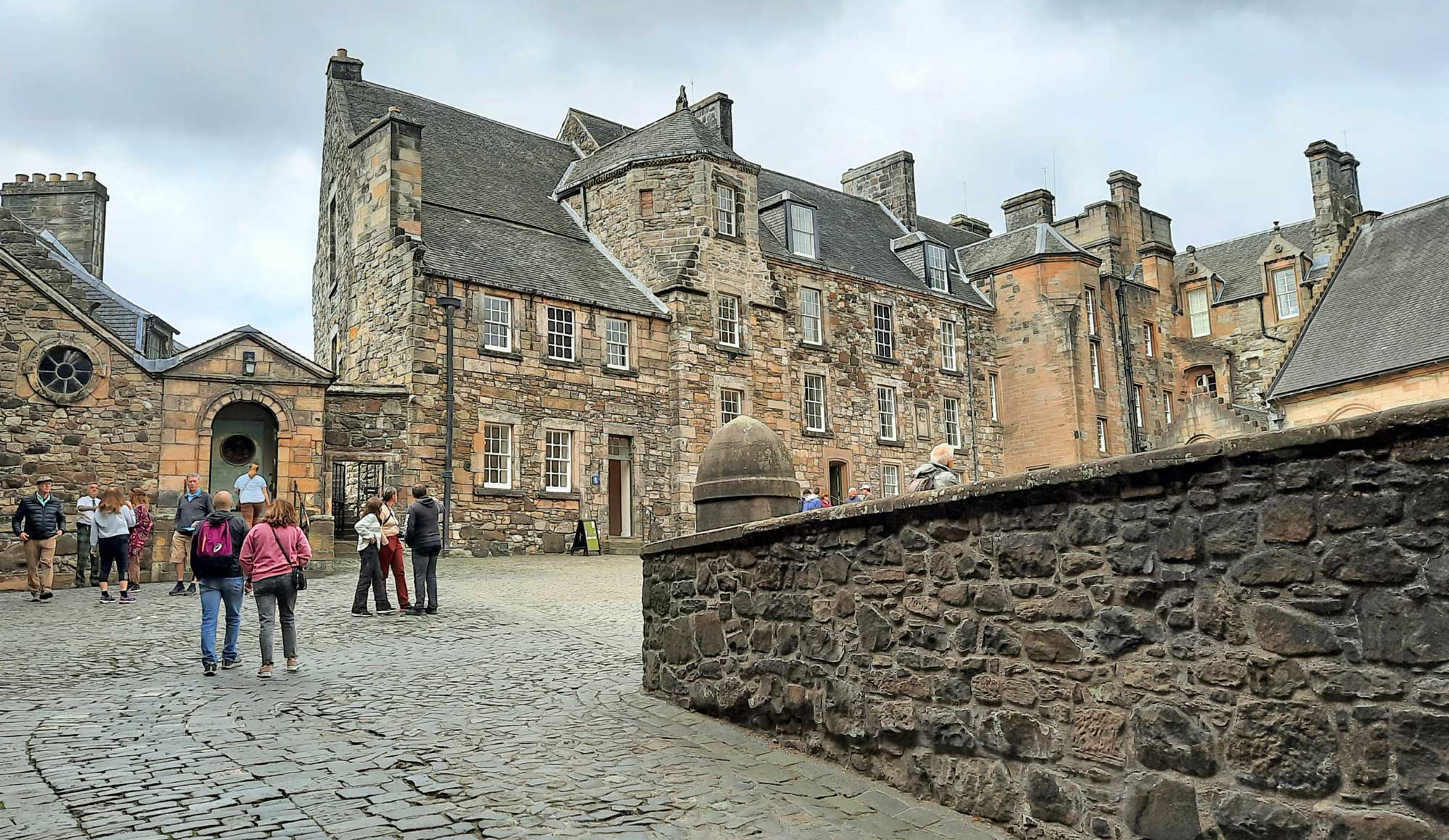
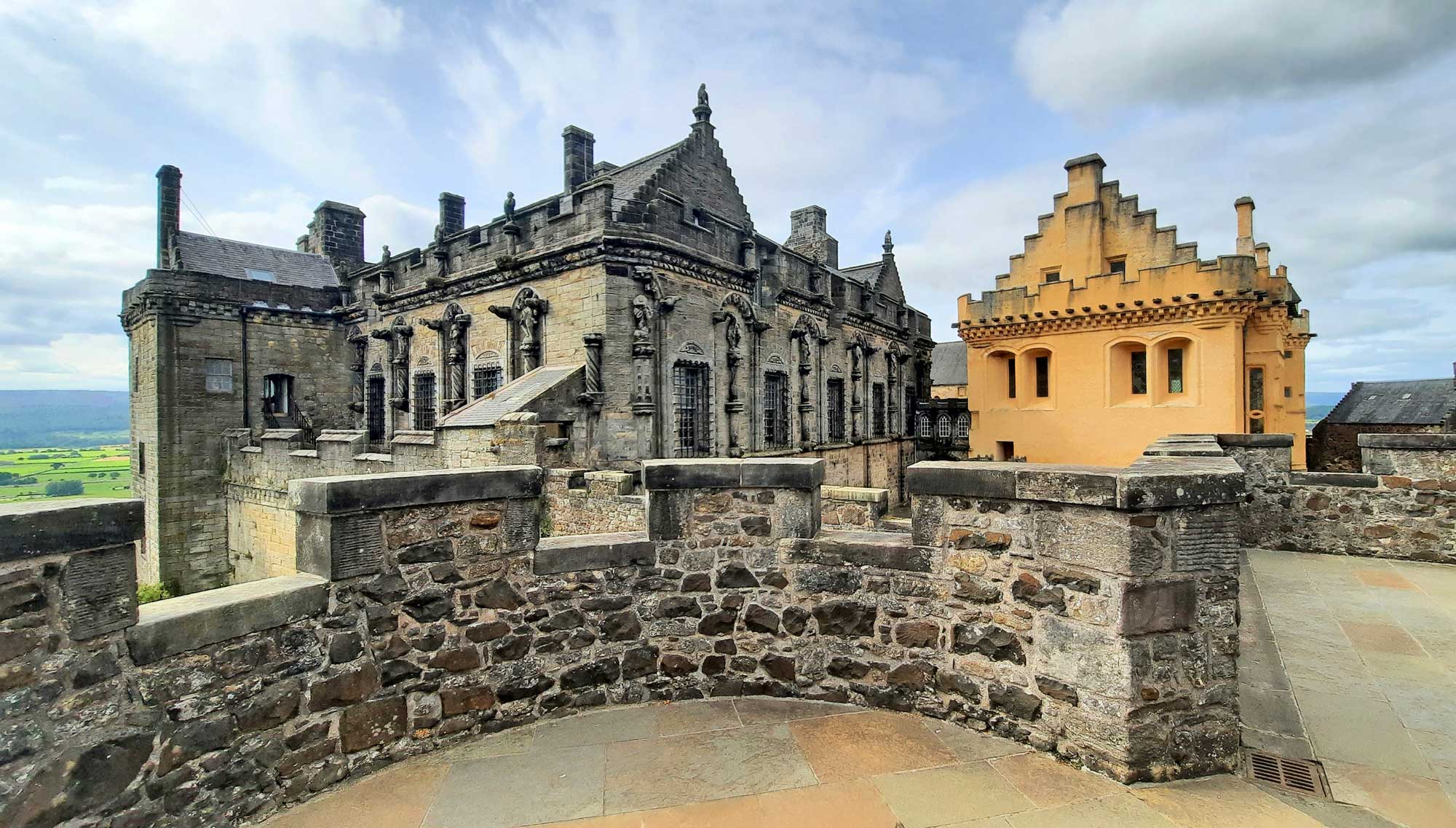
Arrive in Stirling and ascend to Stirling Castle — perched on its volcanic rock above the flat plain of the Carse of Stirling at the strategic heart of Scotland, this is, in Johnny’s considered opinion, the finest castle visit in Scotland. The castle’s position was the key to Scotland’s survival as an independent nation: whoever controlled Stirling controlled the only crossing of the River Forth for miles in either direction, and thus the route between north and south Scotland. It was fought over repeatedly during the Wars of Independence — William Wallace’s victory at Stirling Bridge in 1297 and Robert the Bruce’s at Bannockburn in 1314 both secured the castle for Scotland.
But Stirling is far more than a military fortress. The Renaissance Royal Palace — built by James V in the 1540s and rivalling anything in France for its elaborate sculptural decoration — the Great Hall with its magnificent hammerbeam roof, the Chapel Royal, and the stunning recreated series of the Stirling Heads tapestries make the interior one of the richest and most rewarding in Scotland. The views from the battlements across seven historic battlefields are extraordinary.
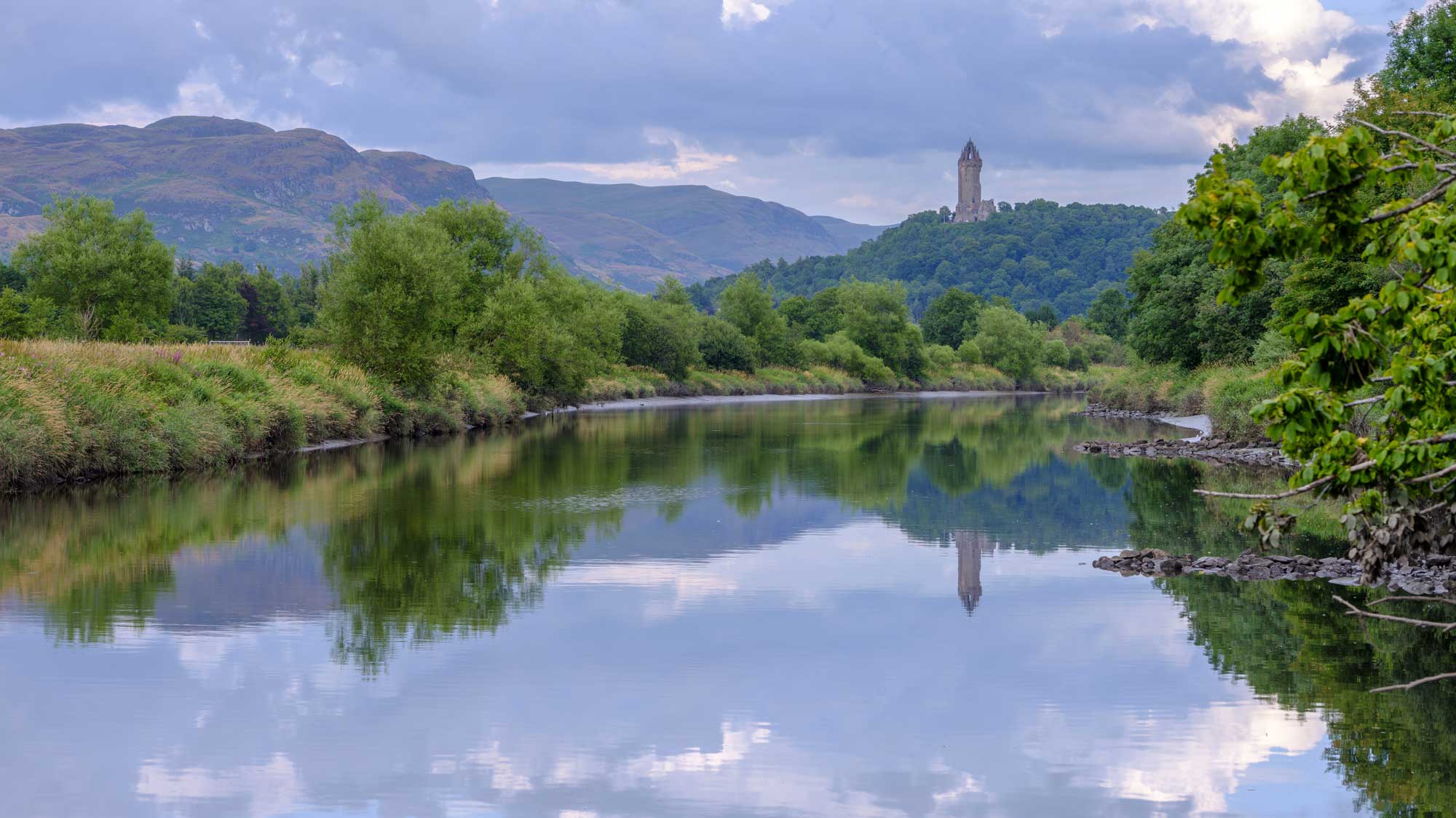
Visible from miles around on its wooded crag above the Carse of Stirling, the Victorian Wallace Monument was completed in 1869 to commemorate William Wallace — the Guardian of Scotland who led his country’s resistance to English occupation in the 1290s and whose victory at Stirling Bridge remains one of the most celebrated military upsets in Scottish history. The monument houses the original two-handed broadsword said to have been wielded by Wallace — a weapon of such extraordinary size that its very existence raises questions about the man who carried it. The views from the crown of the monument stretch to the Highlands, the Lowlands, and on clear days to the Bass Rock on the east coast.
Enter the Loch Lomond and Trossachs National Park and reach the eastern shore of Loch Lomond — the largest freshwater loch in the United Kingdom at 39 kilometres long, its southern basin broad and island-studded, its northern end narrow and mountain-flanked. Stop in the picture-perfect village of Luss on the western shore — its immaculate stone cottages, flower-filled gardens, and sweeping views across the loch to Ben Lomond make it one of the most photographed and painted villages in Scotland, and one that rewards a slow wander and a coffee by the water.
Climb through the dramatic Arrochar Alps on the A83 to the summit of the Rest and Be Thankful — one of Scotland’s most evocatively named mountain passes, its name said to derive from the relief felt by soldiers who marched over it building the military road in the 18th century. The descent into Argyll brings you to Inveraray and its magnificent Gothic Revival castle — home to the Dukes of Argyll and the Chiefs of Clan Campbell for centuries. The extraordinary Armoury Hall, the lavish State Rooms, and the Downton Abbey and Outlander filming connections make this one of the finest castle interiors in Scotland.
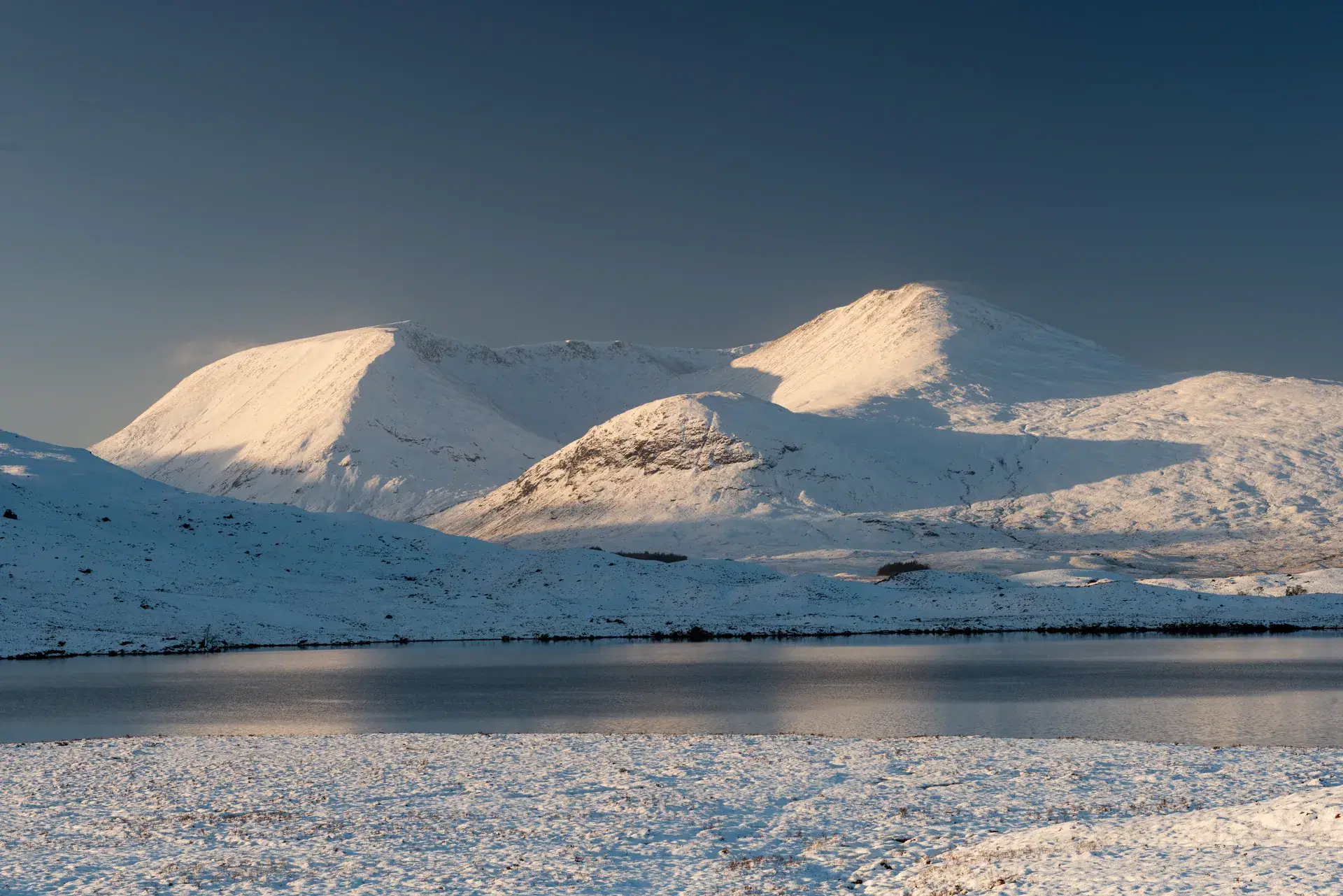
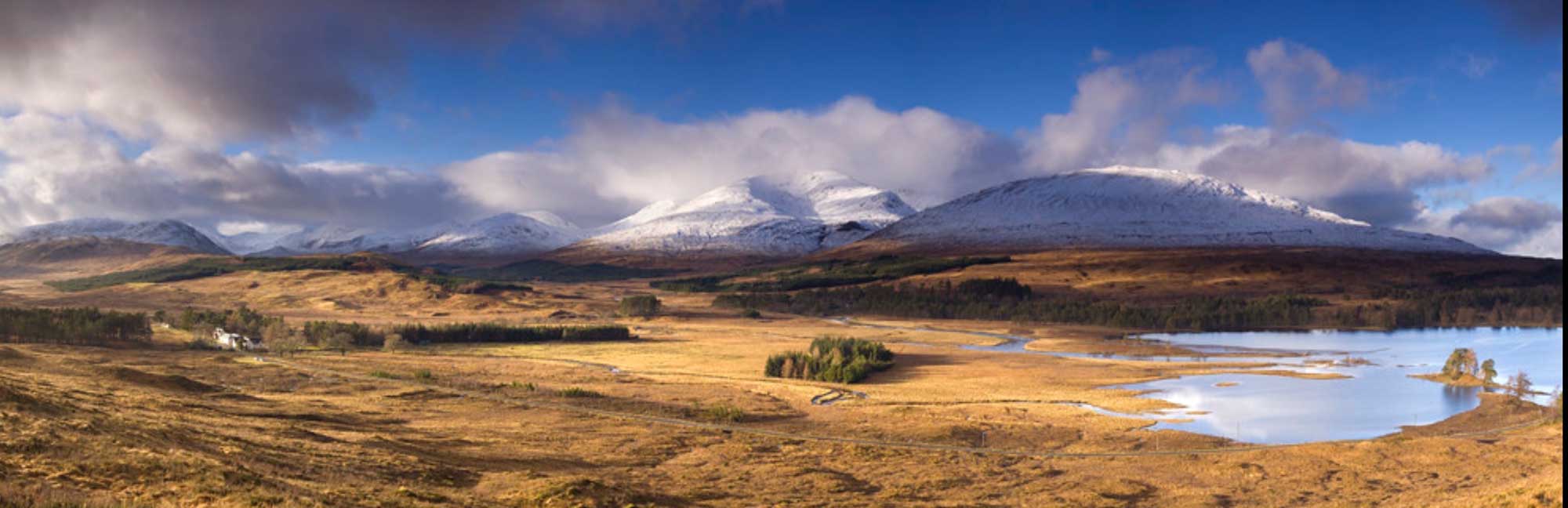
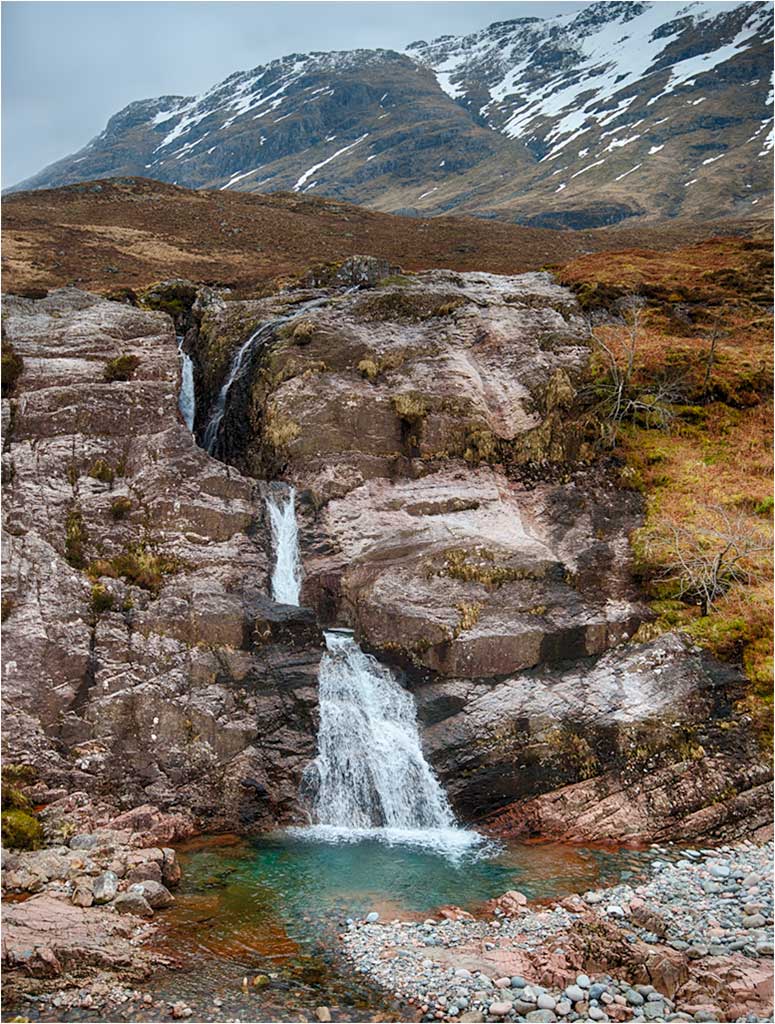
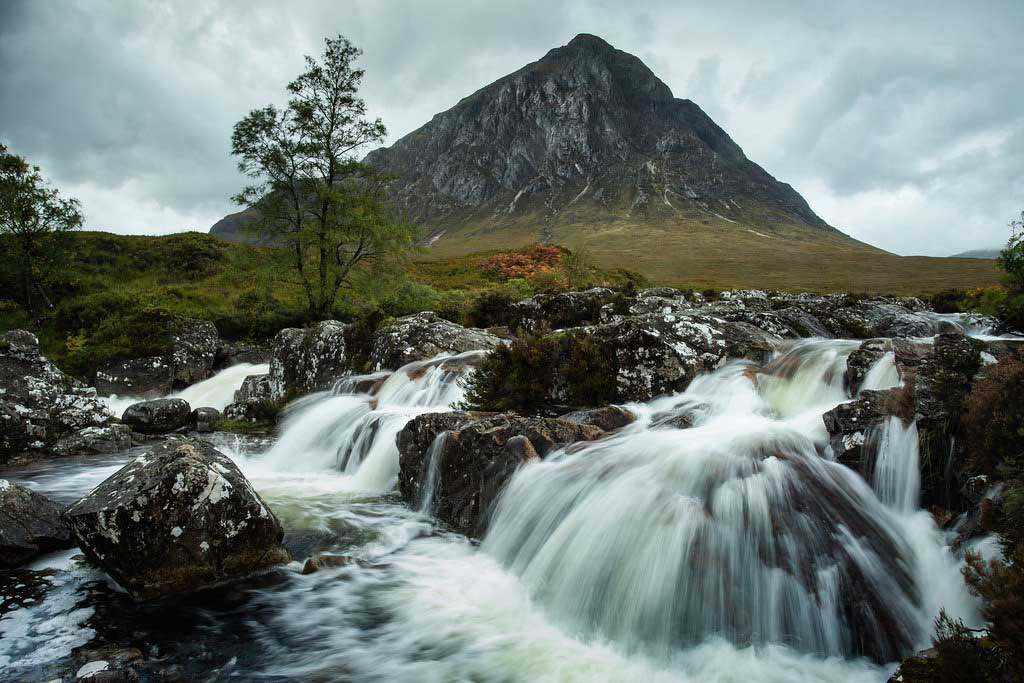
Continue north through Glencoe — the most dramatic and historically laden glen in Scotland — and across the vast, elemental expanse of Rannoch Moor, one of Europe’s last great wildernesses. Johnny will tell the full story of the 1692 Massacre of Glencoe as you drive through the valley where it happened — the twelve days of MacDonald hospitality, the government orders, and the dawn betrayal that has never been forgotten or forgiven in Highland memory.
Arrive in Oban — the irresistible harbour town at the gateway to the Hebridean Islands, where the smell of the sea, the cry of gulls, and the extraordinary fresh seafood from the famous quayside hut announce your first Highland overnight. Check into your accommodation, explore the waterfront, and dine on the finest langoustines and scallops in Scotland as the sun sets over the islands of Mull and Kerrera.
Approximately 9 hours | Oban to Skye via Glencoe, Fort William & Mallaig | Overnight: Isle of Skye
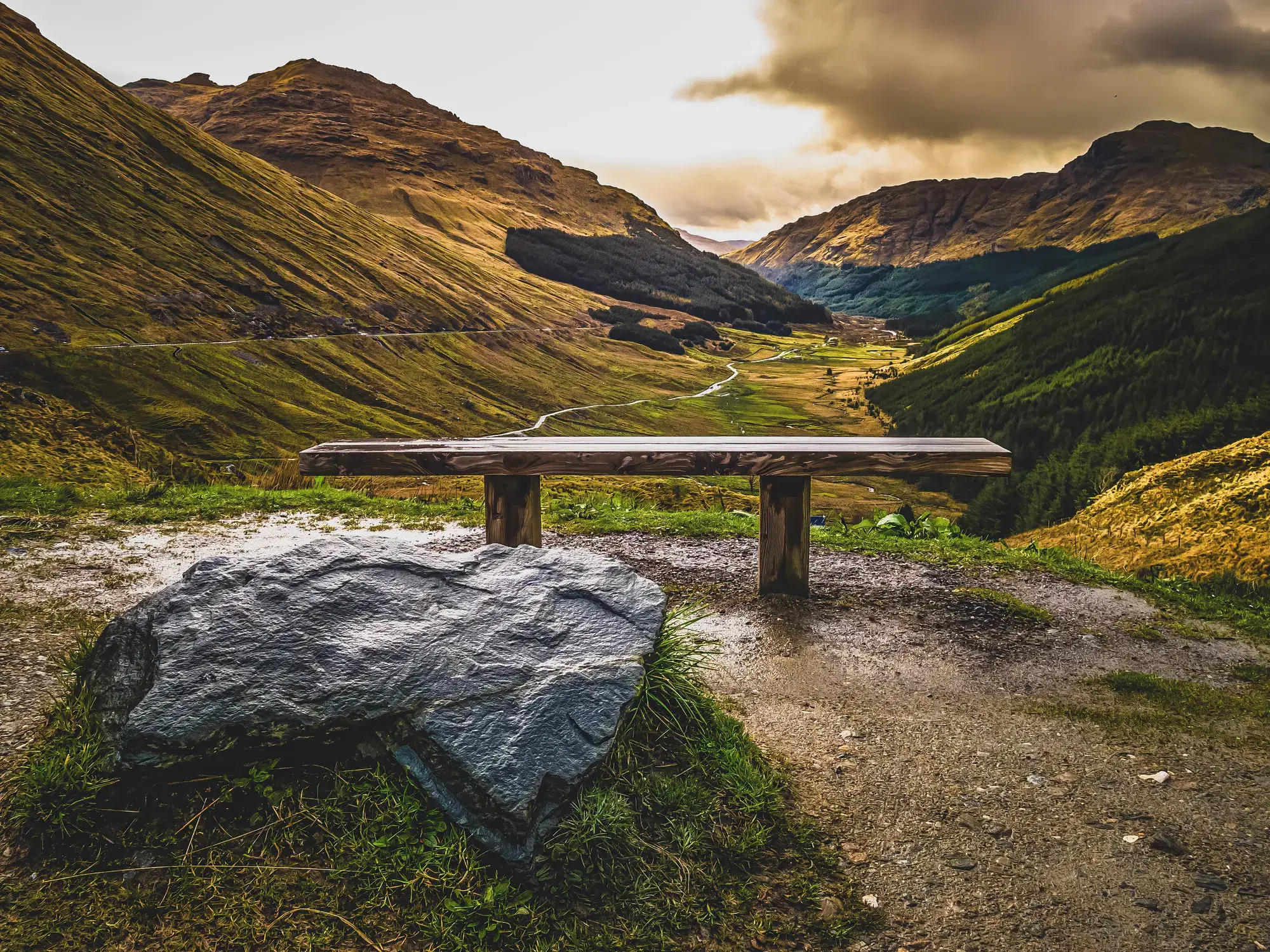
Depart Oban for one of the most scenically magnificent and emotionally powerful driving days in Scotland — through the massacre glen, beneath the roof of Britain, along the legendary Road to the Isles, and across the sea to the island that has inspired more superlatives than anywhere else in Scotland. This is a day that builds continuously — every mile more dramatic than the last — until Skye appears across the water and the adventure moves to an entirely new scale.
Begin in Glencoe — where the mountains close in on every side and the valley carries the weight of one of the most infamous acts of treachery in Highland history. On 13 February 1692, government soldiers of Clan Campbell — having accepted twelve days of MacDonald hospitality — rose before dawn to murder 38 sleeping hosts on the secret orders of the Scottish government. The rest fled into a blizzard and many more died on the mountains above. The physical drama of the glen amplifies the emotional impact of the story — and Johnny tells it in full, in the place where it happened.
Continue north to Fort William — the self-proclaimed Outdoor Capital of the UK — set at the foot of Ben Nevis, Britain’s highest mountain at 1,345 metres. Whether the summit is clear or shrouded in the cloud that caps it for the majority of the year, the sheer scale of the mountain rising above the valley floor is genuinely humbling. The views from the Ben Nevis viewpoint across Glen Nevis and the surrounding Mamores are among the finest mountain panoramas in Britain.
At Fort William, one of Scottish touring’s most delightful decisions awaits. Board the Jacobite Steam Train — the iconic heritage railway whose route across the 21-arch Glenfinnan Viaduct inspired J.K. Rowling’s Hogwarts Express — for a magical, cinematic journey to Mallaig through some of the most breathtaking scenery in the Highlands. Or travel the Road to the Isles by private vehicle, stopping at the Glenfinnan Monument — where Bonnie Prince Charlie raised his standard on 19 August 1745, beginning the last Jacobite Rising — with the full freedom of the road and Johnny’s uninterrupted commentary. Either choice delivers one of the finest journeys in Scotland.
The Glenfinnan Valley is one of the most historically charged and scenically extraordinary places in Scotland. The tall column of the Glenfinnan Monument stands at the head of Loch Shiel — erected in 1815 to honour the Highlanders who gave their lives for the Jacobite cause — as the loch stretches south between the mountains in a scene of such profound and cinematic beauty that it has drawn artists, photographers, and filmmakers for two centuries.
Arrive at Mallaig — the working fishing port at the western edge of the mainland — and board the CalMac ferry for the crossing to Armadale on the Sleat Peninsula of Skye. This passage across the Sound of Sleat is one of the finest short ferry crossings in Scotland — seabirds wheeling overhead, the mountains of Knoydart behind, and the green hills of Skye drawing closer. Keep your eyes on the water: dolphins, porpoises, seals, and occasionally minke whales are regularly spotted on this crossing.
Drive north through Skye’s dramatic interior — past the extraordinary black peaks of the Cuillin Mountains, the most technically challenging ridge in the British Isles and a landscape so alien and overwhelming that even seasoned Highland travellers are silenced by it — and arrive in Portree: Skye’s colourful capital, its distinctive painted harbour buildings reflected in the sheltered bay, its restaurants and pubs among the finest on the island. Settle in for your first night on the Misty Isle.
Full day on Skye | Overnight: Isle of Skye (Night 2)
Two nights on Skye means Day Three belongs entirely to the island — no ferry to catch, no miles to cover, no clock running. This is the day to slow down, breathe deeply, and let the Isle of Skye do what it does to everyone who gives it proper time. From the alien rock formations of the Trotternish Peninsula to the raw Atlantic edge at Neist Point, from a whisky distillery shaped by sea and peat to a wildlife cruise in waters rich with seals and sea eagles, this is Scotland’s most spectacular island experienced at its finest.
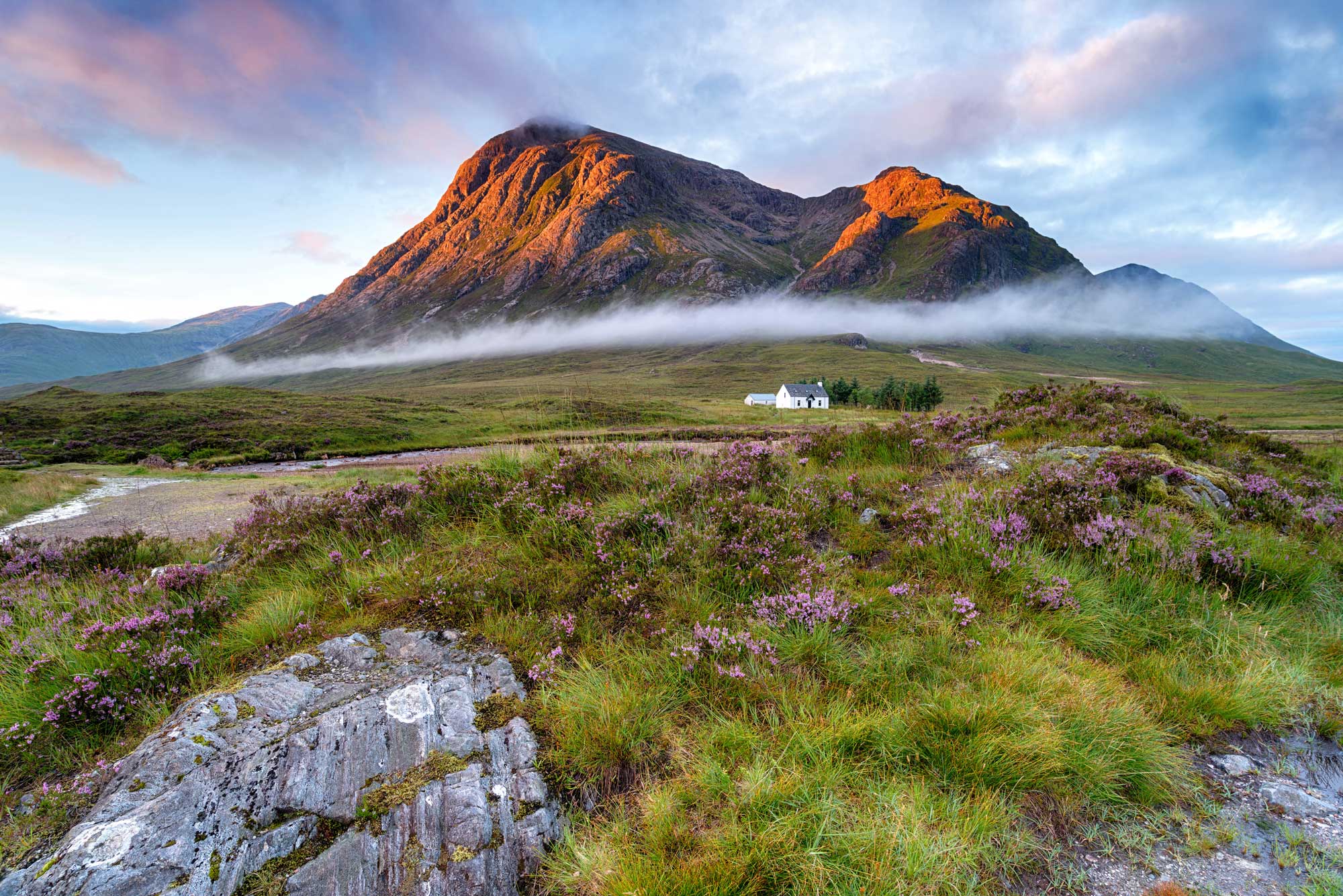
Begin on the Trotternish Peninsula — a 20-mile spine of volcanic rock sculpted by the longest continuous landslip in the United Kingdom into landscapes of breathtaking, otherworldly drama. The Old Man of Storr rises 50 metres above Loch Leathan in a cluster of black basalt pinnacles that look as though they belong on another planet — visible for miles, first climbed in 1955, and the most photographed natural landmark on the island. On clear days the views across the Sound of Raasay to the mainland mountains are extraordinary; in mist the pinnacles appear and dissolve from the clouds in a way that perfectly earns Skye its Gaelic name, Eilean a’ Cheò — the Misty Isle.
Continue north to Kilt Rock — the towering sea cliff whose vertical columns of dark and pale basalt bear an unmistakable resemblance to the pleated folds of a Highland kilt. Beside it, the Mealt Falls plunge 55 metres directly from the clifftop into the sea below — one of the most spectacular and vertiginous viewpoints on the island. On clear days the view extends across the open water toward the Outer Hebrides, a reminder of just how far north and how close to the edge of Europe you are.
Travel west across the island to Neist Point — the most westerly tip of Skye and one of the most dramatically beautiful headlands in Scotland. Sheer basalt cliffs plunge into the Atlantic Ocean below, a white lighthouse marks the very edge of the land, and the open sea stretches westward to the Outer Hebrides and beyond. This headland has known human presence since the Vikings, who navigated these waters over a thousand years ago. On calm days the sea is impossibly blue; in a westerly gale it is a demonstration of raw oceanic power that is utterly unforgettable.
Stop at Sligachan Bridge — one of the great viewpoints on Skye, where the old stone bridge frames a classic view of the Black Cuillin rising above the moor in a panorama that has appeared on the cover of more Scottish tourism brochures than almost any other single image. The Sligachan Hotel behind it has been the base for Cuillin climbers and walkers since the 19th century — the great Victorian alpinists Norman Collie and John Mackenzie made their headquarters here during their pioneering first ascents of the Cuillin peaks. Local legend holds that washing your face in the Sligachan burn will grant eternal beauty.
For whisky lovers, an optional visit to Talisker Distillery at Carbost is one of the finest distillery experiences in Scotland. Skye’s only working single malt distillery has been producing whisky on the shores of Loch Harport since 1830 — its distinctive coastal, peated, and powerfully maritime character shaped by sea air, spring water from the Hawk Hill, and over 190 years of island tradition. Robert Louis Stevenson called it ‘the king o’ drinks’ — a verdict most who taste it find difficult to dispute.
Wildlife enthusiasts may choose an optional boat cruise departing from Portree — two hours on the richly inhabited waters around Skye’s coastline. White-tailed sea eagles — the largest bird of prey in Britain, with a wingspan of up to 2.4 metres — are regularly spotted from these boats, along with harbour and grey seals, bottlenose and common dolphins, porpoises, and occasionally minke whales and basking sharks in season. A genuinely exceptional wildlife experience in one of the most biodiverse marine environments in the UK.
Approximately 9 hours | Skye to Inverness via Eilean Donan & Loch Ness | Overnight: Inverness
Depart Skye for a day that moves from the island’s extraordinary beauty into the deep, dark heart of the Scottish Highlands — through the most photographed castle in Scotland, along the ancient fault line of the Great Glen, and to the shores of the most mysterious and legendary loch in the world, ending the evening in the vibrant capital of the Highlands. Day Four is a day of transitions — from island to mainland, from sea loch to mountain glen, from beauty to history to legend.
Depart Portree and travel south, crossing the Skye Bridge back to the mainland with a last view across the Kyle of Lochalsh to the Cuillin ridge. As Skye recedes behind you, Johnny will share the stories of the bridge itself — a crossing whose tolls sparked one of the most determined civil disobedience campaigns in modern Scottish history, eventually leading to the tolls being abolished in 2004. The bridge replaced a ferry crossing that had connected Skye to the mainland for centuries — and whose passing was mourned by romantics the world over.
Travel south along the shores of Loch Duich to Eilean Donan Castle — the most instantly recognisable and most photographed castle in all of Scotland, rising from its tiny tidal island at the meeting point of three sea lochs with the mountains of Kintail behind it. Originally built in the 13th century, largely destroyed in 1719 when a Spanish Jacobite garrison was shelled by Royal Navy frigates, and meticulously restored between 1919 and 1932, Eilean Donan today is a near-perfect example of the Scottish baronial style — its atmospheric rooms, Jacobite artefacts, and extraordinary setting making it one of the most visited and most rewarding castle experiences in Scotland.
Travel north through Glen Moriston and into the Great Glen — the vast natural fault line that cuts Scotland diagonally in two from Fort William to Inverness, connecting a chain of freshwater lochs via Thomas Telford’s Caledonian Canal, completed in 1822. This ancient geological rift has served as the primary route through the central Highlands for millennia — used by Pictish tribes, Viking raiders, medieval armies, and drovers moving cattle to the southern markets. The mountains on either side of the Glen rise steeply from the valley floor, giving the drive a sense of travelling through a landscape of immense, primordial scale.
Reach the shore of Loch Ness and follow the southern shore road along 37 kilometres of the deepest, darkest, and most legendary loch in Scotland. Loch Ness holds more fresh water than all the lakes of England and Wales combined, plunging to depths of 230 metres — a statistic that gives the enduring mystery of its famous resident a certain scientific plausibility. The legend stretches back to 565 AD when Saint Columba reportedly encountered a fearsome creature in the River Ness; a 1933 newspaper report reignited global fascination that no subsequent investigation has managed to extinguish.
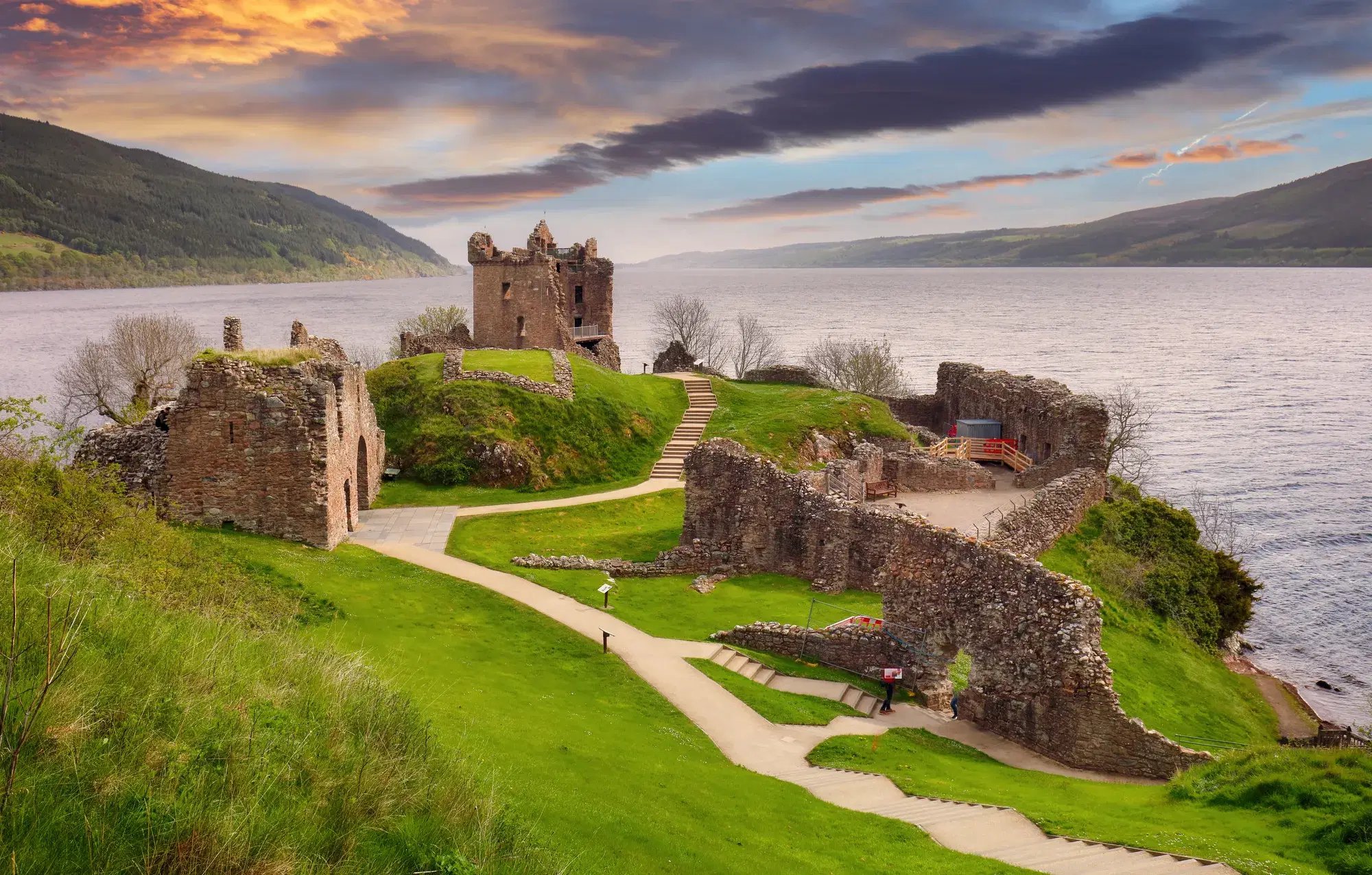
Stop at Urquhart Castle — the dramatic medieval ruins that crown a rocky headland above Loch Ness, offering the finest and most photographed view across the loch in either direction. This was one of the largest castles in medieval Scotland, repeatedly seized and recaptured during the Wars of Independence, held by Robert the Bruce, besieged by the Lord of the Isles, and finally blown up by its own garrison in 1692 to prevent Jacobite occupation. Today its towers and curtain walls retain a brooding grandeur that makes it one of the most atmospheric and rewarding castle ruins in the country.
For those who wish, an optional 30-minute cruise on Loch Ness arrives at Urquhart Castle by water — offering a perspective on the castle and the loch that the road cannot provide, and another chance to watch the surface of the water for whatever might be moving below.
Arrive in Inverness for your fourth overnight stay — a city of genuine warmth, Victorian architecture, excellent restaurants, and Highland pride, set where the River Ness meets the Beauly Firth. Explore the riverside, dine at one of the city’s outstanding restaurants, and rest well — tomorrow brings the most moving battlefield in Britain, a 4,000-year-old prehistoric site, and the long, beautiful road home through the Cairngorms.
Approximately 9 hours | Inverness to Edinburgh via Culloden, Cairngorms & Perthshire
The final day of Scotland’s greatest journey brings the country’s story full circle — from a battlefield that ended the last armed Jacobite rising, through a prehistoric burial site of extraordinary antiquity, across the vast wilderness of the Cairngorms, to a royal castle of centuries-deep history, and home across the Forth to Edinburgh. Day Five is a day of conclusion and reflection — the landscape and history of Scotland assembling itself into a coherent, deeply felt whole as you travel south.
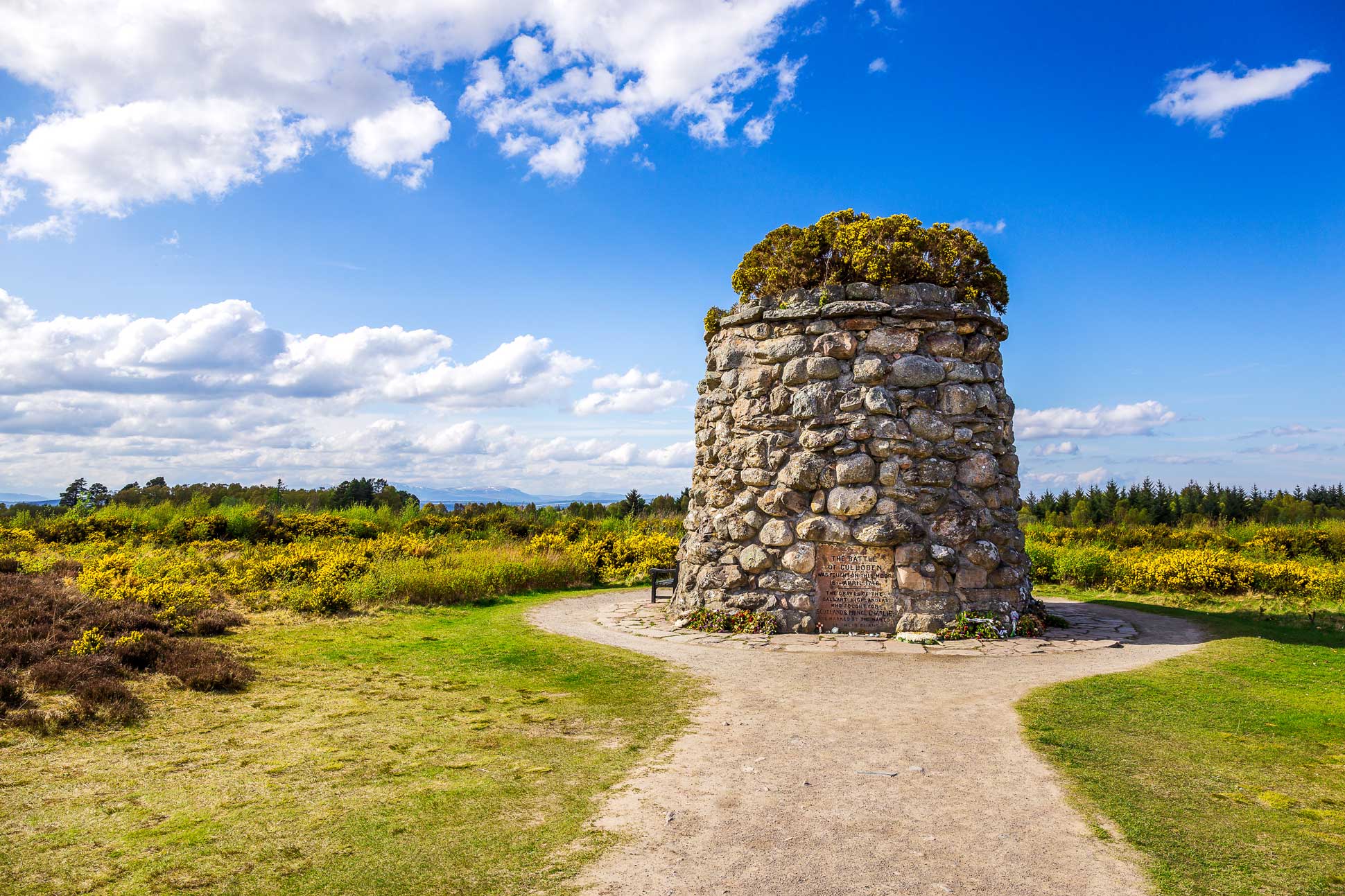
Depart Inverness for Culloden Moor — the windswept, treeless battlefield east of the city where, on the morning of 16 April 1746, the last pitched battle ever fought on British soil was decided in under sixty minutes. The Jacobite army of Bonnie Prince Charlie — exhausted, hungry, and outnumbered — was overwhelmed by the Duke of Cumberland’s government forces in a defeat that ended not just the ’45 rising but the entire Highland clan way of life. The banning of tartan and bagpipes, the destruction of the clan system, the burning of homes, and the beginning of the Highland Clearances all followed from this cold and terrible morning.
Walk among the clan grave markers — each bearing the name of a family that left sons on this moor — and visit the outstanding National Trust for Scotland visitor centre, whose telling of the full Culloden story is among the finest historical experiences in Scotland. Few places in Britain carry such a palpable sense of loss.
A short drive from Culloden brings you to one of the most remarkable and undervisited prehistoric sites in Scotland — the Clava Cairns, a complex of three Bronze Age passage graves and a ring cairn dating from around 2000 BC, surrounded by standing stone circles and positioned with extraordinary astronomical precision. The largest cairn is aligned so that the midwinter sun shines directly through the entrance passage to illuminate the chamber within — a deliberate architectural achievement of a people who understood the movements of the heavens with a sophistication that still astonishes archaeologists. Clava Cairns also has a certain additional fame: it was the inspiration for the standing stone circle through which Claire Randall passes into the 18th century in the opening episode of Outlander.
Travel south through the Cairngorm National Park — the largest national park in the United Kingdom, covering 4,528 square kilometres of ancient mountain plateau, Caledonian pine forest, and sweeping Highland river valleys. Pass through Aviemore and along the broad valley of Strathspey, with the high Cairngorm plateau — home to reindeer, snow buntings, and Britain’s only Arctic mountain ecosystem — stretching away to the east. This is the Scotland that existed before roads, before clearances, before any of the history of the past five days — ancient, vast, and quietly magnificent.
Continue south into Royal Perthshire for a visit to one of two outstanding destinations — chosen on the day to suit your preferences and availability. Blair Castle — the gleaming white turreted fortress above Blair Atholl, ancestral seat of the Dukes of Atholl and home of Europe’s only private army, the Atholl Highlanders — offers 30 rooms spanning seven centuries of Scottish history and views of the Grampian Mountains that are simply magnificent. Scone Palace — the Gothic Revival mansion built on the site of the ancient coronation mound where every King of Scotland from Kenneth MacAlpin to John Balliol was crowned upon the Stone of Destiny — offers a different but equally powerful connection to Scotland’s deepest royal history.
The final approach to Edinburgh brings you back to South Queensferry and the three Forth crossings — the same engineering masterpieces that opened Day One, now seen through the lens of five extraordinary days. The Forth Rail Bridge, glowing red in the late afternoon light, marks the boundary between the Highlands and the Central Belt — and crossing it for the second time on this journey carries a weight that crossing it for the first time could not. Scotland has been experienced. Its landscapes, history, and stories are no longer abstractions.
Arrive back in Edinburgh — the medieval capital where the journey began — with five days of extraordinary memories, a deeper understanding of Scotland’s story, and, if Johnny has done his job well, a strong desire to come back. Johnny will answer any final questions, share recommendations for the rest of your time in Scotland, and ensure your seamless drop-off at your Edinburgh accommodation. Scotland has been seen. Scotland has been felt.
Ready to experience the very best of Scotland on your own terms? Tell us when you’d like to travel, how many are in your party, and where you’d like your journey to begin. We’ll check availability for your preferred dates and craft a bespoke multi-day itinerary shaped around your interests, pace, and must‑see places. Share a few details below and our expert driver‑guide will be in touch with a personalised proposal, pricing, and suggestions to make your time in Scotland unforgettable.
Max 6 persons
Max 5 suitcases
We look forward to welcoming you to Scotland — personally.