Over the Sea to Skye 3 Day
3-Day Private Grand Tour from Edinburgh or Stirling
Max 6 persons
Max 5 suitcases
Prices from £650 per day for a group of six persons. T&Cs apply.
Travelling with a larger group? Get in touch3-Day Private Grand Tour from Edinburgh or Stirling
Max 6 persons
Max 5 suitcases
Prices from £650 per day for a group of six persons. T&Cs apply.
Travelling with a larger group? Get in touchSome journeys deserve more than a single night. The Isle of Skye — the Misty Isle, the island that inspires more superlatives than anywhere else in Scotland — is one of them. This three-day private grand tour gives you the time to truly experience Skye: to rise two mornings on the island, to explore its extraordinary landscapes without the clock running, to discover hidden corners that day-trippers never reach, and to leave feeling that you have not just visited Skye but genuinely known it.
Day One follows the legendary Road to the Isles from Edinburgh or Stirling — past Glencoe’s towering peaks, through the breathtaking scenery of the western Highlands to Glenfinnan, and on to Mallaig for the ferry crossing to Skye. You face one of Scottish touring’s most delightful choices along the way: board the Jacobite Steam Train across the iconic Glenfinnan Viaduct — the inspiration for the Hogwarts Express — or travel the road west through landscapes so beautiful they seem designed for cinema.
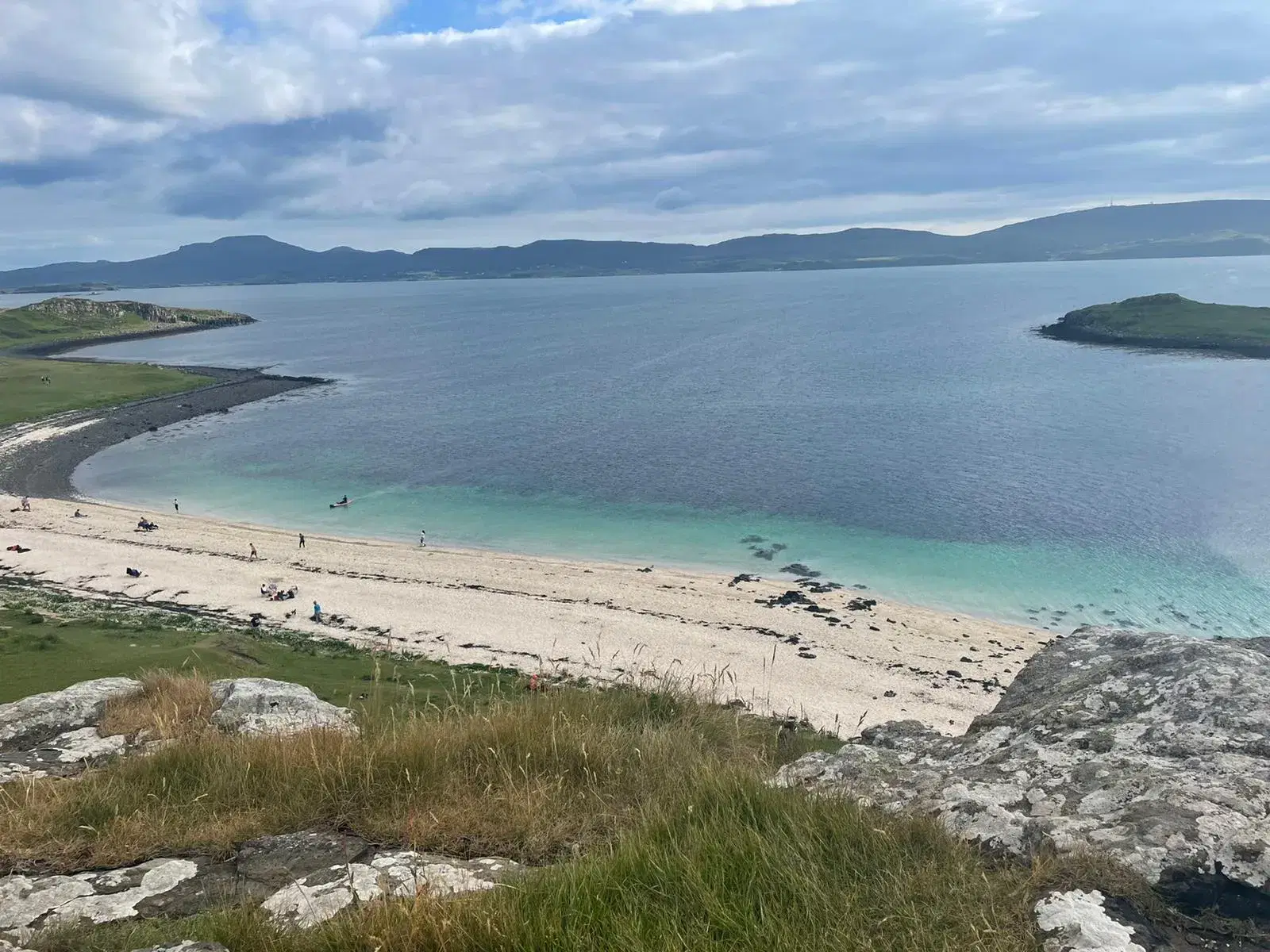
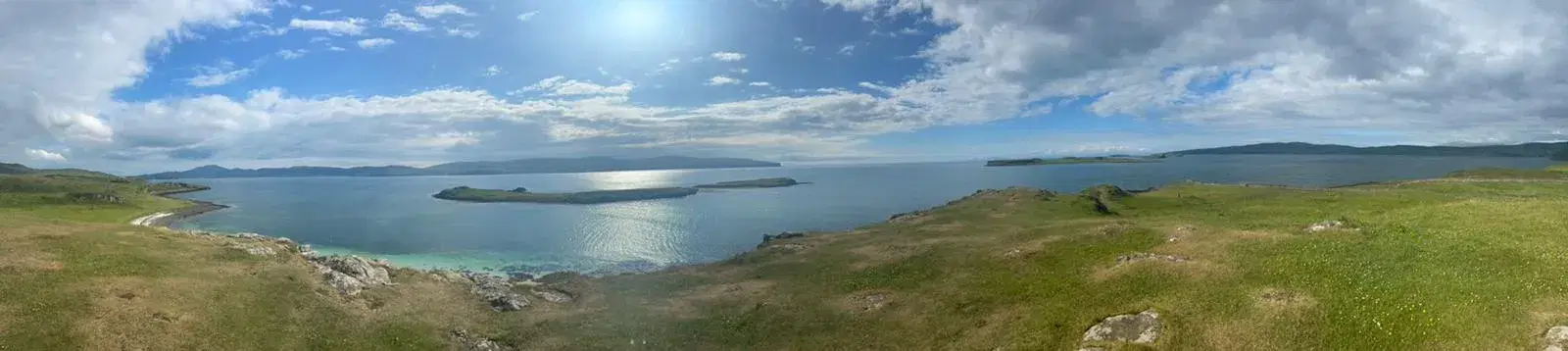
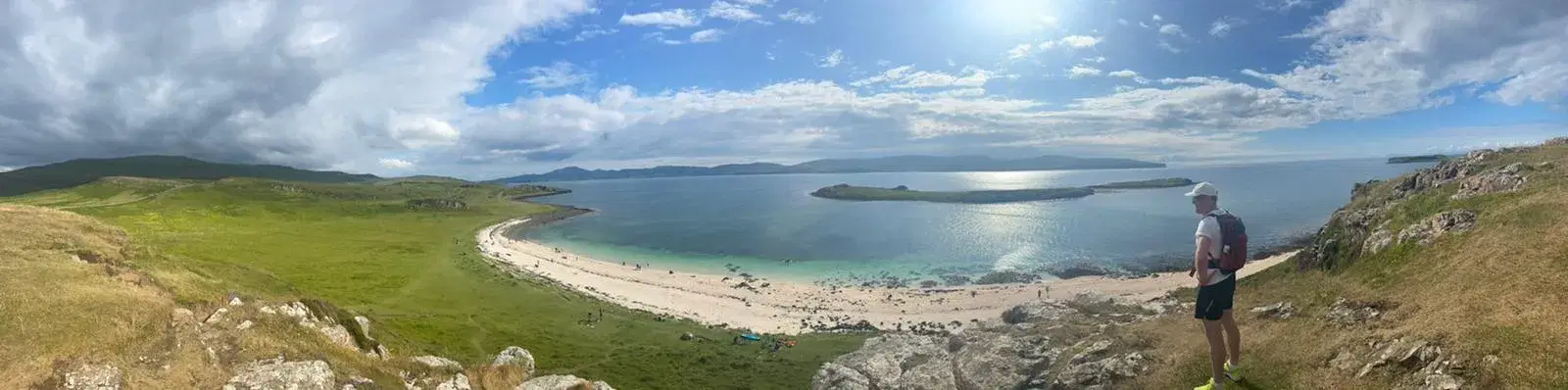
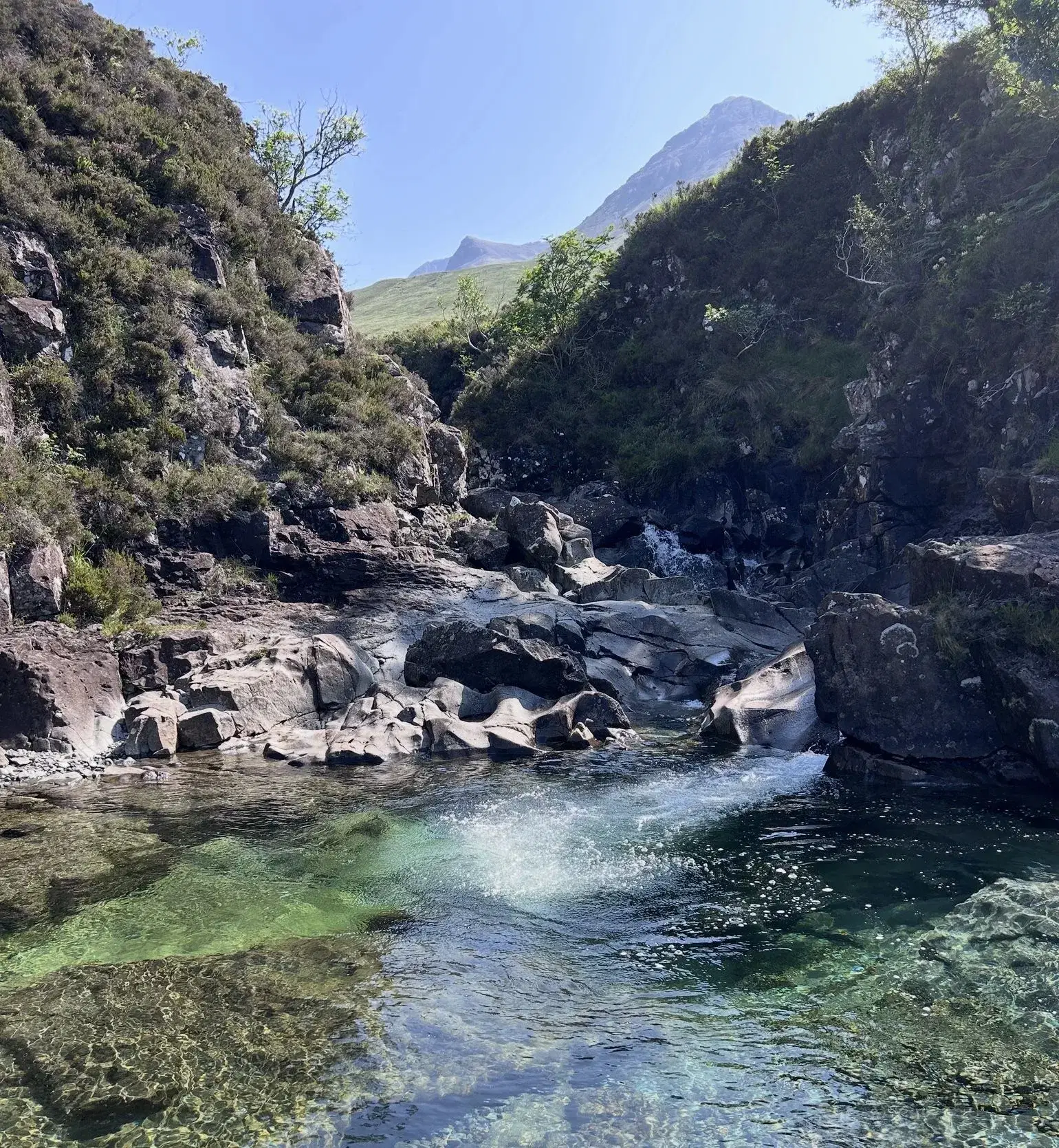
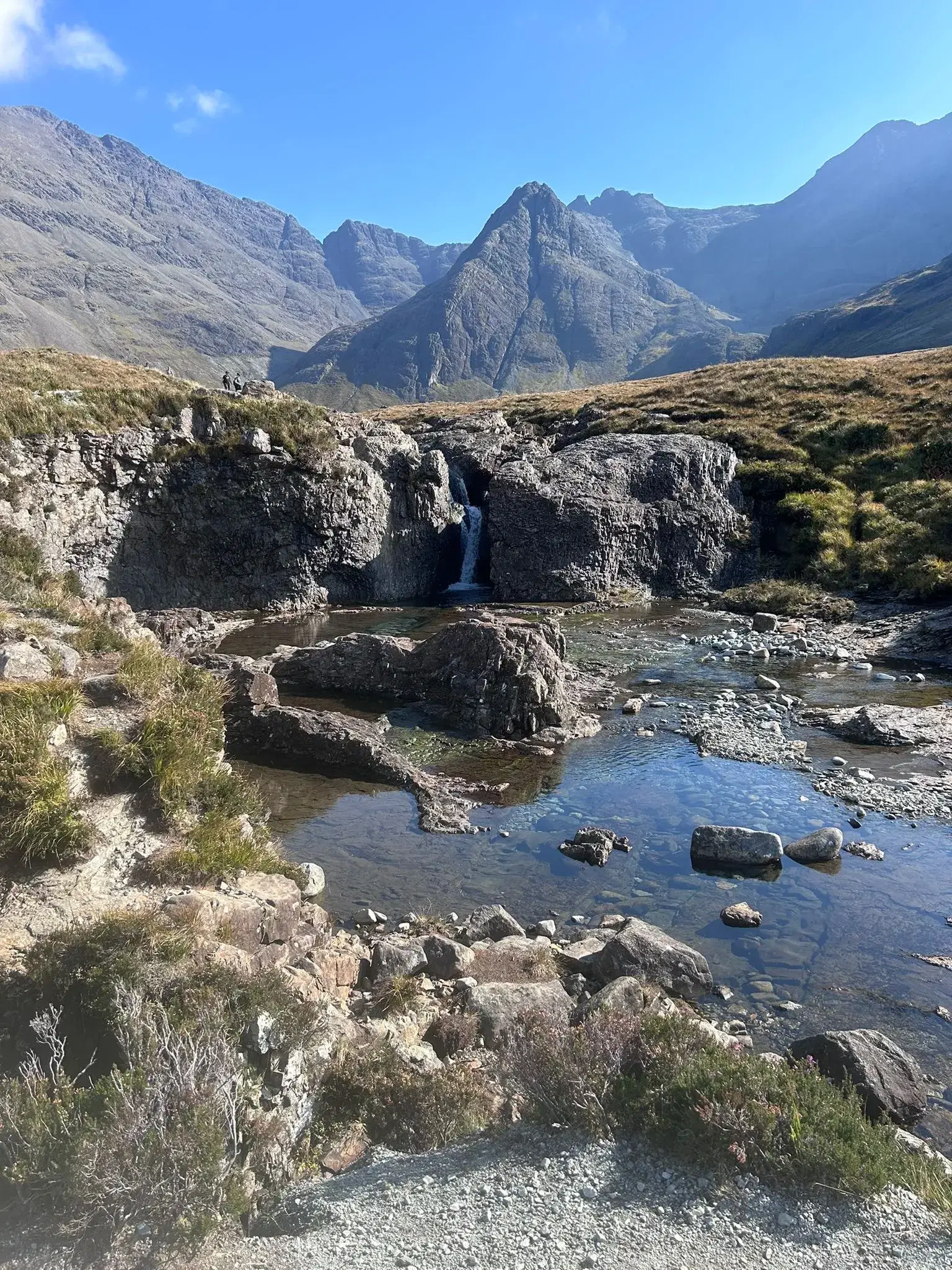
Day Two is yours entirely on Skye — a full, unhurried exploration of the island from the ancient towers of Dunvegan Castle to the alien rock formations of the Trotternish Peninsula, from a living museum of Highland crofting life to the iconic Old Man of Storr and the thundering sea-cliff cascade of Kilt Rock and Mealt Falls. With two nights on the island, the afternoon is genuinely free — for the Fairy Pools, a whisky tasting at Talisker Distillery, a wildlife boat trip from Portree, or simply a long walk on a white sand beach.
Day Three departs Skye via the bridge to the mainland, stops at the magnificent Eilean Donan Castle — Scotland’s most photographed — before heading north to Inverness, Loch Ness, and the profoundly moving Culloden Battlefield, before the long, scenic drive home through the Cairngorms. Three days. Three utterly distinct experiences. One journey that will define how you think about Scotland for the rest of your life.
Approximately 8 hours | Departing Edinburgh or Stirling | Ferry: Mallaig to Armadale, Skye | Overnight: Isle of Skye (Night 1 of 2)
Depart from your accommodation in Edinburgh or Stirling and head north and west through the Trossachs, past Callander’s Highland cattle, across the wilderness of Rannoch Moor, and into the awe-inspiring drama of Glencoe — before turning west on the legendary Road to the Isles. By the time the ferry pulls away from Mallaig and the mountains of Skye appear across the water, you will already have experienced a day of extraordinary Highland beauty. And still two full days on the island lie ahead.
Pass through the charming town of Callander — Scotland’s traditional gateway to the Highlands — for a morning refreshment break before crossing the Highland Boundary Fault and entering the wilder country beyond. This is prime territory for one of Scotland’s most irresistible and photogenic encounters: the shaggy, amber-coated Highland cattle whose long horns and fringed faces have become one of the most iconic images of the country. Keep your camera ready as the landscape transforms from Lowland pastoral to rugged Highland in a matter of miles.
Cross the vast, haunting plateau of Rannoch Moor — one of Europe’s last great wildernesses, its peat bogs and dark lochs unchanged since the last Ice Age — and descend into Glencoe, announced by the iconic pyramid of Buchaille Etive Mòr at the valley entrance. Towering peaks rise over 3,000 feet as the road winds through one of the most overwhelming mountain valleys in the world.
This is also the site of the Massacre of Glencoe — the 1692 betrayal in which government soldiers, having accepted twelve days of MacDonald hospitality, rose at dawn to murder 38 of their sleeping hosts on government orders. The rest fled into a blizzard. Johnny will tell the full story here, in the place where it happened — and it lands with a weight that no history book can replicate.
Arrive at Fort William, set beneath the massive bulk of Ben Nevis — Britain’s highest mountain at 1,345 metres — where one of the most enjoyable decisions in Scottish touring awaits. You have two extraordinary options for the journey west to Mallaig:
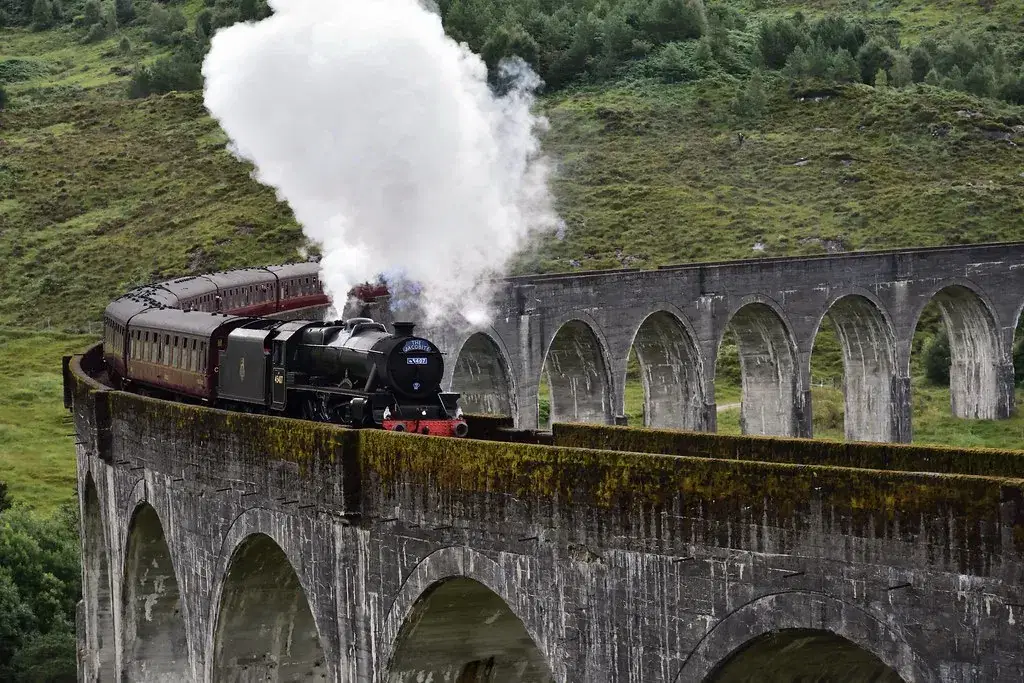
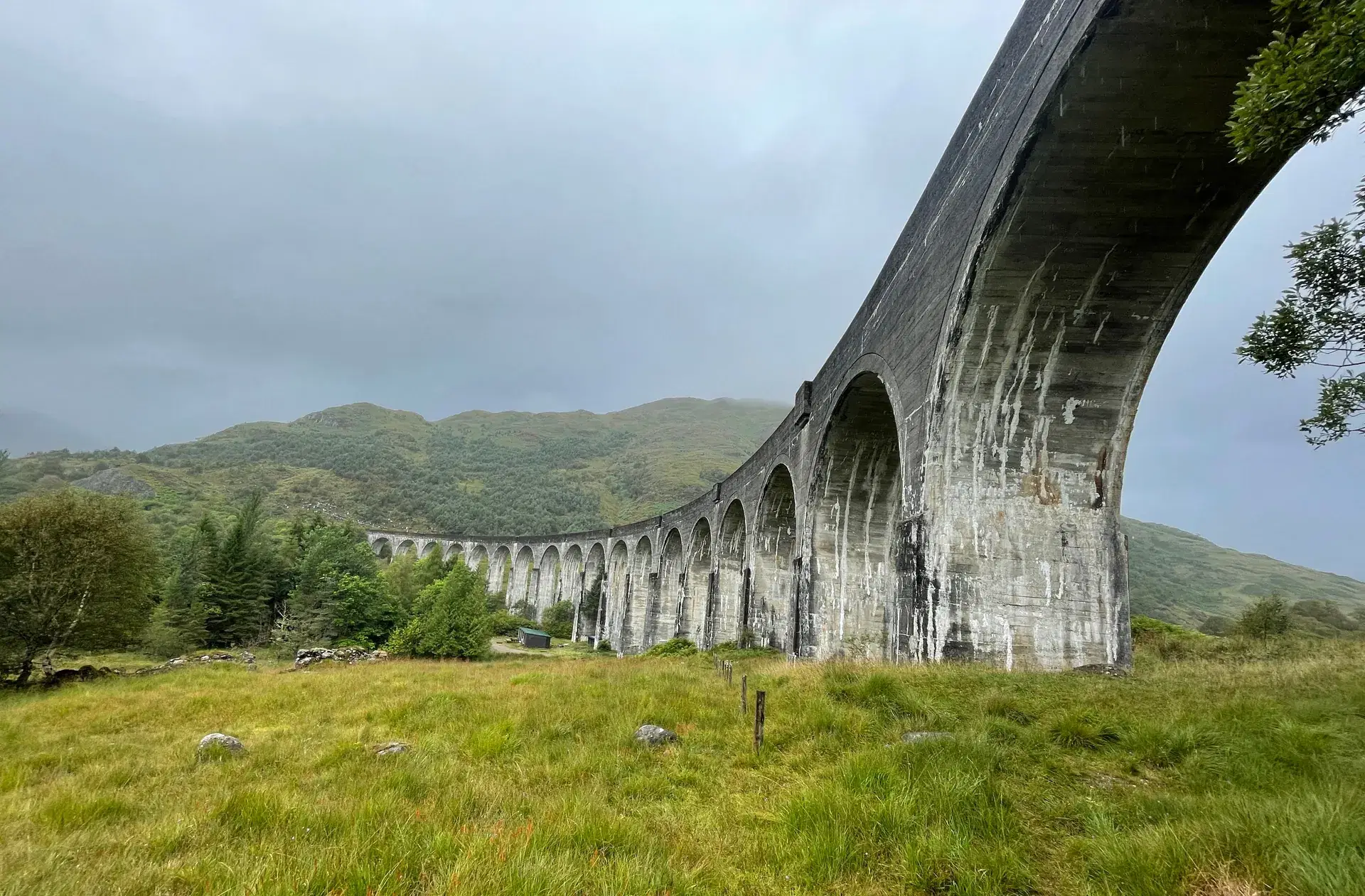
Option One: Board the Jacobite Steam Train at Fort William — the iconic heritage railway whose 84-mile round trip crosses the magnificent 21-arch Glenfinnan Viaduct. This is the very locomotive and track that inspired J.K. Rowling’s Hogwarts Express, and the viaduct crossing — with Loch Shiel stretching away below and the Rough Bounds mountains rising on every side — is as magical and cinematic an experience as Scotland has to offer. Johnny will meet you at Mallaig station.
Option Two: Travel the Road to the Isles by private vehicle — following the same route through some of the most breathtakingly remote and beautiful Highland scenery in Scotland. Stop at the Glenfinnan Monument on the shores of Loch Shiel — where Bonnie Prince Charlie raised his standard on 19 August 1745 — and enjoy the full drama of the western Highlands at your own unhurried pace.
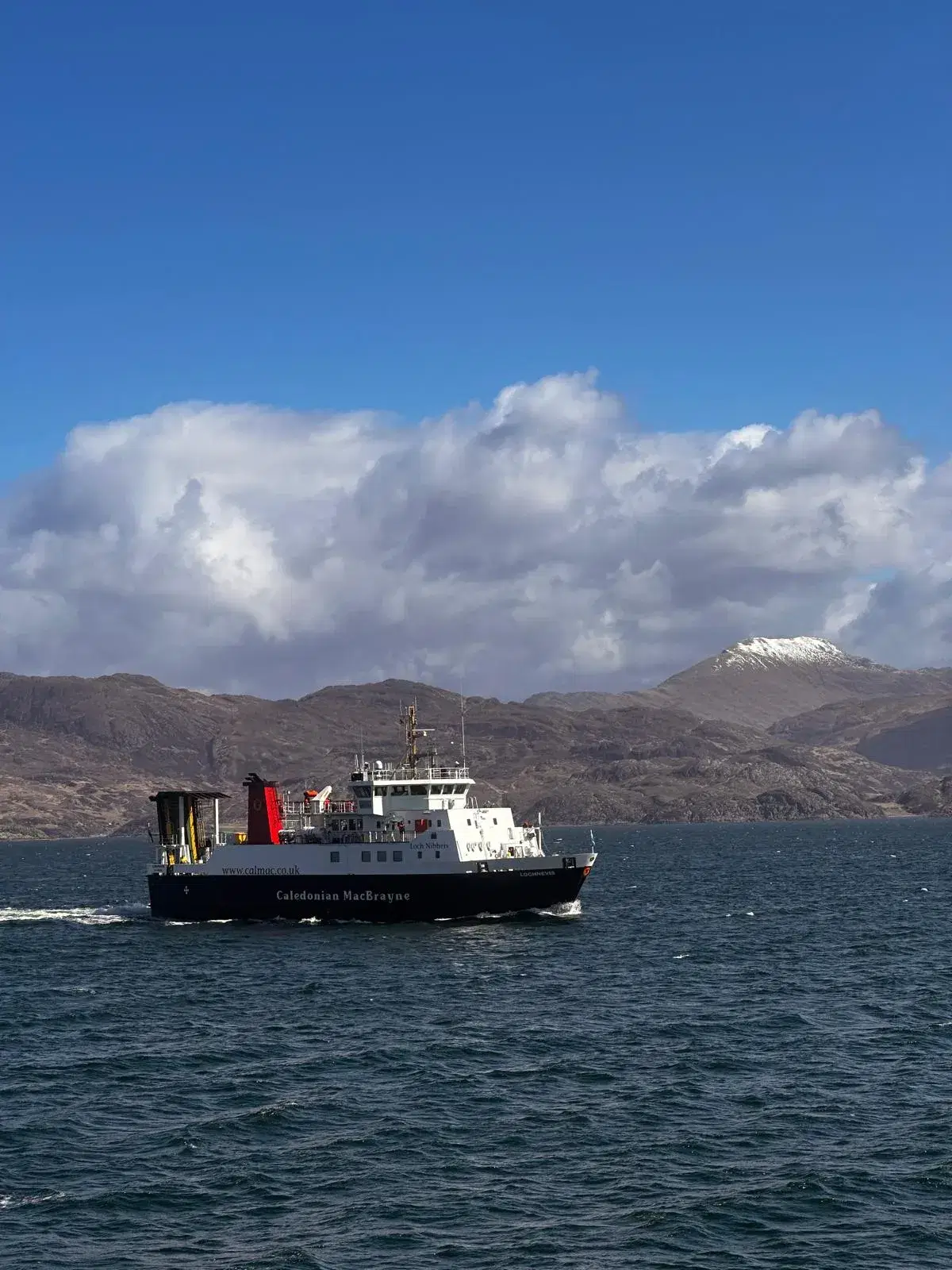
Arrive at Mallaig — the working fishing port at the western edge of the mainland — and board the CalMac ferry for the crossing to Armadale on the Sleat Peninsula of Skye. This short passage across a sea loch of extraordinary beauty is one of the finest short ferry crossings in Scotland — the mountains of Knoydart rising behind Mallaig, the green hills of Skye drawing closer across the water. Keep your eyes on the surface: bottlenose and common dolphins regularly ride the ferry’s bow wave on this crossing, and porpoises, seals, and minke whales are far from rare.
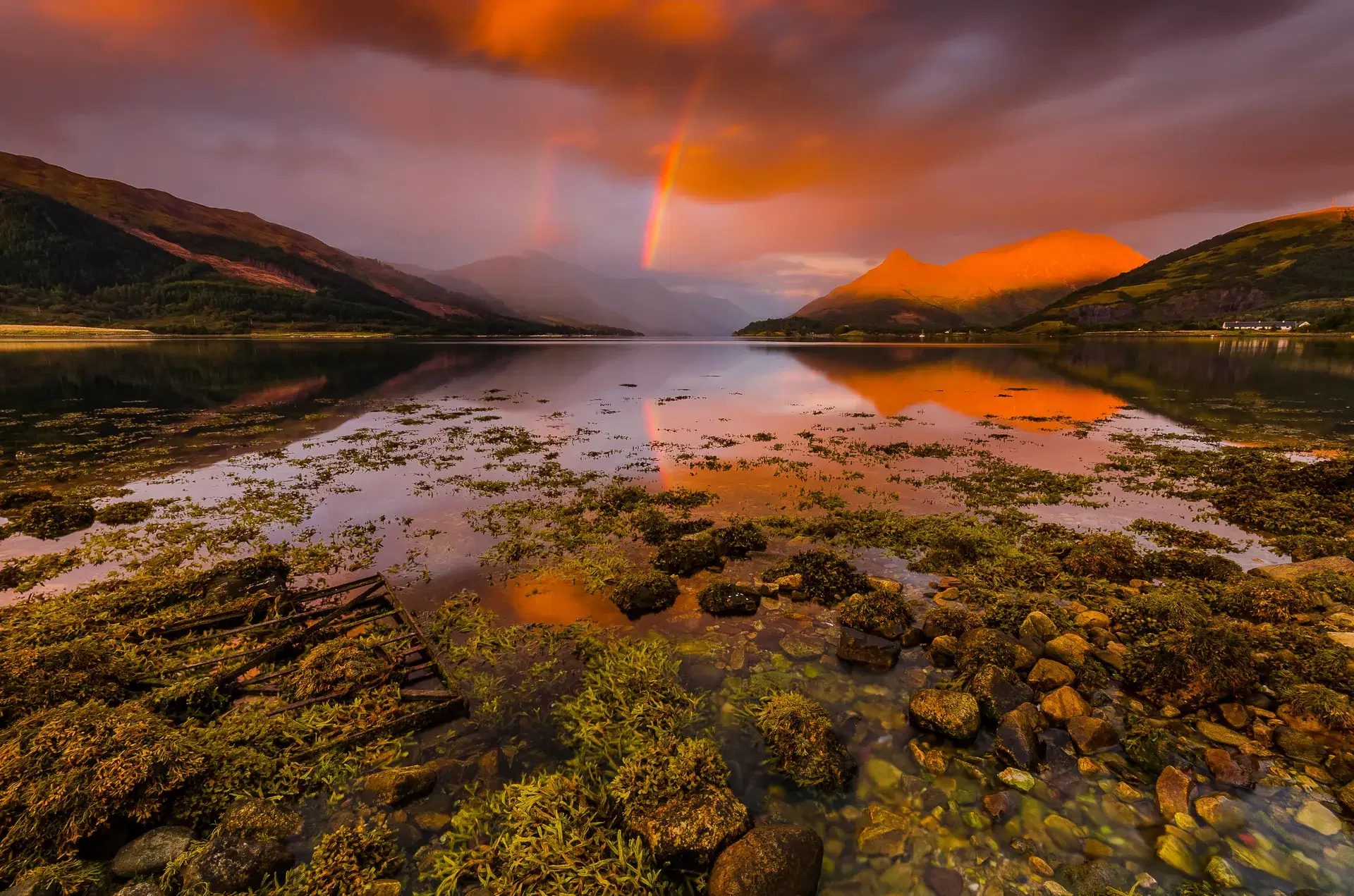
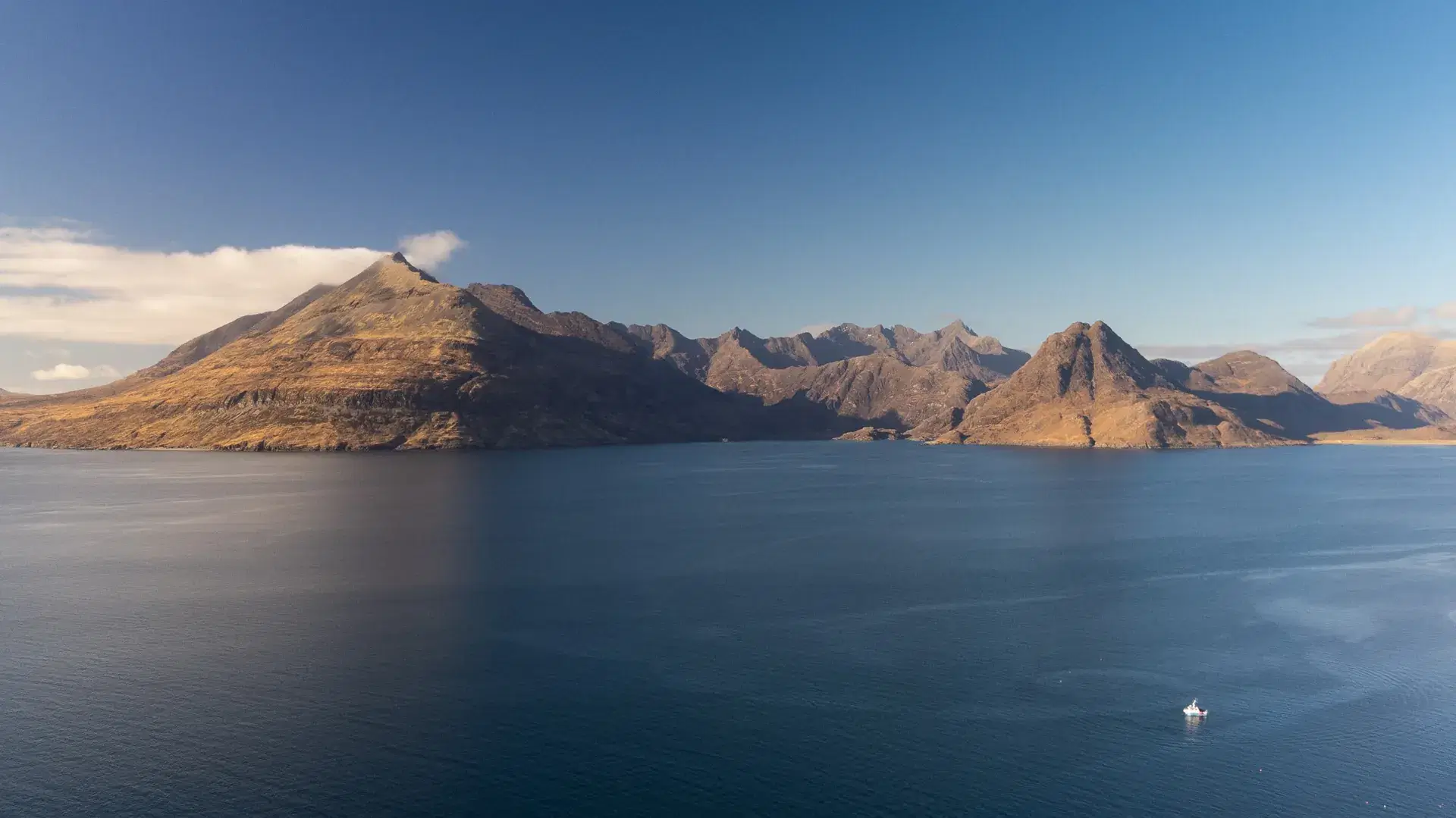
Arrive on Skye and make your way to your accommodation — where you will be staying for two nights. This first evening is for settling into the island’s particular rhythm: the extraordinary quality of the light at dusk over the Cuillin mountains, the village pubs where traditional music drifts through open doors, and the outstanding seafood restaurants serving langoustines, scallops, and oysters from the surrounding waters. Tomorrow is entirely yours on the island — and there is no rush at all.
Full day | Skye only | Overnight: Isle of Skye (Night 2 of 2)
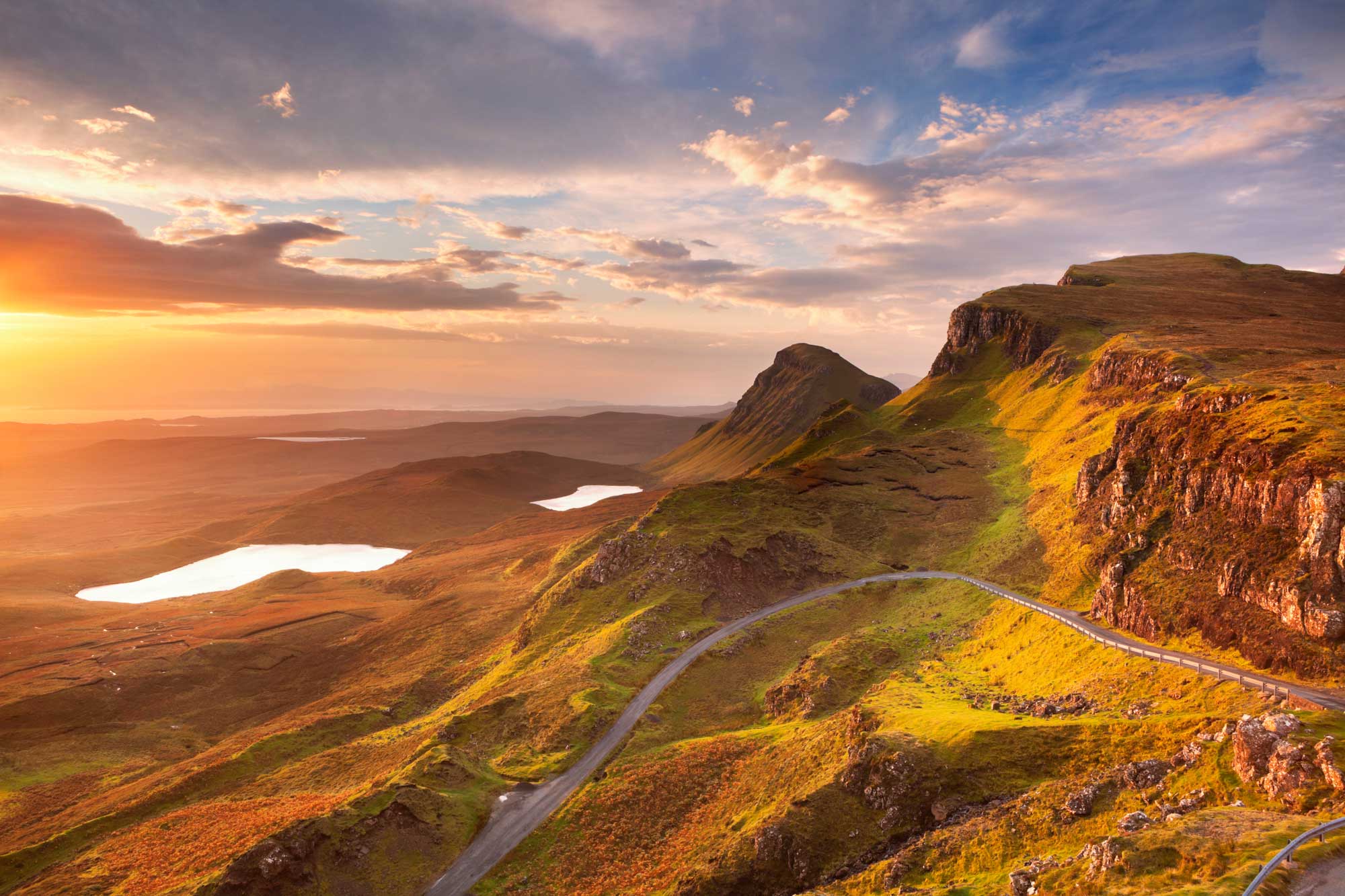
Rise on Skye for a full, unhurried day on one of the most extraordinary islands in Europe. The Isle of Skye — 50 miles long, covering over 600 square miles of jagged mountain peaks, sea cliffs, ancient brochs, hidden beaches, and coastline of savage Atlantic beauty — rewards those who give it proper time. Today there is no ferry to catch and no miles to cover before dark. This is Skye on its own terms, at its own pace.
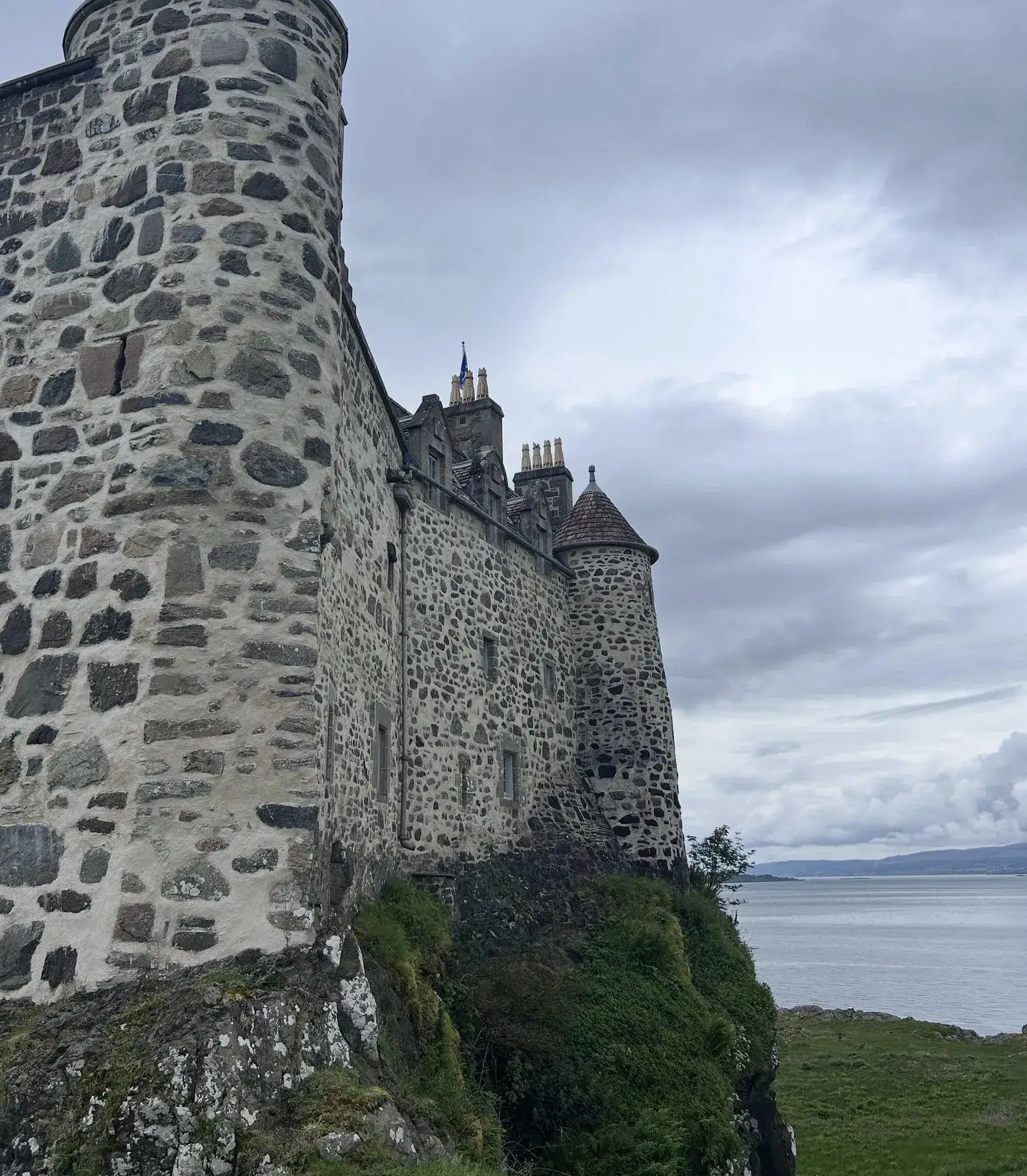
Begin at Dunvegan Castle — the oldest continuously inhabited castle in Scotland, home to the Chiefs of Clan MacLeod for over 800 years without interruption. Perched above Loch Dunvegan on the western shore of the island, this extraordinary fortress has never passed out of MacLeod hands since the 13th century — a remarkable and unique distinction among Scottish castles. Explore the richly furnished State Rooms, discover the legendary Fairy Flag — a piece of ancient silk said to have been gifted to the clan by the fairies and capable of saving the MacLeods from defeat in battle if unfurled — and wander the beautiful woodland gardens above the loch’s dark waters.
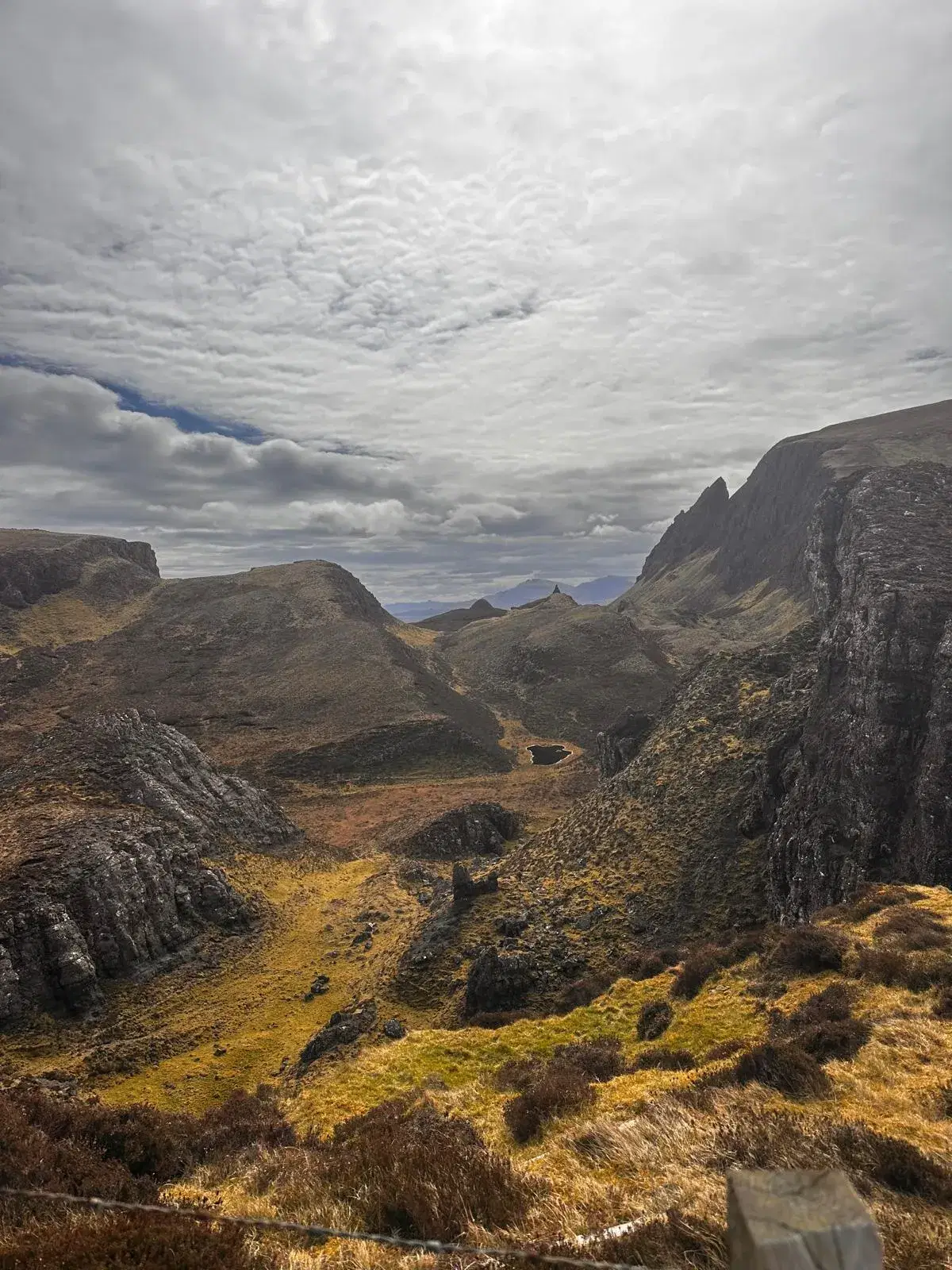
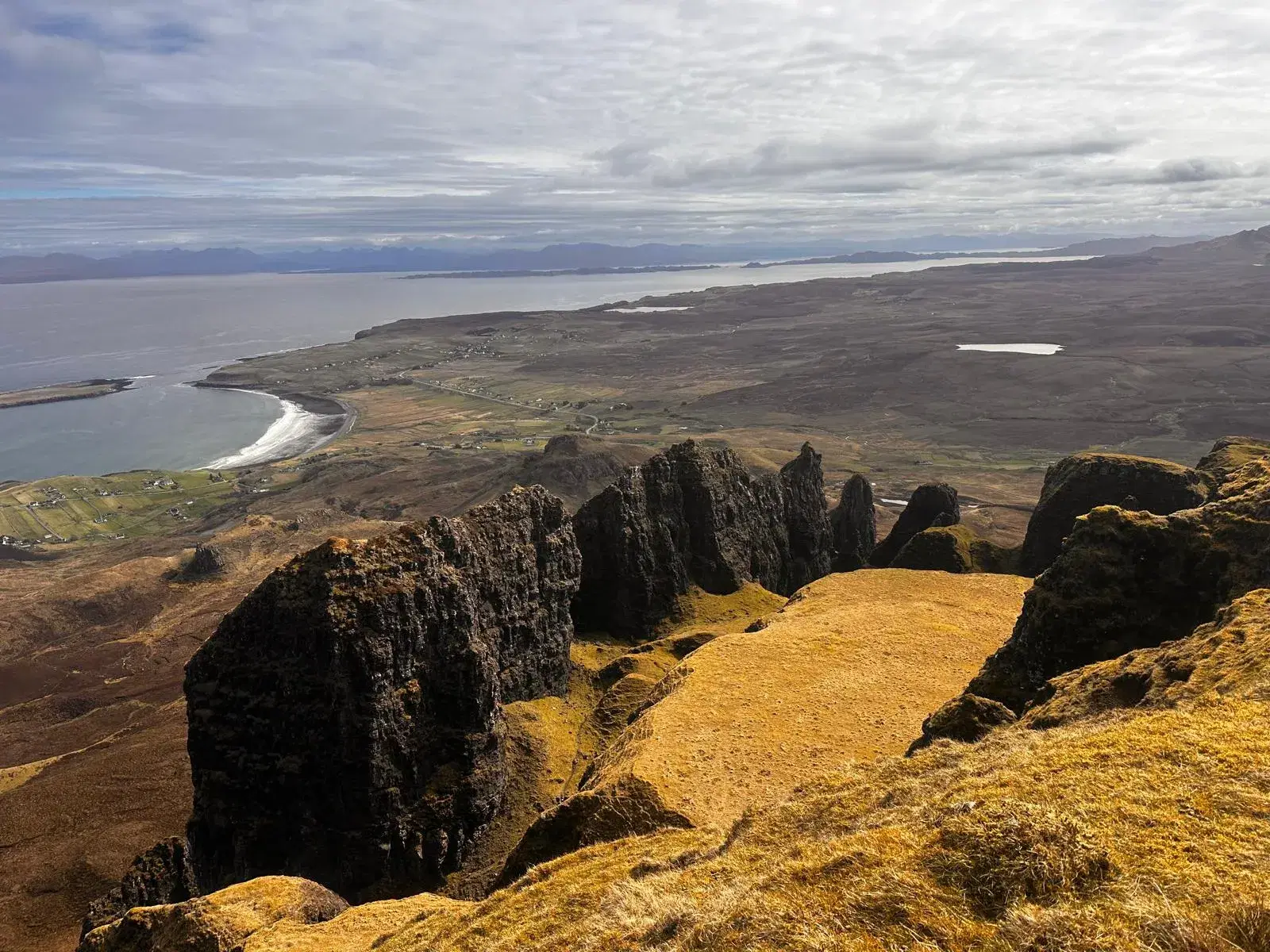
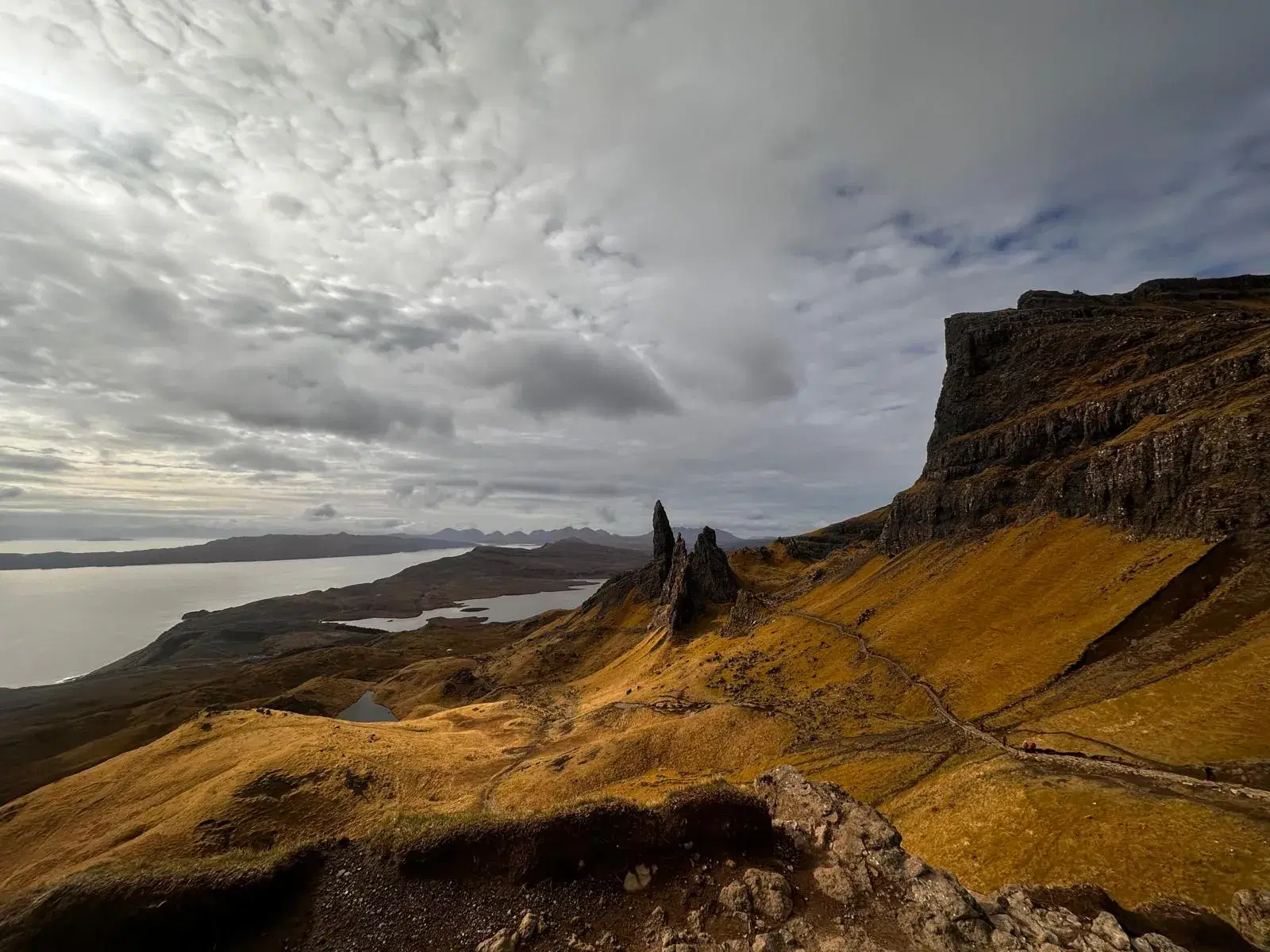
Travel north along the dramatic Trotternish Peninsula — a 20-mile spine of volcanic rock sculpted by the longest continuous landslip in the United Kingdom into some of the most extraordinary and otherworldly landscapes in the British Isles. Towering pinnacles, collapsed escarpments, and sweeping coastal views make this one of those rare landscapes that consistently silences people on first encounter — even those who thought they were prepared for it.
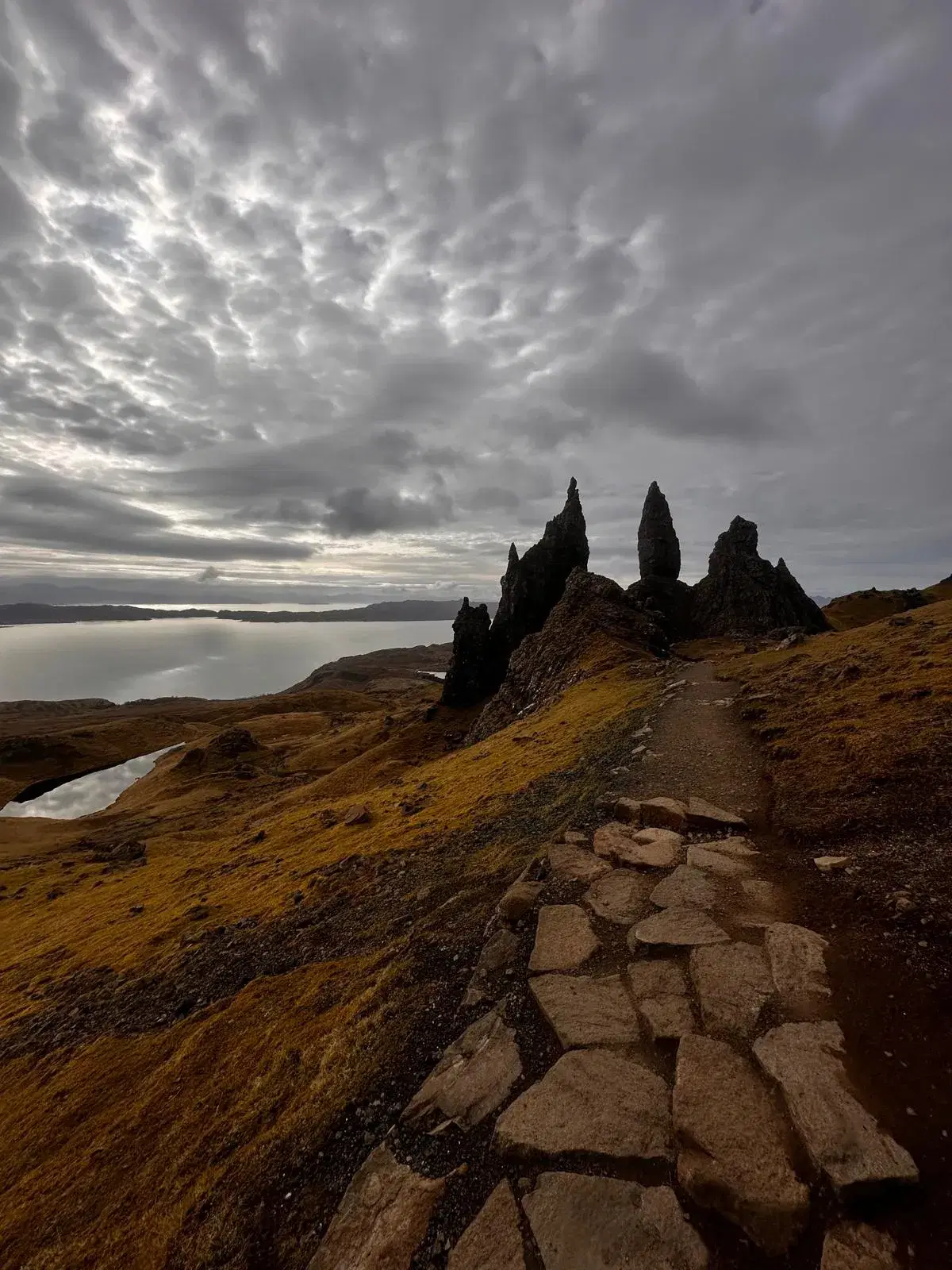
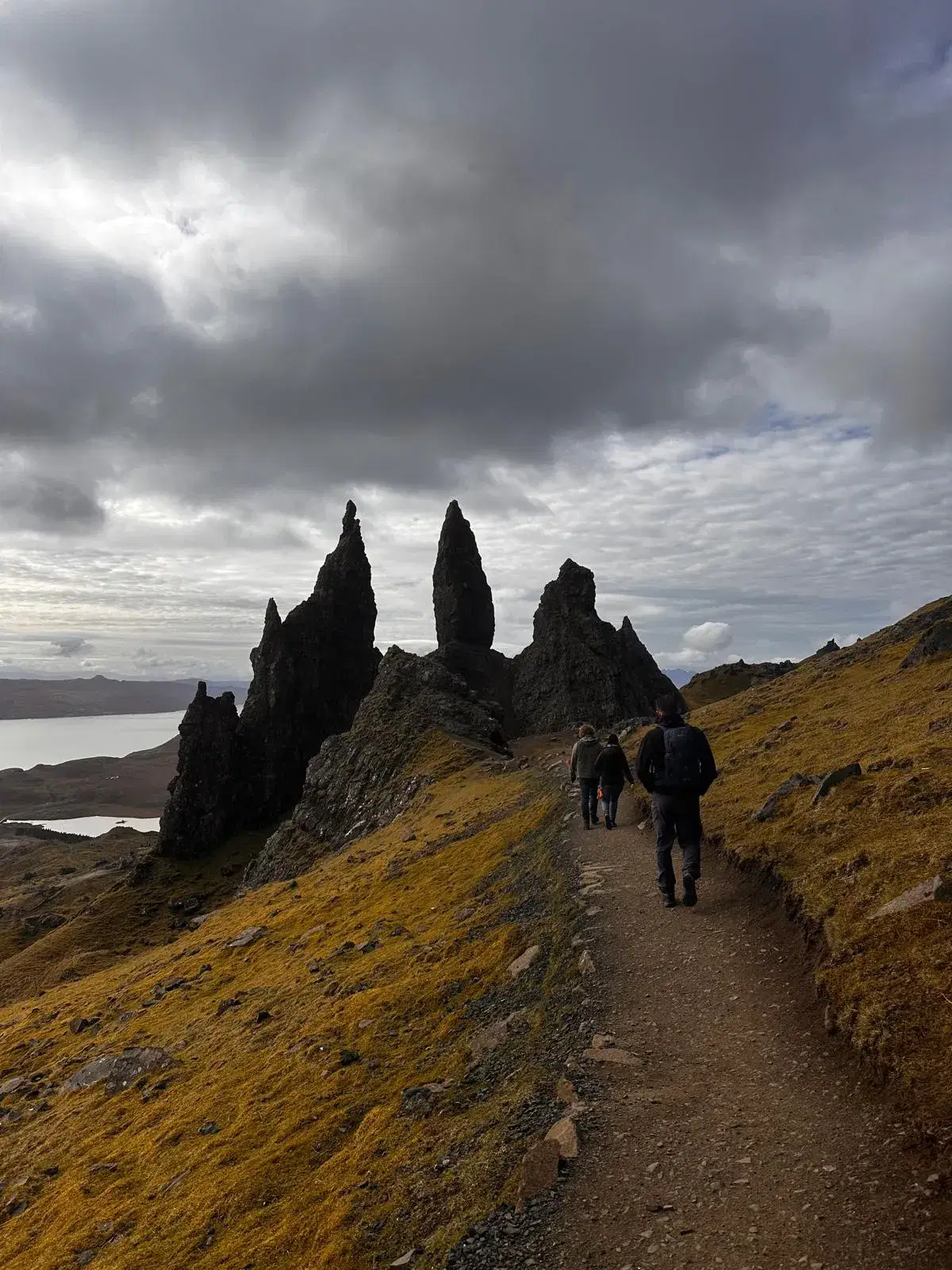
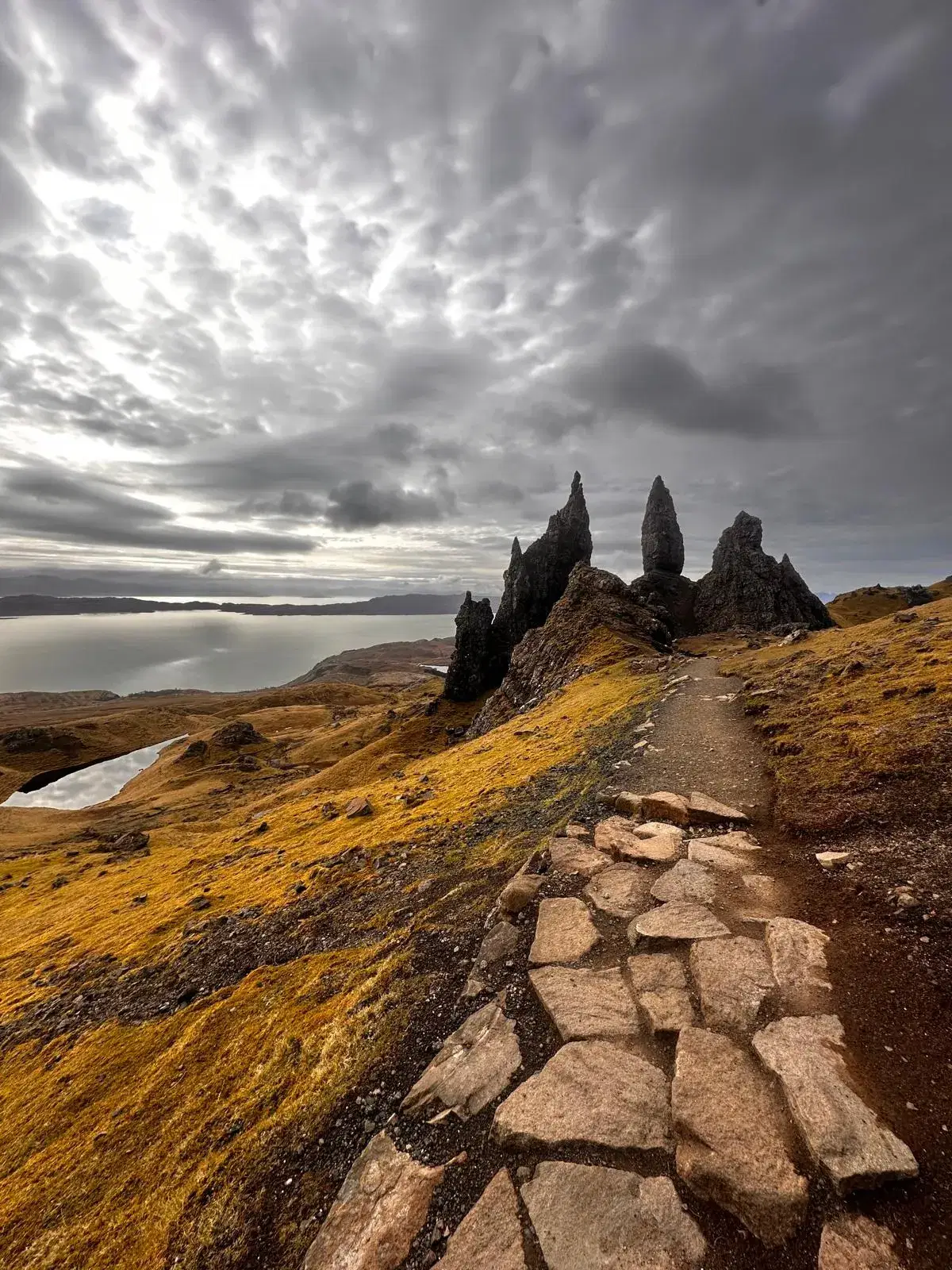
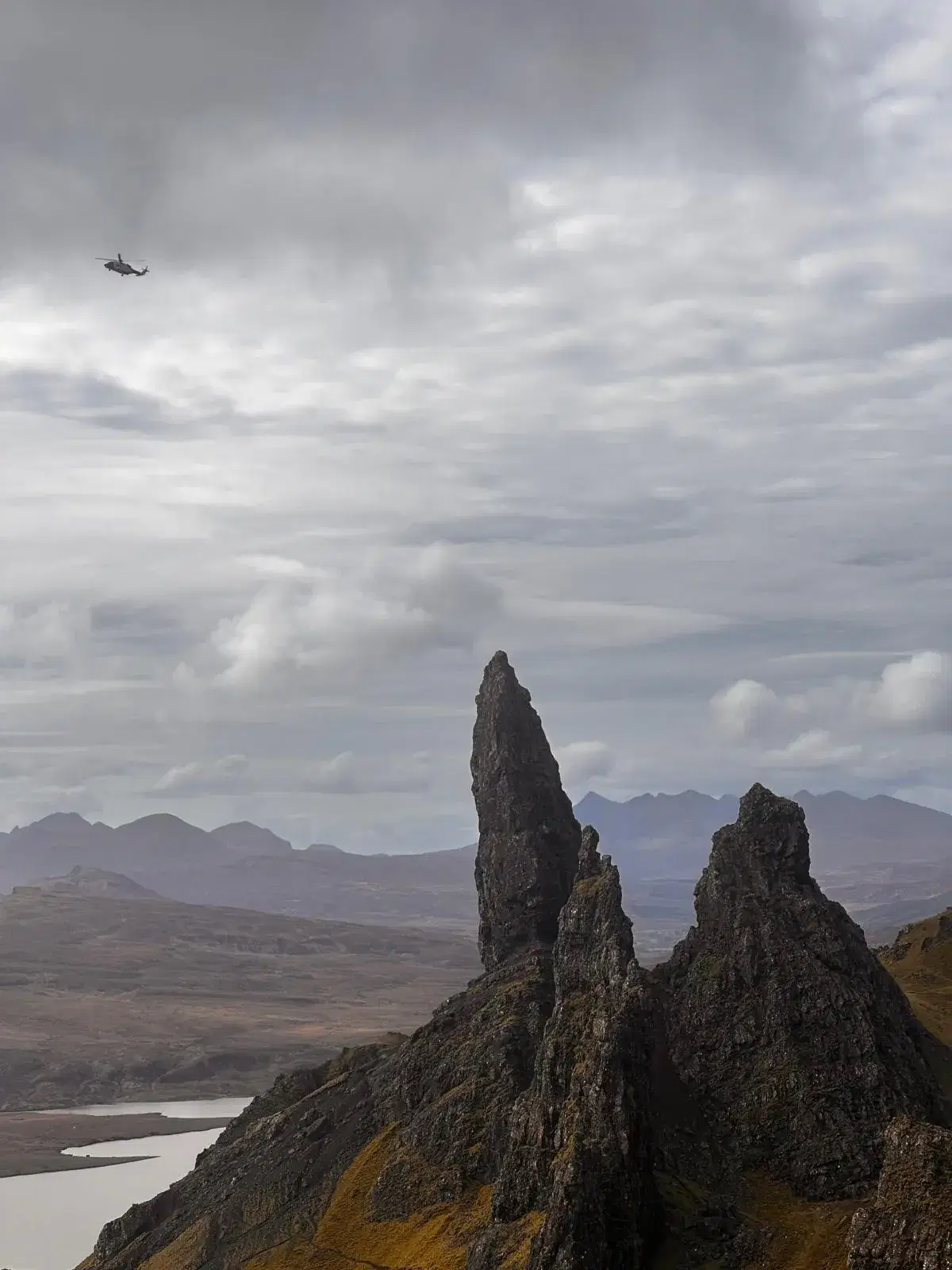
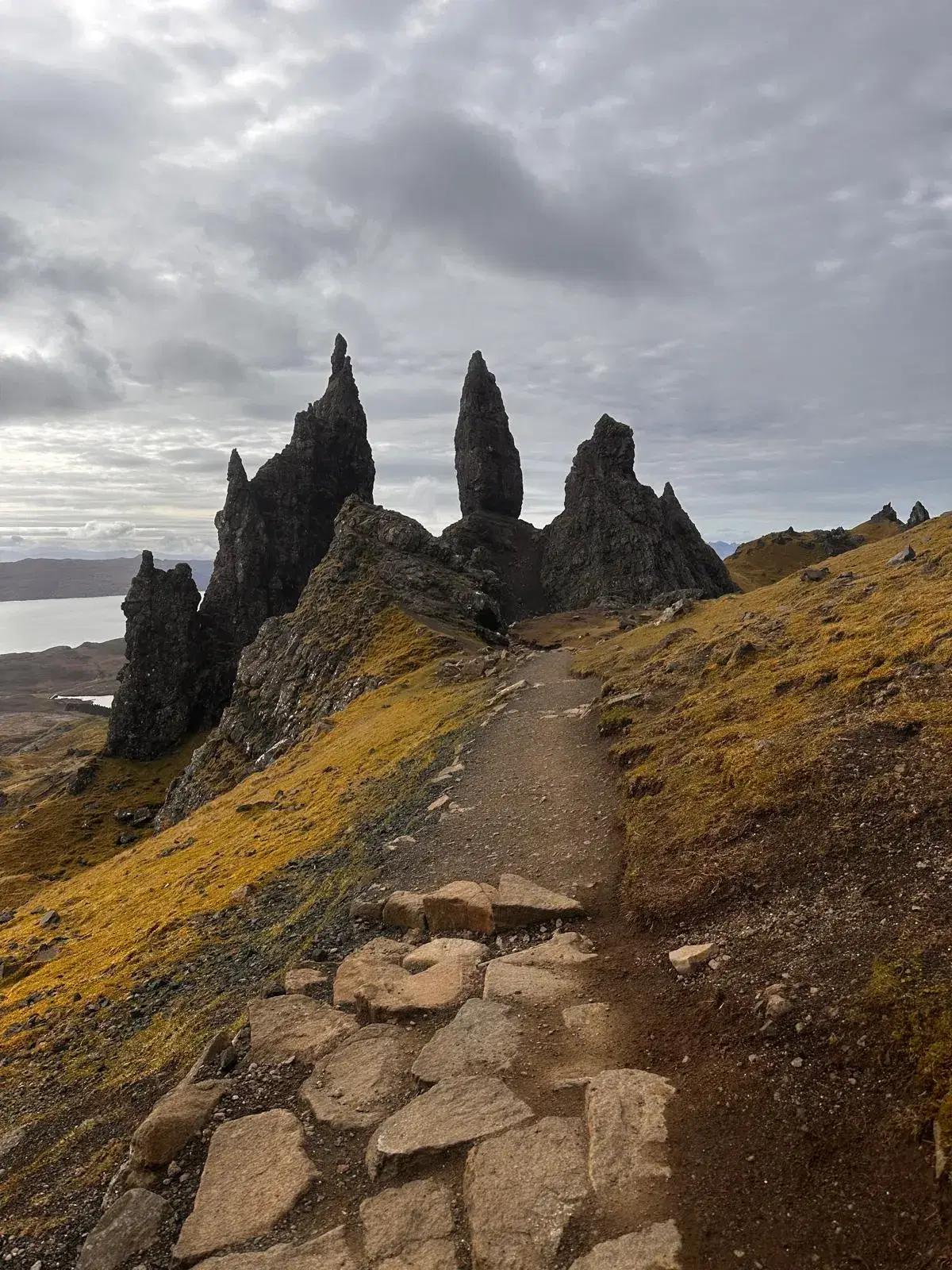
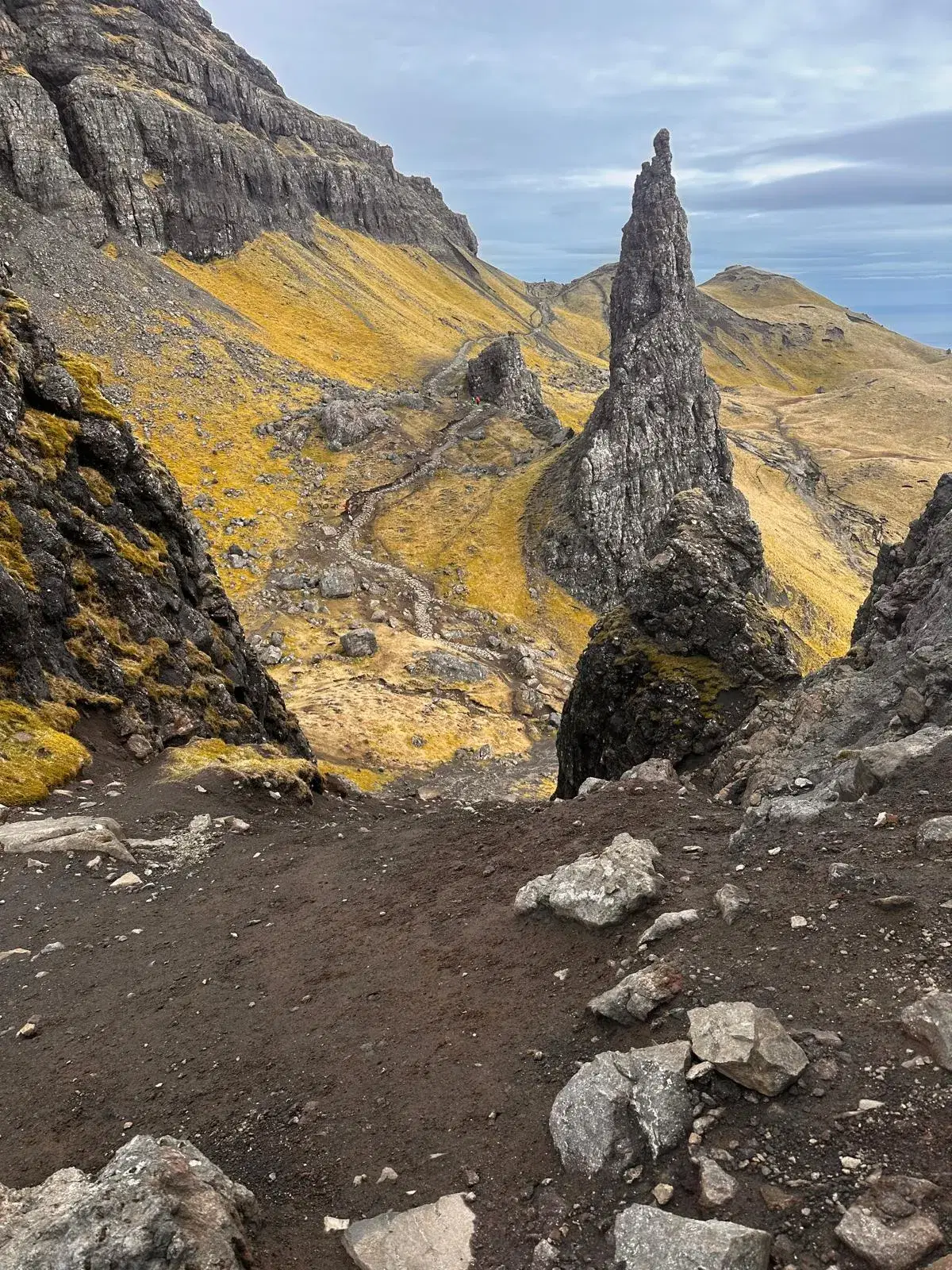
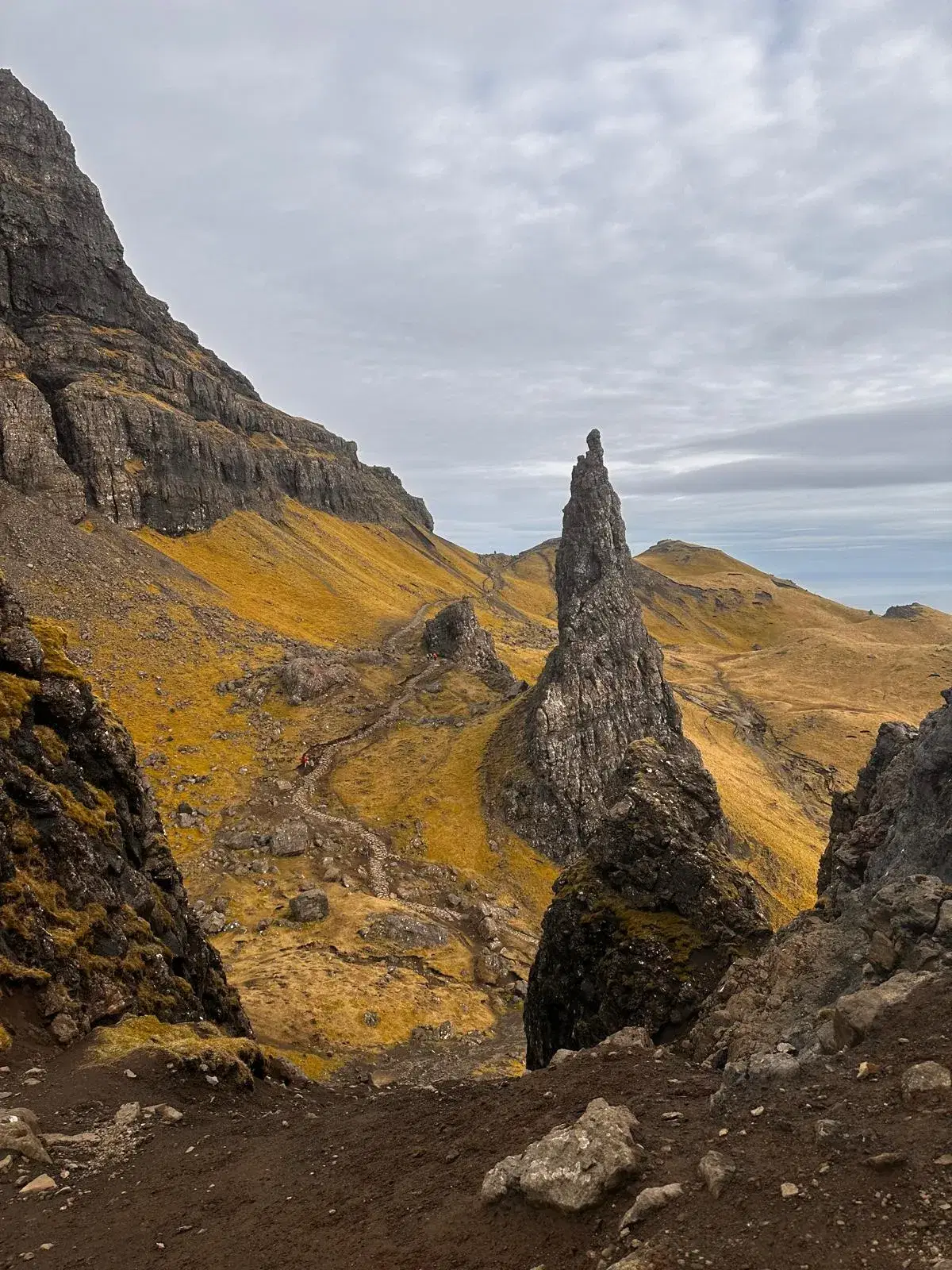
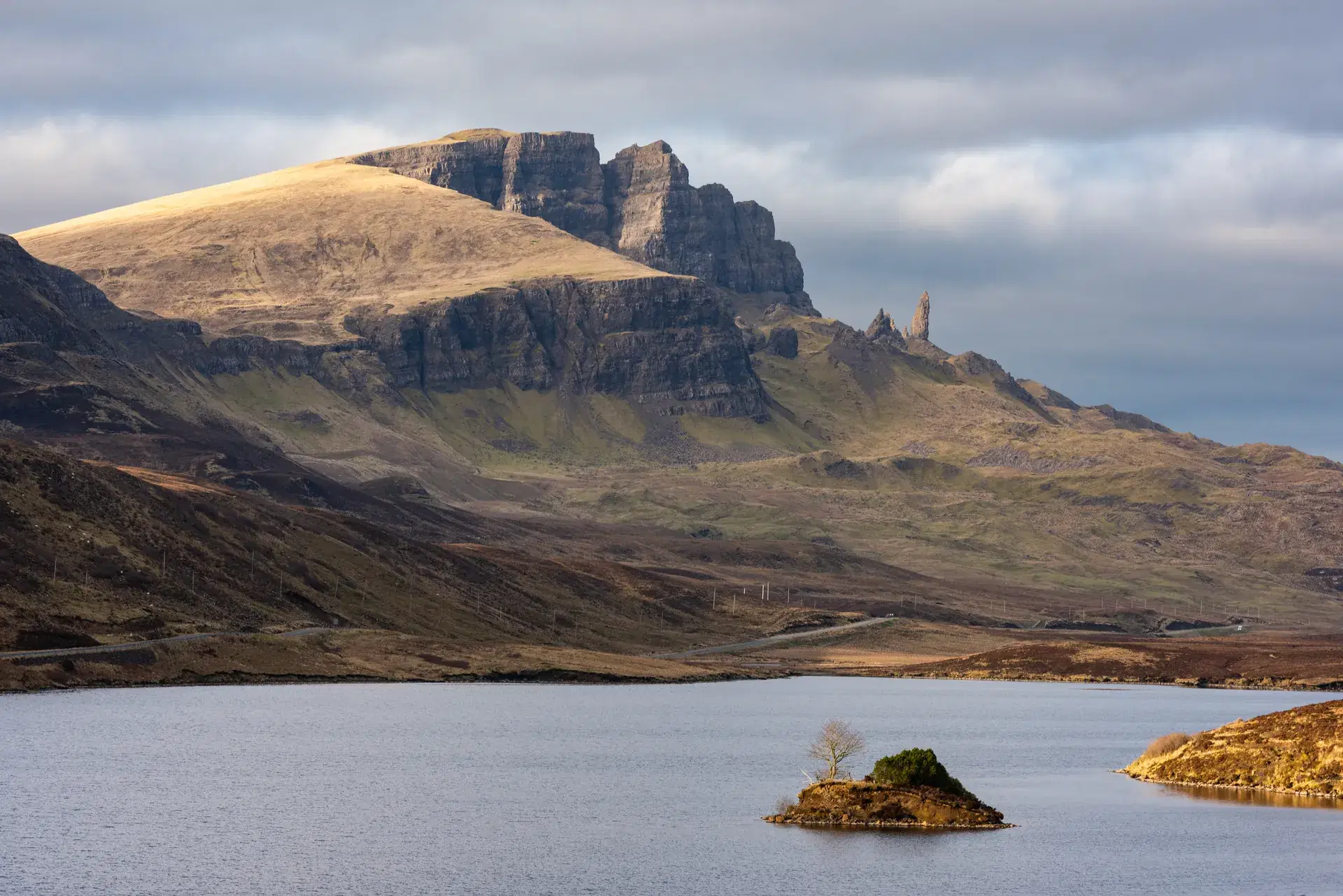
The undisputed icon of the Trotternish is the Old Man of Storr — a 50-metre pinnacle of black basalt rock that rises impossibly above Loch Leathan, visible for miles and instantly recognisable as one of Scotland’s most photographed natural landmarks. Named for a giant said to be buried in the hillside below, the Old Man was first climbed in 1955 and has drawn visitors ever since. On a clear day the views stretch across the Inner Sound to the mountains of Torridon on the mainland. In mist — which is far from uncommon — the pinnacle appears and disappears from the clouds in a way that perfectly earns Skye its Gaelic name: Eilean a’ Cheò, the Misty Isle.
Continue to Kilt Rock — a towering sea cliff of columnar basalt whose vertical dark and pale striations bear an unmistakable resemblance to the folds of a Highland kilt. Beside it, the Mealt Waterfall plunges 55 metres directly from the clifftop into the sea — one of Skye’s most spectacular and vertiginous viewpoints. The combination of the patterned cliff face, the plunging waterfall, and the open Atlantic stretching to the horizon makes this one of the finest photo opportunities on the entire island.
Visit the Skye Museum of Island Life at Kilmuir — a beautifully preserved collection of traditional thatched blackhouses recreating the daily life of a 19th-century crofting township with extraordinary authenticity. Wander through cottages, barns, and weaving sheds, and discover the tools, furniture, and personal belongings of the island families who lived here — a deeply moving portrait of a way of life that the Highland Clearances came close to extinguishing entirely.
In the nearby churchyard lies the grave of Flora MacDonald — the Skye woman who helped Bonnie Prince Charlie escape to France disguised as her maidservant after Culloden in 1746. It was one of the most daring and romantic acts in Scottish history, and it cost Flora dearly: she was arrested and imprisoned in the Tower of London before public sympathy secured her release. Her gravestone bears the words of Samuel Johnson, who met her on his famous tour of the Hebrides: ‘a name that will be mentioned in history, and if courage and fidelity be virtues, mentioned with honour.’
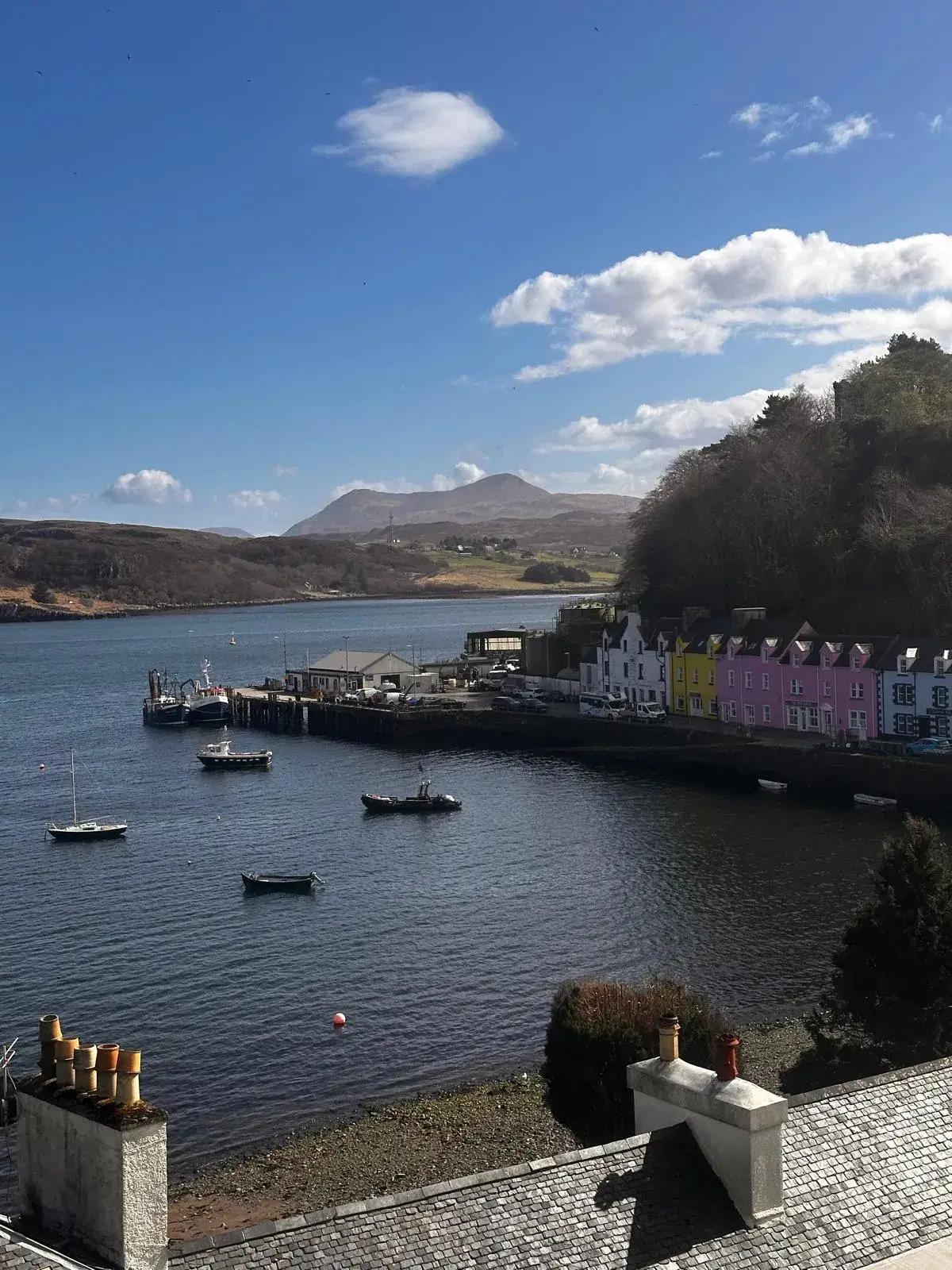
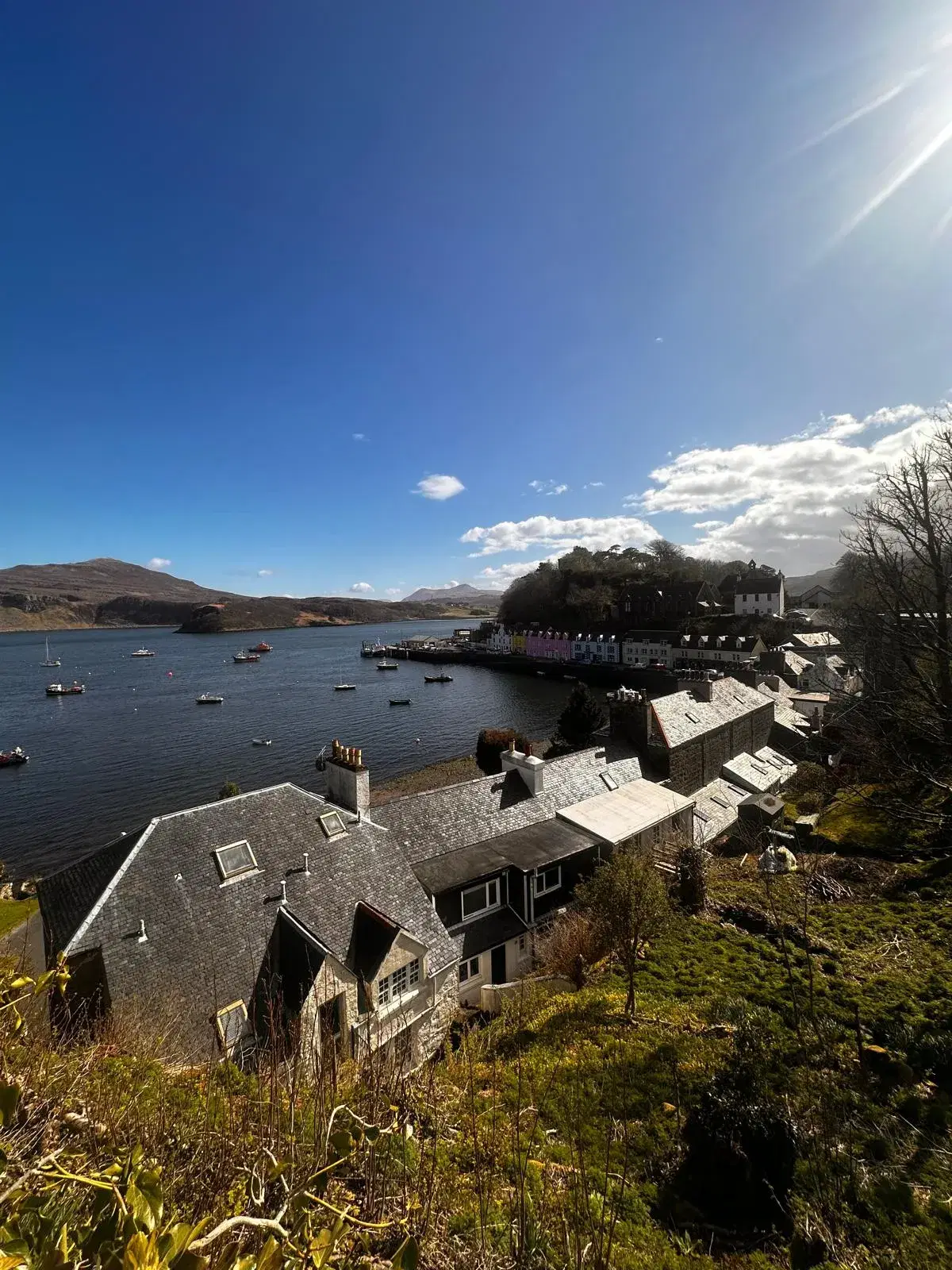
With two nights on the island, the afternoon and evening of Day Two are genuinely yours. Johnny is happy to recommend and guide you to any of the following — or simply to let the island dictate the pace:
Return to your accommodation for a second evening on Skye — perhaps the most valuable addition this three-day format provides. The island at dusk, with the day-visitors gone and the Cuillins turning violet and amber in the evening light, belongs entirely to those who stayed. Dine well, sleep deeply, and let Skye do what it has always done to those who give it the time it deserves.
Approximately 10 hours | Departing Skye via Skye Bridge | Returning to Edinburgh or Stirling
Rise on Skye for the last time and depart via the elegant modern Skye Bridge — pausing for a final look back at the Cuillin ridge across the Kyle of Lochalsh — before a day that moves through three of Scotland’s most powerful and memorable destinations on the long, scenic journey home. Eilean Donan Castle, Loch Ness, Inverness, and Culloden Battlefield: each one extraordinary in its own right, and together they make Day Three a fitting and deeply satisfying conclusion to three days at the very best of Scotland.
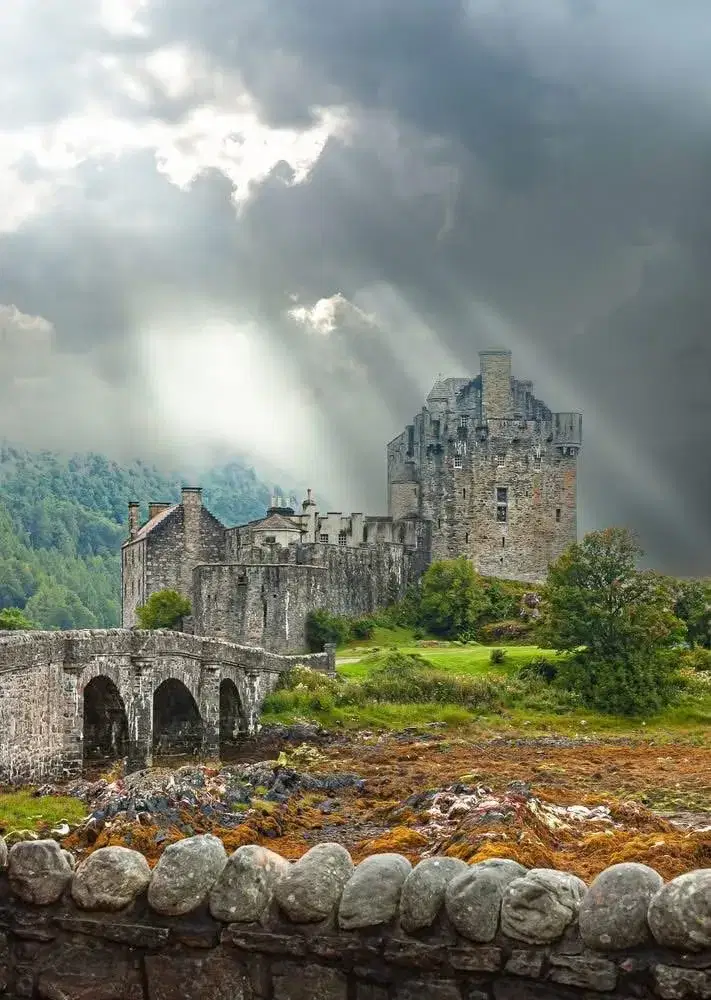
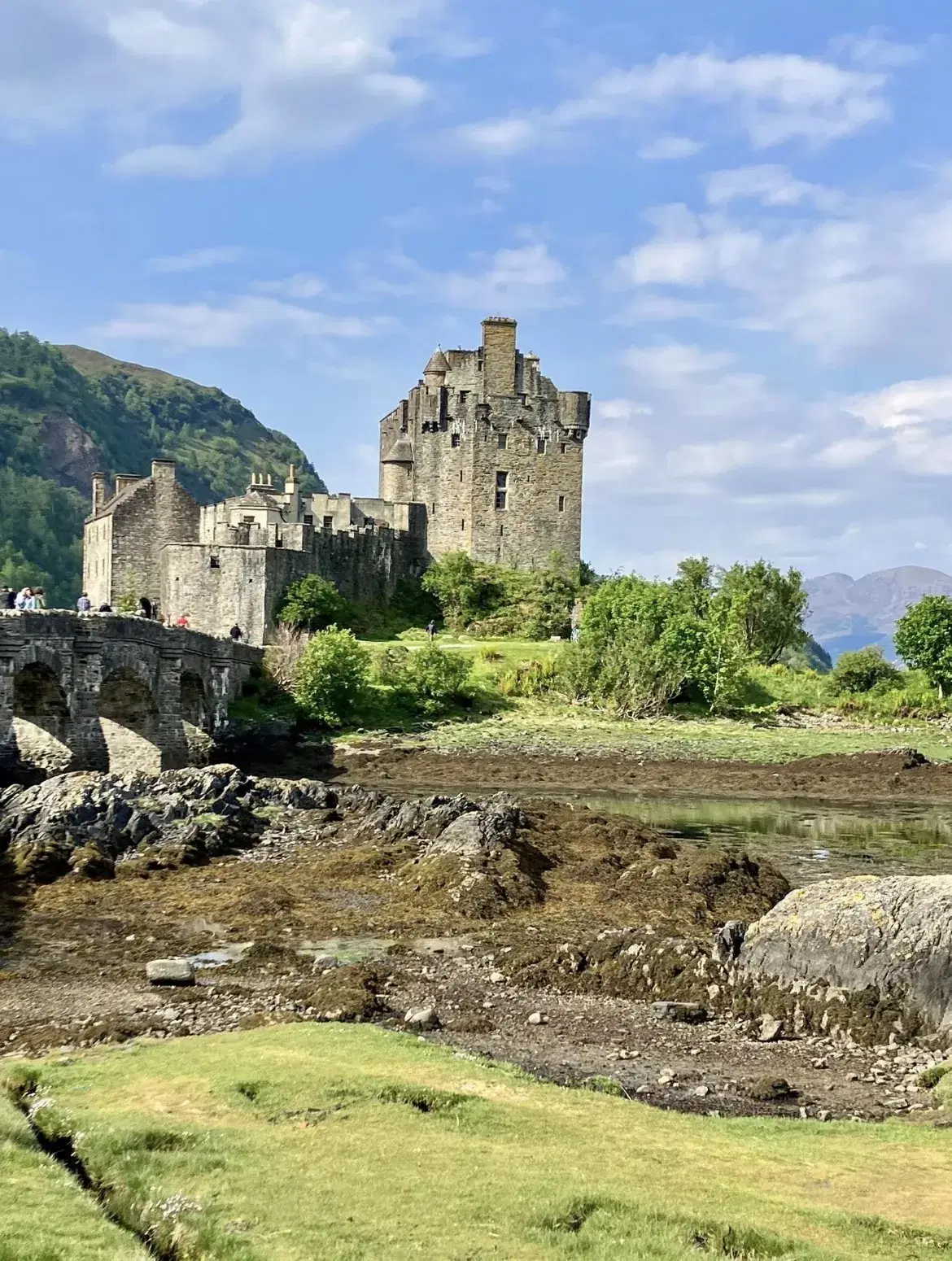
Cross the Skye Bridge and travel south along the shores of Loch Duich to Eilean Donan Castle — the most instantly recognisable and most photographed castle in all of Scotland. Rising from a tiny tidal island at the meeting point of three sea lochs, its ancient walls perfectly reflected in the still water with the mountains of Kintail rising dramatically behind it, Eilean Donan is one of those places that manages to exceed even the highest expectations.
Originally built in the 13th century as a stronghold against Norse raids, the castle was destroyed in 1719 when a Spanish Jacobite garrison was shelled by Royal Navy frigates — its ruins left untouched for two centuries before a meticulous reconstruction between 1919 and 1932 restored it to near-perfect condition. Explore the atmospheric rooms, the Jacobite artefacts and clan history, and the views from the bridge that have featured in countless films, advertisements, and travel books. Take your time here — Eilean Donan earns every photograph.
Travel north through Glen Moriston and along the southern shore of Loch Ness — 37 kilometres of the deepest, darkest, and most legendary loch in Scotland. Loch Ness holds more fresh water than all the lakes of England and Wales combined, plunging to 230 metres at its deepest point. The legend of the Loch Ness Monster stretches back to 565 AD, when Saint Columba reportedly encountered a fearsome beast in the River Ness — a story that sonar expeditions, underwater cameras, and satellite surveillance have failed to definitively resolve in either direction. Keep your eyes on the water.
Stop at Fort Augustus — the picturesque village at the southern end of the loch where Thomas Telford’s famous staircase of five canal locks connects the Caledonian Canal to Loch Ness — for lunch on the waterfront before continuing north to Inverness.
Arrive in Inverness — the vibrant, welcoming capital of the Scottish Highlands, built where the River Ness meets the Beauly Firth at the northern end of the Great Glen. Explore the handsome Victorian city centre, walk the riverside past the striking pink-sandstone Inverness Castle, browse the independent shops of the Victorian Market, and take in the atmosphere of a city that has been the gateway to the far north for centuries. Johnny will share the stories behind the city’s medieval origins, its pivotal role in the Jacobite story, and its remarkable transformation into one of Scotland’s fastest-growing cities.
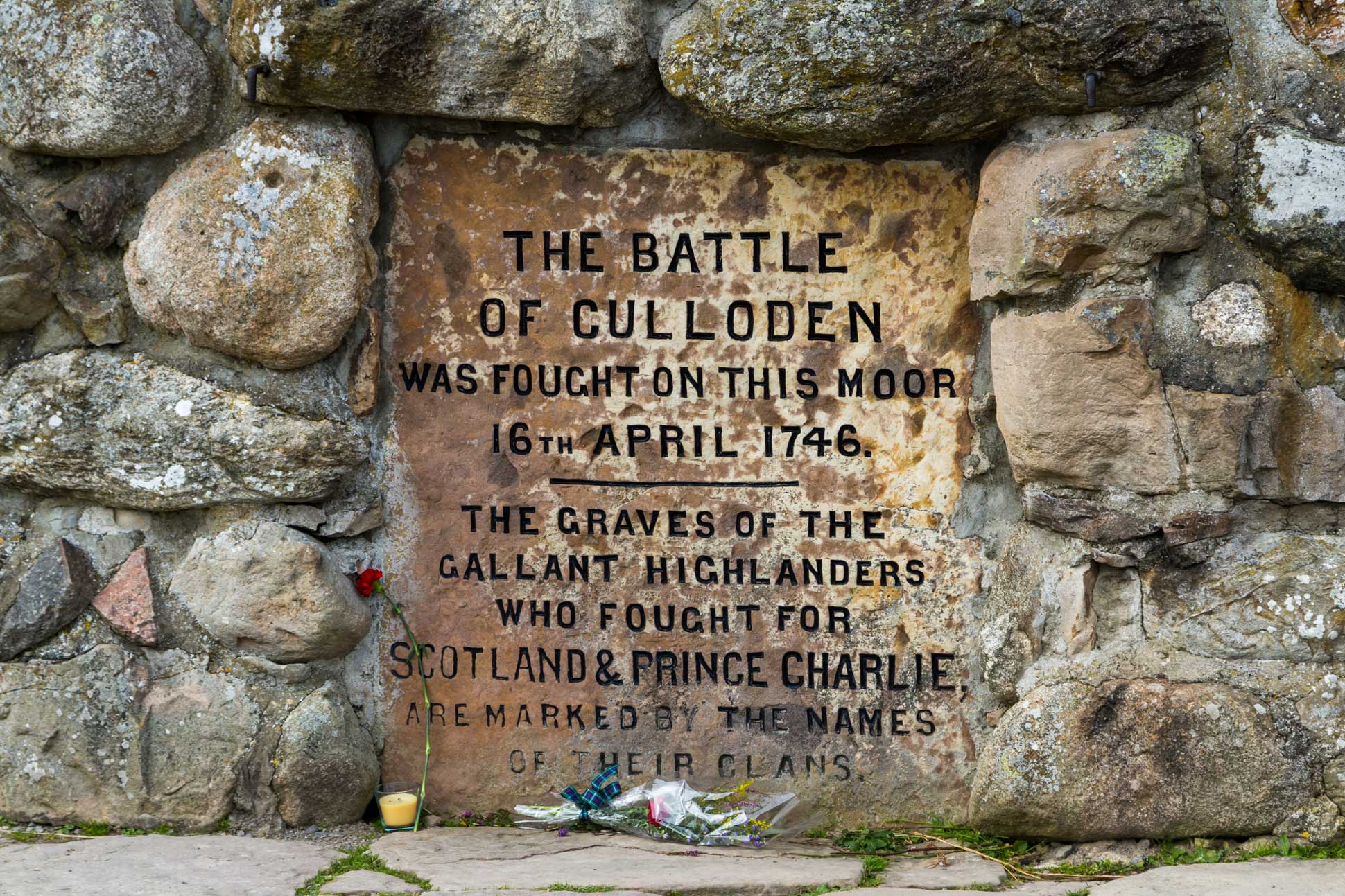
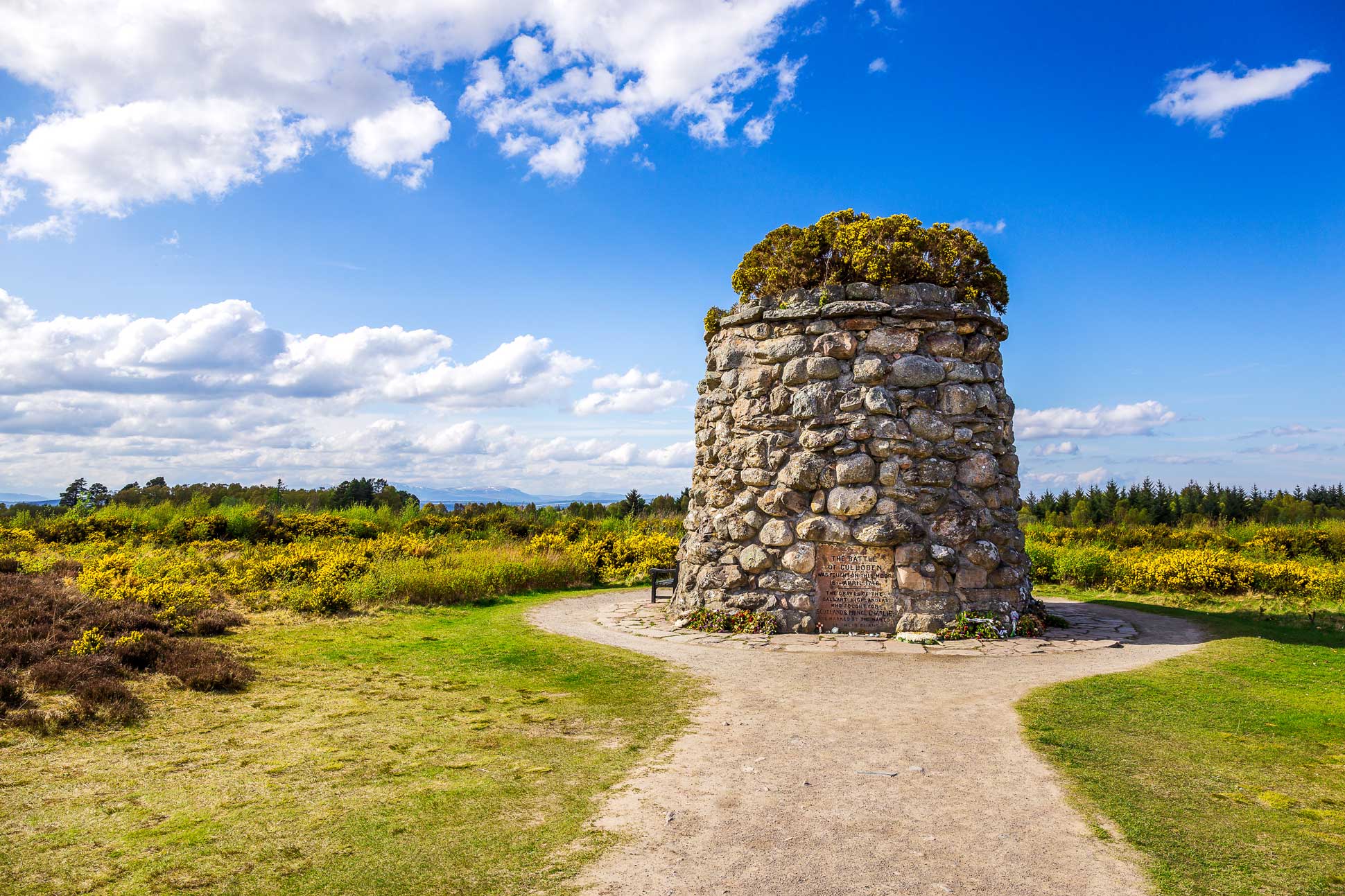
Travel east from Inverness to Culloden Moor — the windswept battlefield where, on 16 April 1746, the last pitched battle ever fought on British soil was decided in under sixty minutes. The exhausted, hungry Jacobite army of Bonnie Prince Charlie was shattered by the Duke of Cumberland’s government forces in a defeat that ended the Jacobite cause, destroyed the Highland clan system, and set in motion the Clearances that would empty the glens of their people for the next century.
Walk among the clan grave markers — each stone bearing the name of a family that left sons on this moor — and visit the outstanding National Trust for Scotland visitor centre, whose telling of this story is among the finest historical experiences in Scotland. The aftermath of Culloden — the banning of tartan, the criminalisation of bagpipes, the burning of homes and the brutal reprisals across the Highlands — is a chapter of Scottish history that every visitor should understand. In Culloden, they do.
Begin the return journey south through the magnificent Cairngorm National Park — the largest national park in the United Kingdom, stretching across 4,528 square kilometres of ancient mountain plateau, Caledonian pine forest, and sweeping Highland glens. Travel through the broad valley of Strathspey, past Aviemore and the high Cairngorm plateau, and south through Perthshire towards Edinburgh or Stirling — stopping as the mood takes you for photographs, a final dram, or simply to stand in the Highland air and let three extraordinary days settle.
Cross the Forth Bridges as the journey draws to a close — the three famous spans of the Forth, each representing a different era of Scottish engineering genius — and arrive home with three days of memories that will stay with you for a very long time.
Ready to experience the very best of Scotland on your own terms? Tell us when you’d like to travel, how many are in your party, and where you’d like your journey to begin. We’ll check availability for your preferred dates and craft a bespoke multi-day itinerary shaped around your interests, pace, and must‑see places. Share a few details below and our expert driver‑guide will be in touch with a personalised proposal, pricing, and suggestions to make your time in Scotland unforgettable.
Max 6 persons
Max 5 suitcases
We look forward to welcoming you to Scotland — personally.