Castles, Islands & the Coastal Way
4-Day Private Tour from Edinburgh
Max 6 persons
Max 5 suitcases
Prices from £650 per day for a group of six persons. T&Cs apply.
Travelling with a larger group? Get in touch4-Day Private Tour from Edinburgh
Max 6 persons
Max 5 suitcases
Prices from £650 per day for a group of six persons. T&Cs apply.
Travelling with a larger group? Get in touchMost visitors to Scotland travel north. This tour turns west — and in doing so discovers a side of the country that rewards the curious traveller with something genuinely different: an island that compresses the entire Highland landscape into 20 miles of coastline, a prehistoric glen containing more ancient monuments per square mile than almost anywhere in Europe, and a coastal journey through Argyll that has been one of the great Scottish drives since the days of the drovers who walked this same route south to market.
Four days carry you from Edinburgh through the heart of Scotland’s royal history at Stirling, across the Firth of Clyde to the Isle of Arran — justly called ‘Scotland in Miniature’ — north through the Kintyre Peninsula and the extraordinary prehistoric landscape of Kilmartin Glen, past Inveraray and Kilchurn Castle to the seafood capital of Oban, and home through Glencoe, the Trossachs, and the royal burgh of Culross before the Forth Bridges announce the return to Edinburgh. A tour of rare variety, rare beauty, and — on Arran especially — a pace and atmosphere that is quietly, completely its own.
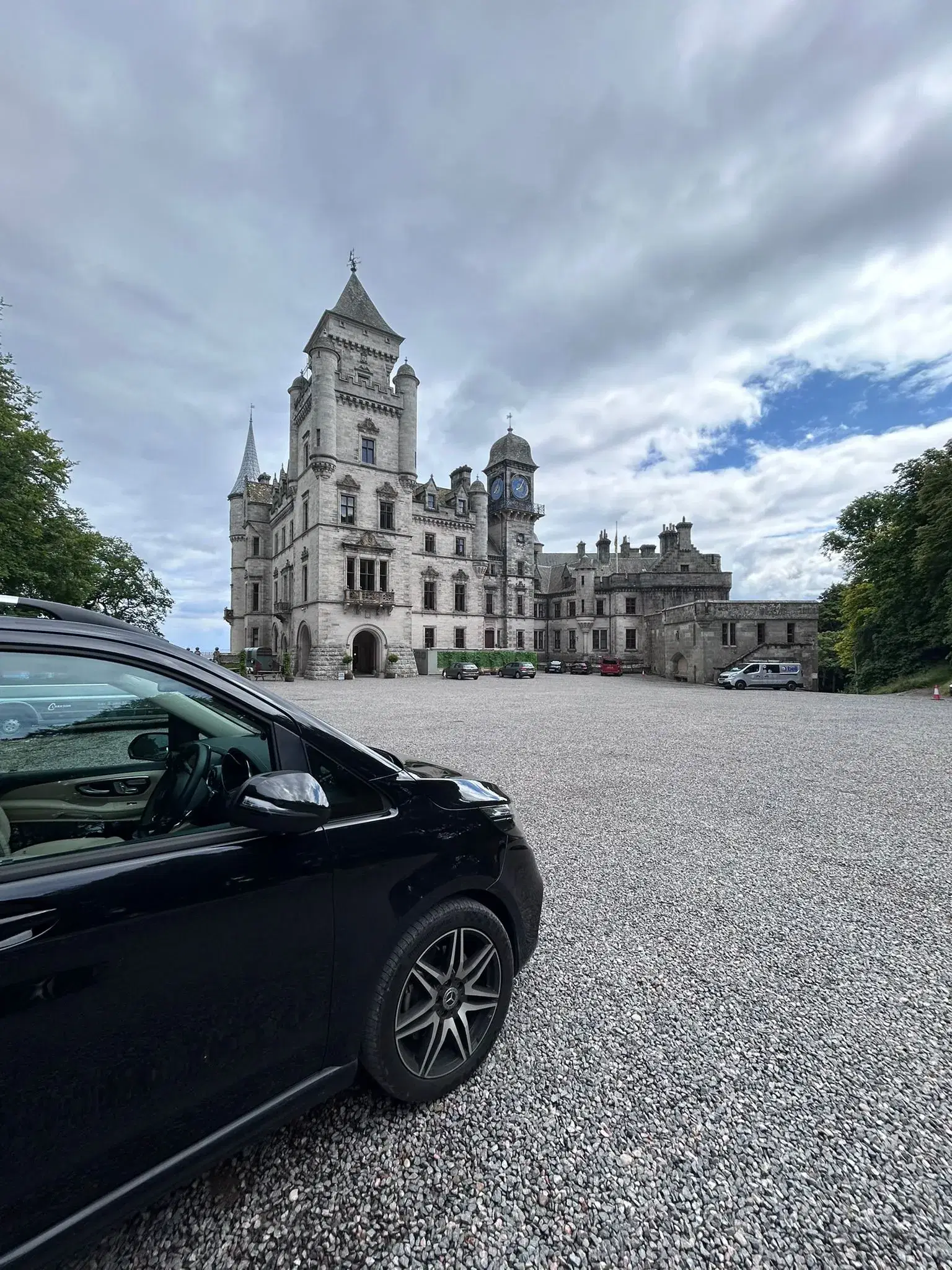
Every mile is guided by Johnny Dreczkowski MBE — honoured by His Majesty The King in June 2025, a proud Scot and professional driver-guide renowned for his storytelling, heritage knowledge, and warm Scottish hospitality — from the seamless comfort of your private new Mercedes V-Class Avantgarde. This is Scotland’s western story — and it is one that most visitors never discover.
Approximately 8 hours including ferry | Edinburgh to Isle of Arran | Overnight: Arran (Night 1)
The first day travels west from Edinburgh through Scotland’s most historically charged landscape — past the castle that controlled the country’s destiny for centuries, through the rolling countryside of Ayrshire, and down to the Clyde coast where the Isle of Arran rises from the firth in a profile of such dramatic peaks and ridges that it looks, from the ferry deck, like a Highland mountain range that someone has placed in the sea. The crossing to Brodick is the moment this tour announces itself — and it does so with considerable style.
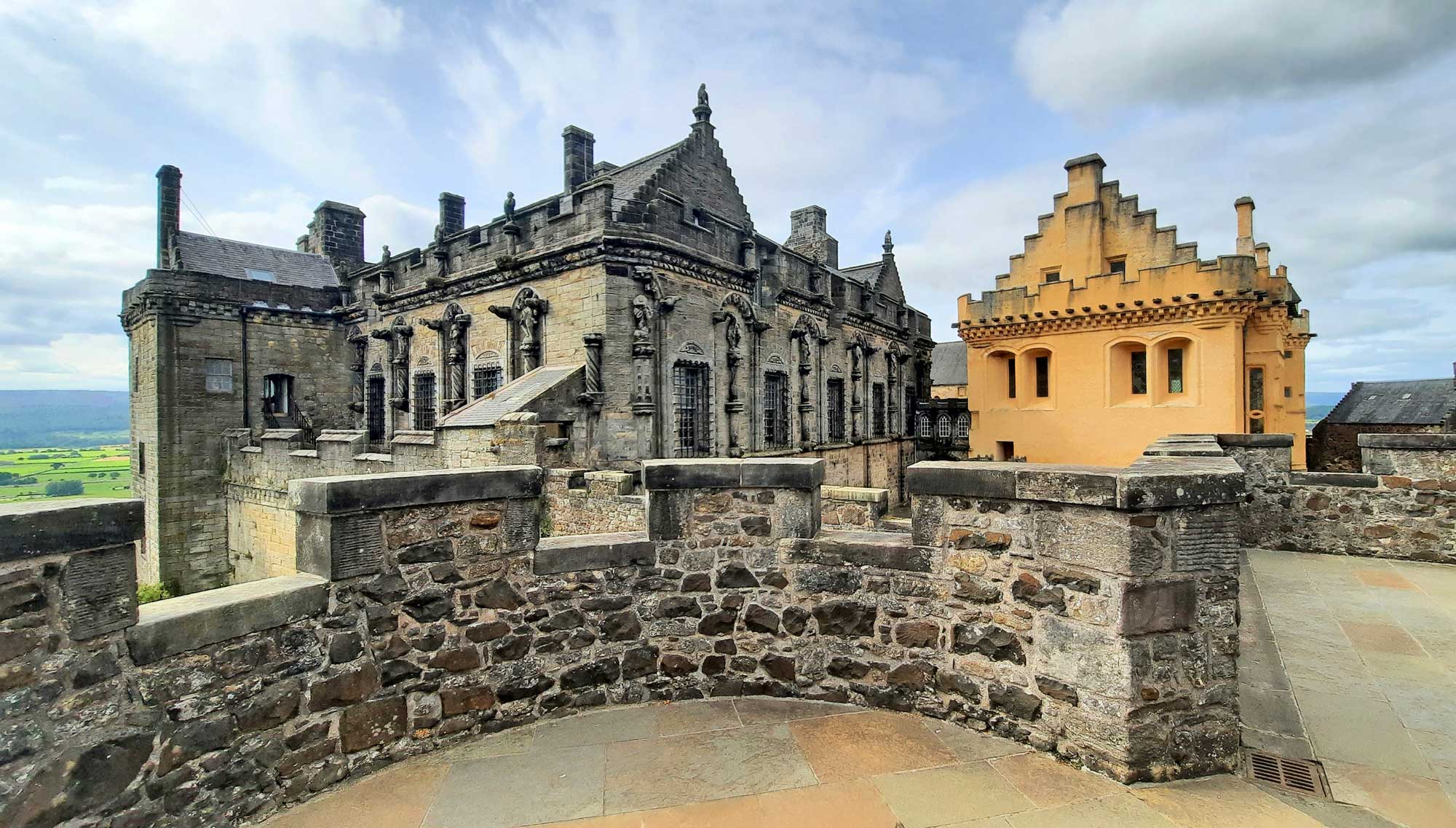
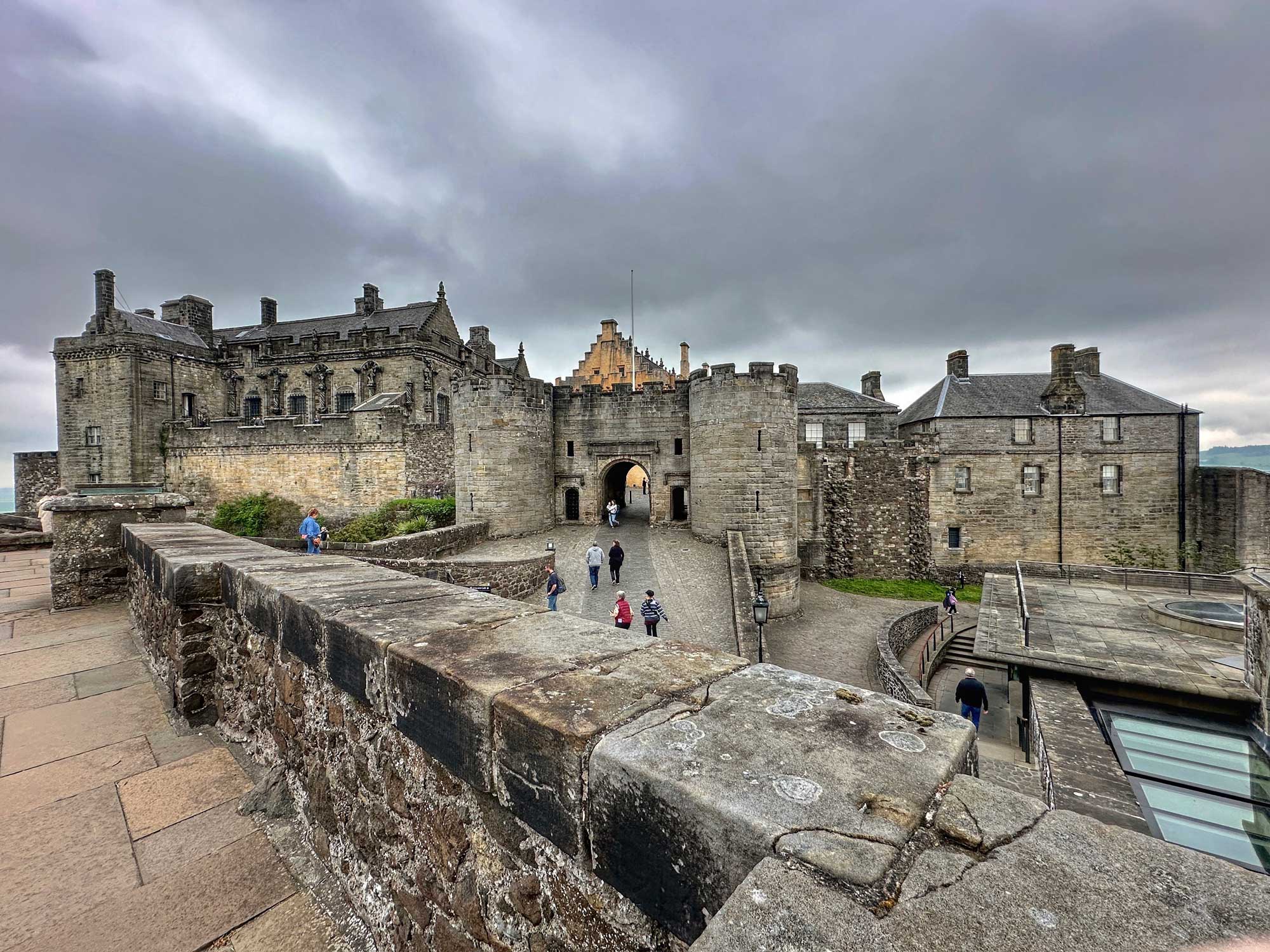
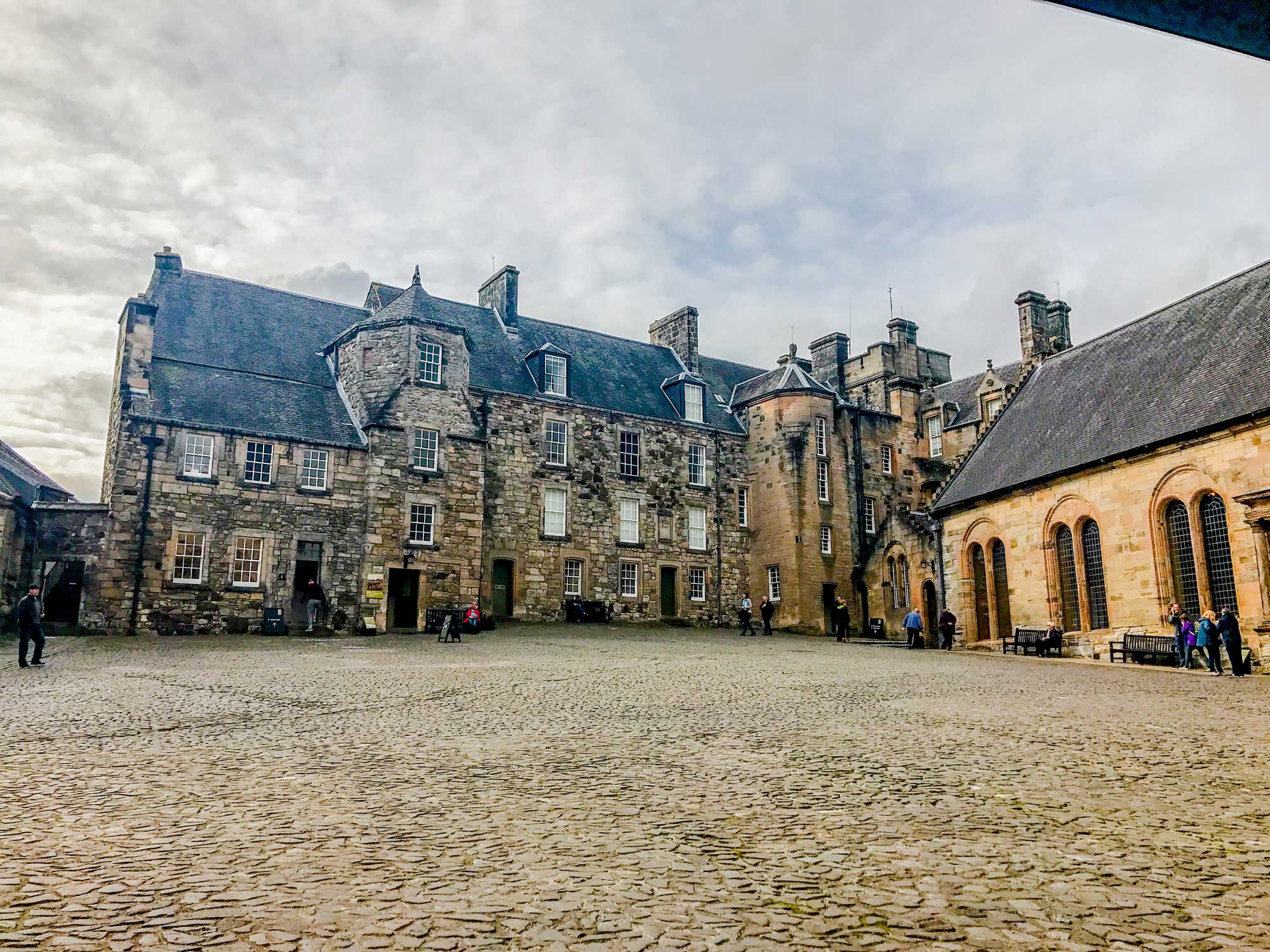
Depart Edinburgh and drive west to Stirling — the strategic fulcrum of Scottish history, whose castle sits on a volcanic rock controlling the only practical crossing of the River Forth for miles in either direction. For centuries, whoever held Stirling held Scotland — and the castle that crowns the crag reflects that significance in every stone. This is, in Johnny’s considered opinion, the finest castle visit in Scotland: the Renaissance Royal Palace built by James V in the 1540s, with its extraordinary Stirling Heads — a series of oak medallion portraits, recently and meticulously recreated in vivid colour after the originals deteriorated beyond display — the Great Hall with its magnificent hammerbeam roof, and the views from the battlements across seven historic battlefields make the experience genuinely exceptional.
Stirling Castle was the childhood home of Mary Queen of Scots, crowned here at just nine months old in September 1543 — the youngest monarch ever to be crowned in Scotland. The great Scottish kings James IV and James V both held court here in magnificent Renaissance style, making Stirling briefly one of the most culturally sophisticated royal courts in northern Europe. The story of this castle is the story of Scotland — and Johnny tells it with the full depth and warmth it deserves.
Continue west through the rolling Ayrshire countryside — the birthplace of Robert Burns, Scotland’s national poet, born at Alloway in 1759. The gentle, agricultural landscape of Ayrshire bears little obvious resemblance to the dramatic Highland scenery that dominates most Scottish tourism, but it has its own quiet beauty — broad river valleys, whitewashed farmhouses, and the Firth of Clyde opening ahead with Arran’s peaks rising on the horizon as you approach the coast. Burns lived his entire short life in this landscape and loved it with the intensity that only a poet can bring to a place — his verses are embedded in every village, every field name, every public house sign between here and the Clyde.
Board the CalMac ferry at Ardrossan for the 55-minute crossing to Brodick on the Isle of Arran. The vessel is CalMac’s MV Glen Sannox — one of the most modern ferries in the Scottish fleet, a state-of-the-art dual-fuel ship with panoramic lounges, spacious open decks, and a remarkably stable, quiet crossing even in the changeable Clyde weather. Named for one of Arran’s most dramatic glens, the Glen Sannox is not merely a ferry but a genuinely pleasant beginning to the island experience — and as Arran’s peaks sharpen from a silhouette into a full mountain landscape during the crossing, the anticipation of what awaits builds in a way that no road approach could achieve.
Arrive in Brodick — Arran’s main village, sheltered below Goat Fell, with Brodick Bay curving south in front of it. Check into the Auchrannie Spa Resort — a four-star country house hotel and the finest property on the island, set in its own grounds above the village with views across the bay and the Firth of Clyde beyond. The spa facilities are outstanding: thermal pools, treatment rooms, and the particular quality of relaxation that comes from being on an island where the pace of life is, by geography and temperament, entirely different from the mainland. Dine at the Auchrannie’s restaurant on Arran’s extraordinary larder — seafood landed at Brodick pier, lamb and beef from the island’s own farms, cheese from the Arran Creamery — and let the island settle around you as the evening light fades over the bay.
Full day on the Isle of Arran | Overnight: Arran (Night 2)
The Isle of Arran — 20 miles long, 10 miles wide, and containing within those dimensions a Highland landscape of genuine mountain drama, a Lowland landscape of rolling farmland, five prehistoric stone circles, a 13th-century castle, two whisky distilleries, seven golf courses, abundant red deer, golden eagles, and sea otters — has earned its nickname of Scotland in Miniature with complete justification. Today the island is entirely yours.
Begin at Brodick Castle — the ancient seat of the Dukes of Hamilton, rising from the wooded slopes above Brodick Bay in a setting of great natural drama. The oldest parts of the castle date from the 13th century, though the building seen today is largely 19th-century, extended by the 11th Duke in 1844 for his wife Princess Marie of Baden. The interior is richly furnished with Hamilton family treasures accumulated over centuries of aristocratic ownership — silver, porcelain, paintings, and sporting trophies — and the walled garden, one of the finest in Scotland, blazes with rhododendrons and azaleas in spring. The woodland trails through the castle grounds offer sweeping views over the bay and, on clear days, across the Firth of Clyde to the mainland hills.
Cross the island to Machrie Moor on the western coast — one of the most atmospheric and most evocative prehistoric landscapes in Scotland, where five distinct stone circles stand on a broad, flat moorland above the Atlantic in a concentration of ancient monuments that has no parallel in the Scottish islands. Dating from between 3500 and 1500 BC, the circles range from the dramatically tall — single standing stones rising to over five metres, their red sandstone glowing in afternoon light — to the low and barely visible, their significance apparent only when you understand what lies beneath: burial cists, cremated remains, and the traces of a community that lived on this moor for two thousand years and used these stones to mark the turning points of their year, their lives, and their deaths. The two-kilometre walk across the moor to reach the circles is, in Johnny’s view, one of the most rewarding short walks in Scotland — the changing light, the sound of the Atlantic, and the gradual revelation of each new circle giving the experience a cumulative power that the individual monuments alone could not achieve.
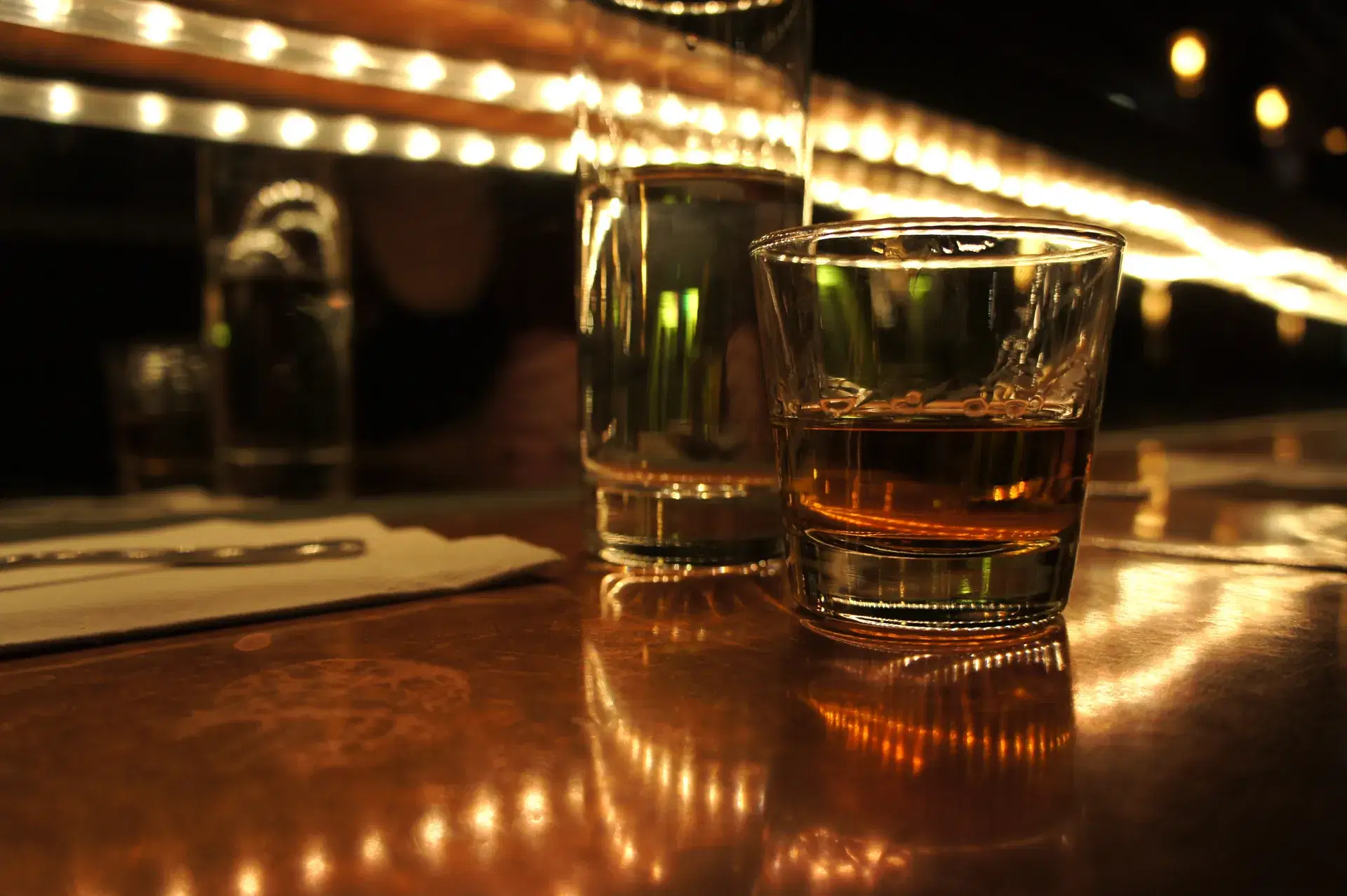
Continue south to Lagg Distillery — established in 2019 on the southern tip of the island and among the most exciting new distilleries in Scotland. Where the original Isle of Arran Distillery at Lochranza produces an unpeated Highland-style malt, Lagg was designed from the outset to produce a heavily peated expression in the tradition of the great Hebridean whiskies — Islay in style, Arran in character, with the island’s own water and climate shaping a spirit of distinctive coastal intensity. The distillery building itself, designed to complement the natural landscape above the rocky southern shoreline, is one of the most architecturally considered in Scotland, and the visitor experience — including guided tours of the production floor and tastings of new-make spirit alongside maturing expressions — is among the most informative and enjoyable available anywhere in the Scottish islands.
The afternoon on Arran is yours — and the island offers possibilities to suit every inclination. For those drawn to the outdoors, a walk into Glen Rosa — the great glacial valley that cuts deep into Arran’s mountain heartland beneath Cir Mhor and the granite ridges of the main ridge — offers the Highland landscape at its most dramatic, with red deer frequently visible on the valley sides and golden eagles occasionally visible above the peaks. For golfers, seven courses ranging from the 18-hole Brodick Golf Club with its bay views to the nine-hole Shiskine Golf & Tennis Club near Blackwaterfoot offer some of the most scenic and characterful island golf in Scotland. For others, the coastal villages — Lamlash with its Holy Island backdrop, Whiting Bay with its falls walk, the Royal Burgh of Brodick itself — reward an unhurried afternoon of exploration at island pace.
Approximately 9 hours including ferry | Arran to Oban via Kintyre, Kilmartin & Inveraray | Overnight: Oban (Night 3)
Day Three makes a short ferry crossing to the Kintyre Peninsula and then travels north through Argyll — one of the longest and most historically rich counties in Scotland, stretching from the Mull of Kintyre to the Great Glen in a succession of sea lochs, forested glens, and Atlantic coastline that has been the heartland of Scottish Gaelic culture since the Kingdom of Dalriada was established here in the 6th century. The journey passes through some of the most important prehistoric and historic sites in Scotland before arriving in Oban as the evening light settles over the bay.
Depart Brodick by the short seasonal CalMac ferry to Claonaig on the Kintyre Peninsula — a 30-minute crossing across Kilbrannan Sound that is one of the most scenic short ferry routes in Scotland, with Arran’s mountain skyline filling the eastern horizon as the heather-covered hills of Kintyre rise ahead. Disembark at Claonaig and begin the drive north through Kintyre — a long, narrow peninsula of exceptional quiet beauty, its single-track roads threading between the hills and the sea, its farms and fishing villages largely undiscovered by mainstream tourism.
Arrive at Kilmartin Glen — one of the most extraordinary prehistoric landscapes in Europe and one of the most important archaeological sites in Scotland. The glen contains over 800 ancient monuments within a six-mile radius: Neolithic and Bronze Age burial cairns arranged in Scotland’s longest linear cemetery, stone circles, standing stones, rock carvings covered in enigmatic cup-and-ring marks that have never been fully explained, and the remains of settlements spanning five millennia of continuous human occupation. The concentration of monuments here surpasses that of almost anywhere else in Britain outside Orkney — and unlike Orkney, Kilmartin Glen is visited by relatively few people, giving the experience a quality of solitary communion with the ancient past that the more famous sites cannot offer.
Kilmartin Museum — recently rebuilt and now one of the finest archaeological museums in Scotland — provides the context that brings the landscape alive: the full timeline of human settlement in the glen, the objects recovered from the cairns and cists, and the current state of archaeological understanding of what all these monuments meant to the people who built them. Johnny’s storytelling in Kilmartin is among the most compelling of the entire tour — because this is a place where the questions are as powerful as the answers.
Continue north to Inveraray — one of the most perfectly preserved planned towns in Scotland, built from scratch in the 1740s by the third Duke of Argyll when he decided to relocate the existing village to improve the view from his new castle. The result is an immaculate Georgian town of white-harled buildings arranged along the shore of Loch Fyne, with the town’s twin-towered church dominating the main street and the loch stretching south between wooded hills to the open Firth. Inveraray is an excellent lunch stop — the Loch Fyne Oyster Bar and several excellent town centre restaurants serve the produce for which this loch is famous, including the Loch Fyne oysters and kippers that have been among the most celebrated in Britain for generations.
Inveraray Castle — the ancestral home of the Dukes of Argyll and the Chiefs of Clan Campbell, one of the most powerful and most controversial clans in Scottish history — sits in its own parkland a short walk from the town, its distinctive Gothic Revival exterior with its four corner towers and central conical spire one of the most recognisable and most photographed castle facades in Scotland. The castle that stands today was begun in 1746 — the same year as the Battle of Culloden, in which the Campbell-led government forces played a decisive role — replacing an earlier fortress on the same site. The State Rooms are among the finest in Scotland: the Armoury Hall, whose walls are decorated with muskets, broadswords, pikes, and axes arranged in elaborate geometric patterns, is extraordinary; the Tapestry Drawing Room and the State Dining Room, prepared for Queen Victoria’s visit of 1877, are magnificent. The castle has also served as a location for Downton Abbey and several Outlander episodes.
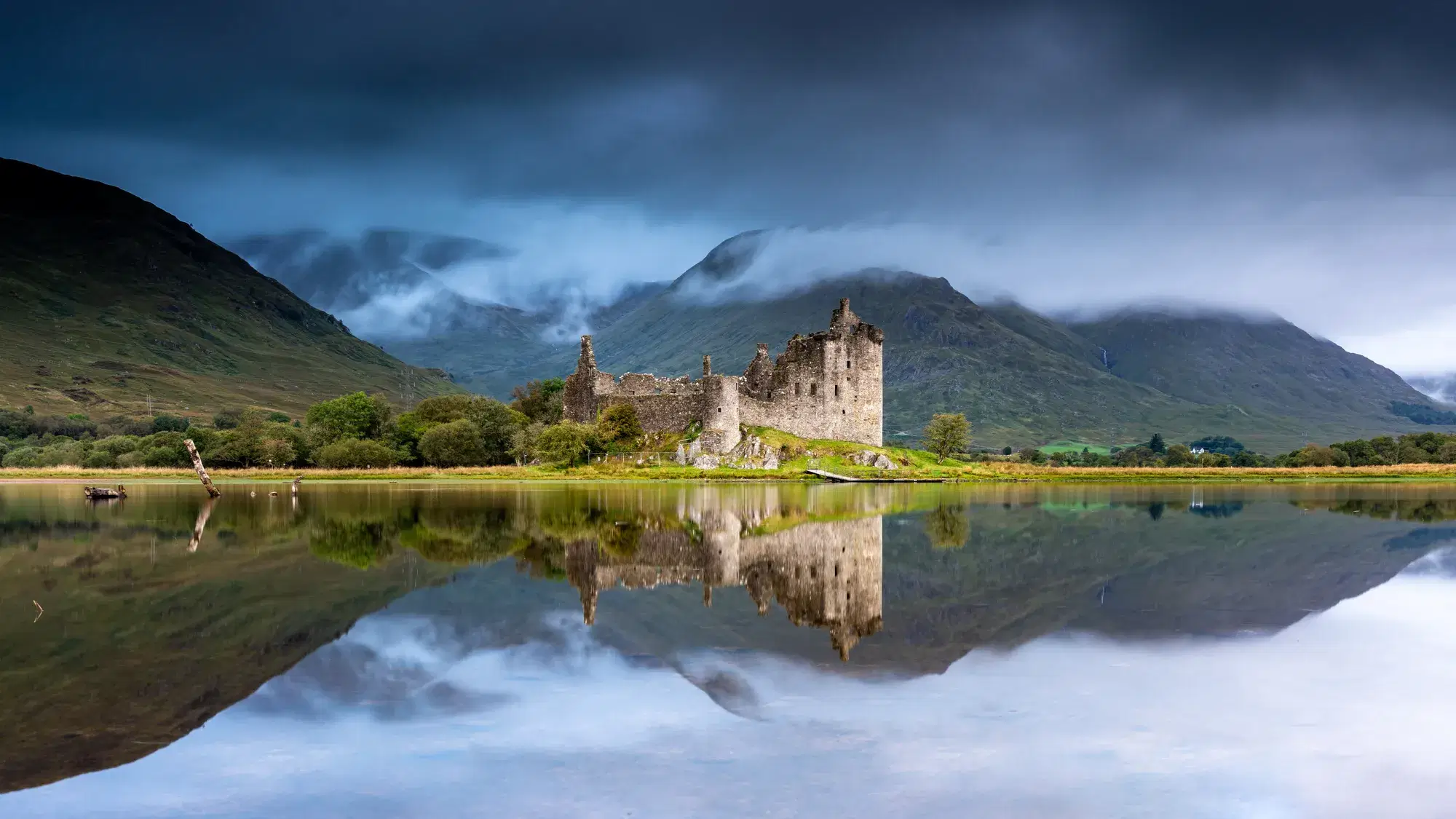
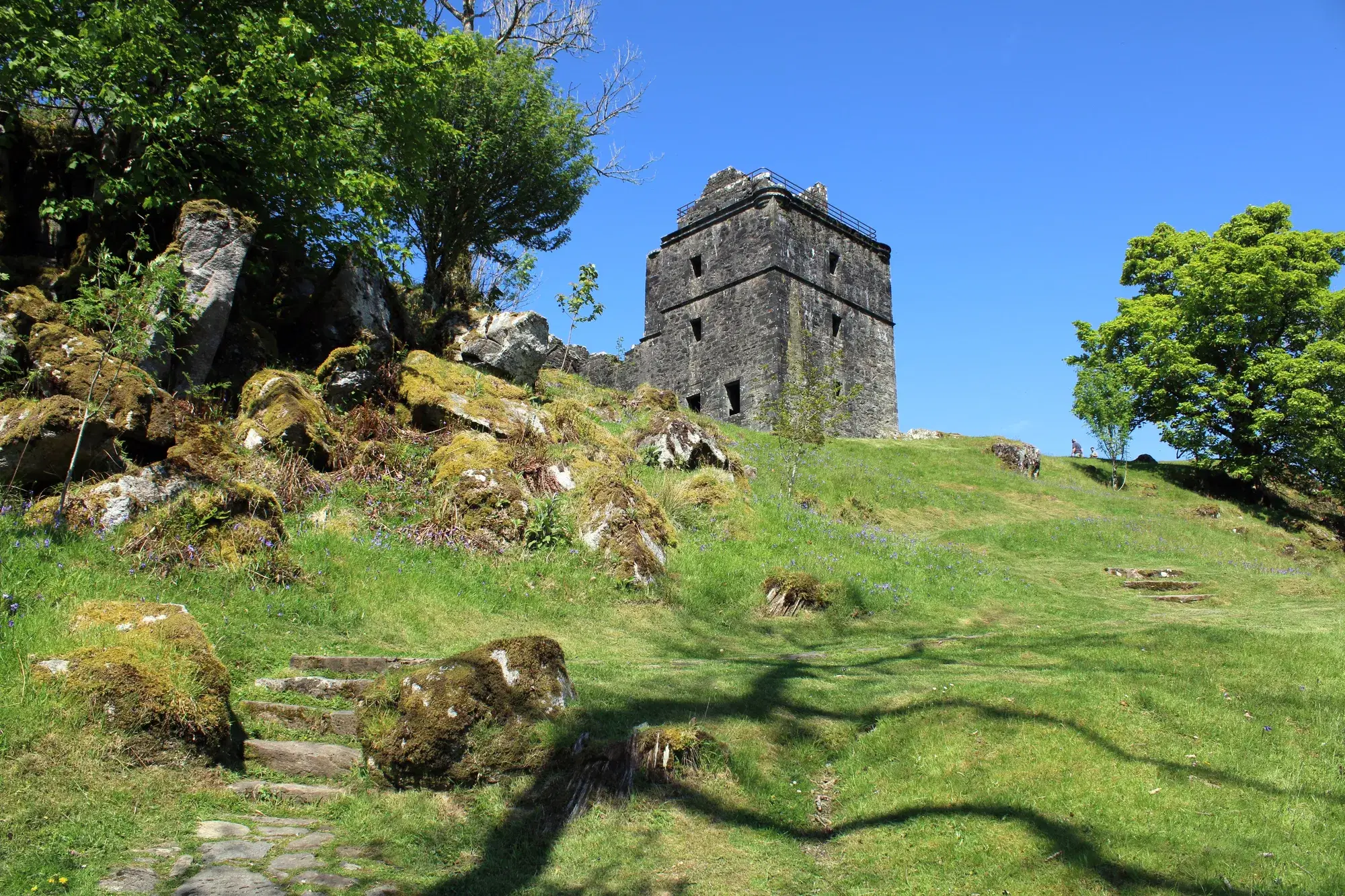
Travel north and then east around the head of Loch Awe to Kilchurn Castle — a 15th-century Campbell fortress rising from a rocky promontory at the head of the loch, its towers and curtain walls reflected in the still dark water with the soaring peak of Ben Cruachan rising behind it. One of the most romantically ruined and most photographed castles in Scotland, Kilchurn was built in 1450 by Sir Colin Campbell, abandoned in 1769, and partially demolished by a lightning strike in the 18th century — leaving a ruin of such picturesque perfection that it has been the subject of paintings and engravings since the Romantic era. Turner painted it. Wordsworth wrote about it. The view from the lochside, with the castle’s reflection breaking in the ripples of the inflow stream, is one of those Scottish landscape moments that stops conversation entirely.
Arrive in Oban as the evening settles over the harbour — the irresistible gateway to the Hebridean Islands, where the Seafood Hut on the pier serves langoustines and scallops caught that same morning, and McCaig’s Victorian folly crowns the hill above the bay. Check into No 17 The Promenade — a boutique waterfront hotel whose individually styled rooms, many with direct sea views across the bay to the islands of Kerrera and Mull, are among the finest in the town. Dine superbly on Oban’s outstanding seafood — the town’s position at the junction of the major Hebridean ferry routes makes it the distribution point for the finest shellfish in Scotland — and let the sound of the harbour settle you into your last evening of the tour.
Approximately 9 hours | Oban to Edinburgh via Glencoe, Trossachs & Culross | Return to Edinburgh
The final day of this western journey turns for home — but does so through some of the most dramatic and most storied landscapes in Scotland, pausing first for a morning dram in one of the oldest distilleries in the country before the road rises into the majesty of Glencoe, threads the literary landscape of the Trossachs, and traces the Fife Coast through the most perfectly preserved 17th-century village in Scotland. By the time the Forth Bridges announce Edinburgh’s return, the tour has gathered everything Scotland’s western and central landscape has to offer into a single, deeply satisfying final day.
Begin the final morning at Oban Distillery — one of the oldest distilleries in Scotland, established in 1794 and operating continuously for over 230 years in the heart of the town, its pagoda roofs visible from the bay and its production floor a short walk from the harbour. Oban single malt is the definitive west Highland coastal whisky — lightly peated, maritime, with notes of sea salt, heather honey, and dried fruit that reflect the particular character of this coastline. The distillery is unusually compact and unusually atmospheric: the production floor has barely changed in a century, the stills are among the smallest in Scotland, and the guided experience gives a genuine insight into the craft of whisky-making at human scale. A morning dram overlooking the bay before the drive south is one of the finest ways in Scotland to begin a day’s journey.
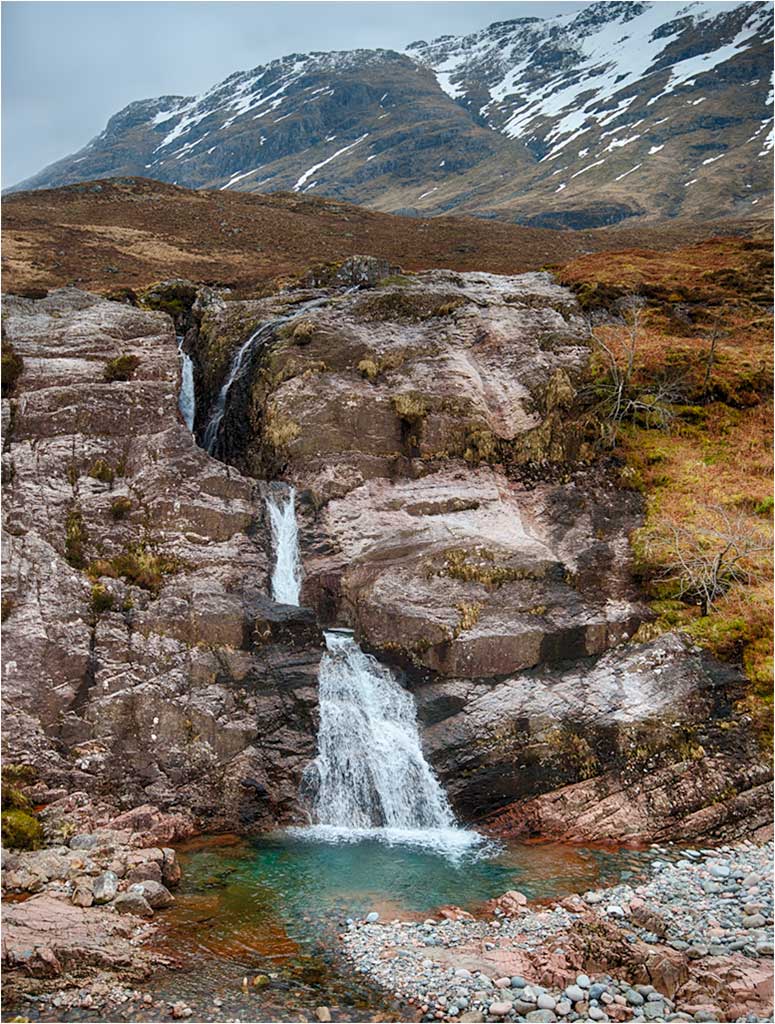
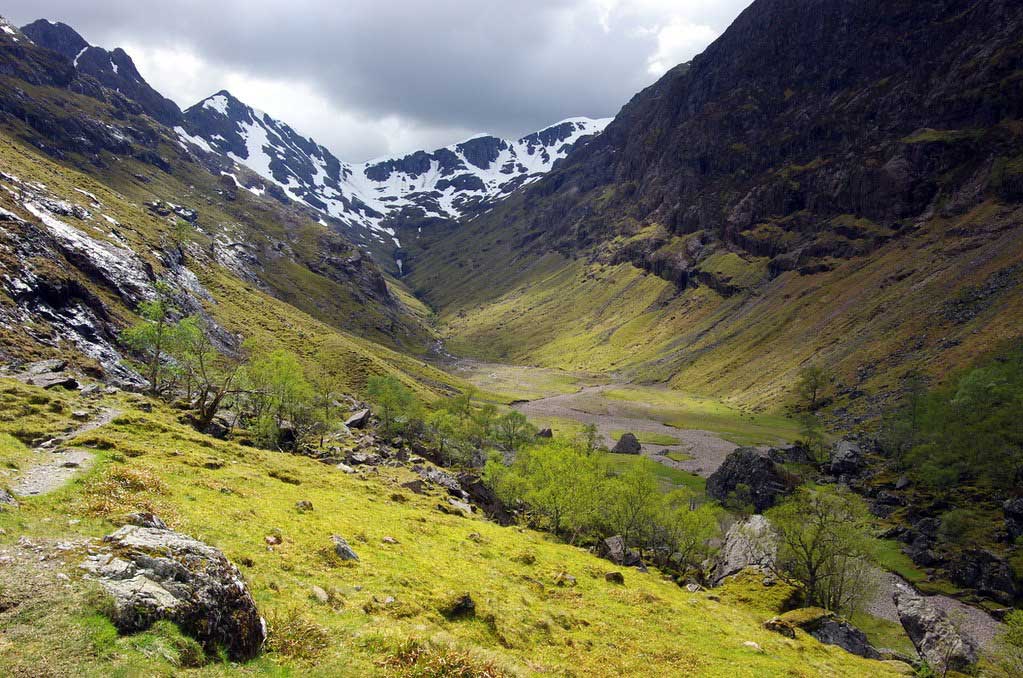
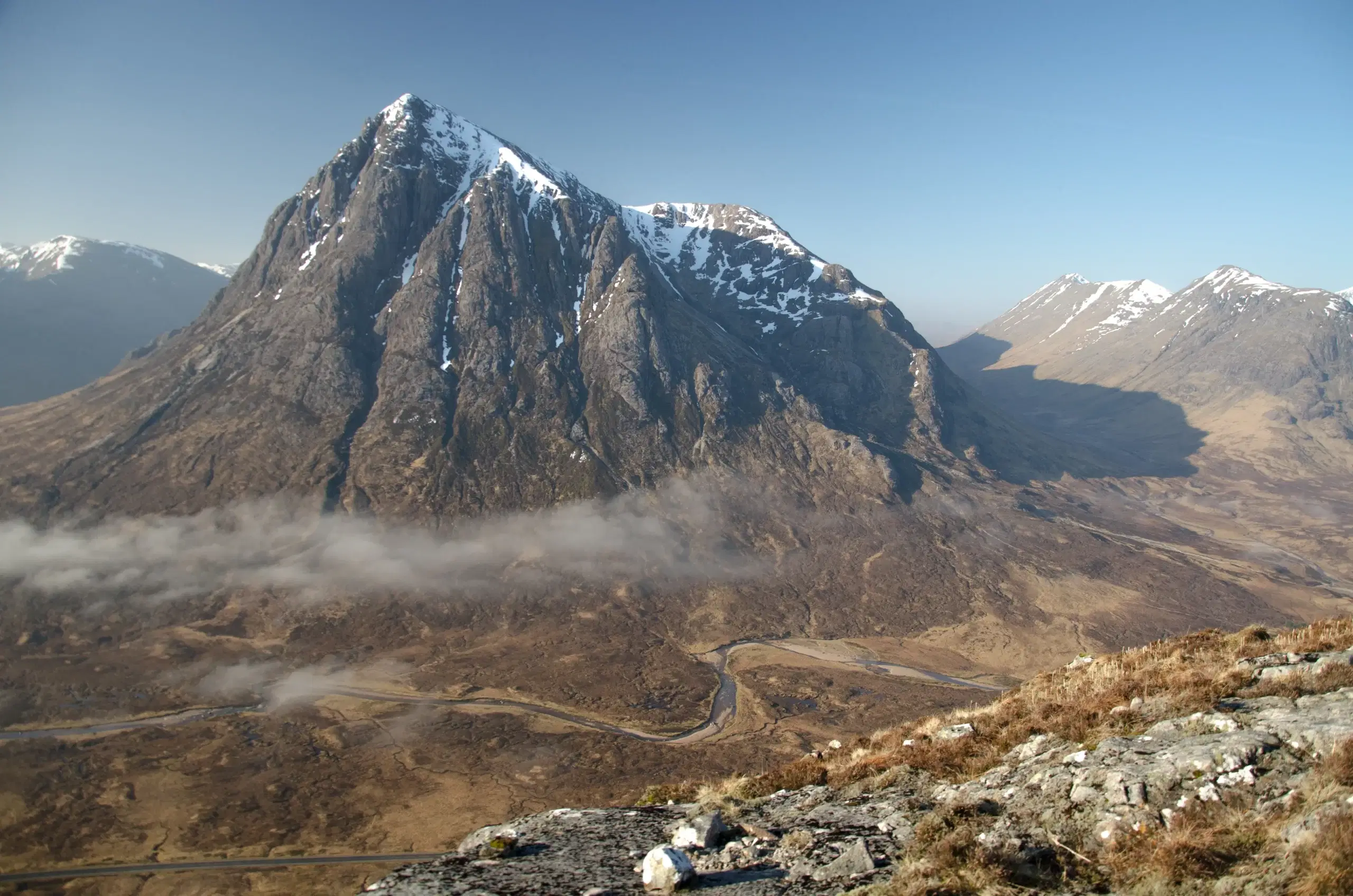
Drive south from Oban along the coast and into Glencoe — where the mountains close in on every side and the valley carries the weight of one of the most infamous acts of treachery in Highland history. On 13 February 1692, government soldiers of Clan Campbell — having accepted twelve days of MacDonald hospitality, eating at their hosts’ tables and sleeping beneath their roofs — rose before dawn on government orders and murdered 38 sleeping members of the MacDonald clan. The rest fled into a February blizzard; many more died of exposure on the surrounding hills. The Three Sisters — Gearr Aonach, Aonach Dubh, and Beinn Fhada — rise above the valley floor in one of Scotland’s most immediately recognisable and most photographed mountain panoramas, their scale and drama perfectly matching the gravity of the history that unfolded beneath them.
Continue south through the Loch Lomond and Trossachs National Park — the landscape that Sir Walter Scott chose as the setting for ‘The Lady of the Lake’ in 1810 and ‘Rob Roy’ in 1817, poems and novels that single-handedly created the Scottish tourist industry by making this region the most fashionable destination in Britain for a generation of Romantic-era travellers. The road passes Loch Lubnaig — a narrow, deep loch enclosed between forested hillsides — and through the charming gateway town of Callander before continuing south through the Highland Boundary Fault, the ancient geological line that divides Highland from Lowland Scotland as precisely as any drawn border. The Trossachs are at their most beautiful in autumn, when the oak and birch woodlands turn gold and amber above the dark lochs — but in any season they offer a gentler, more intimate Highland landscape that provides the perfect transition between the drama of Glencoe and the history ahead.
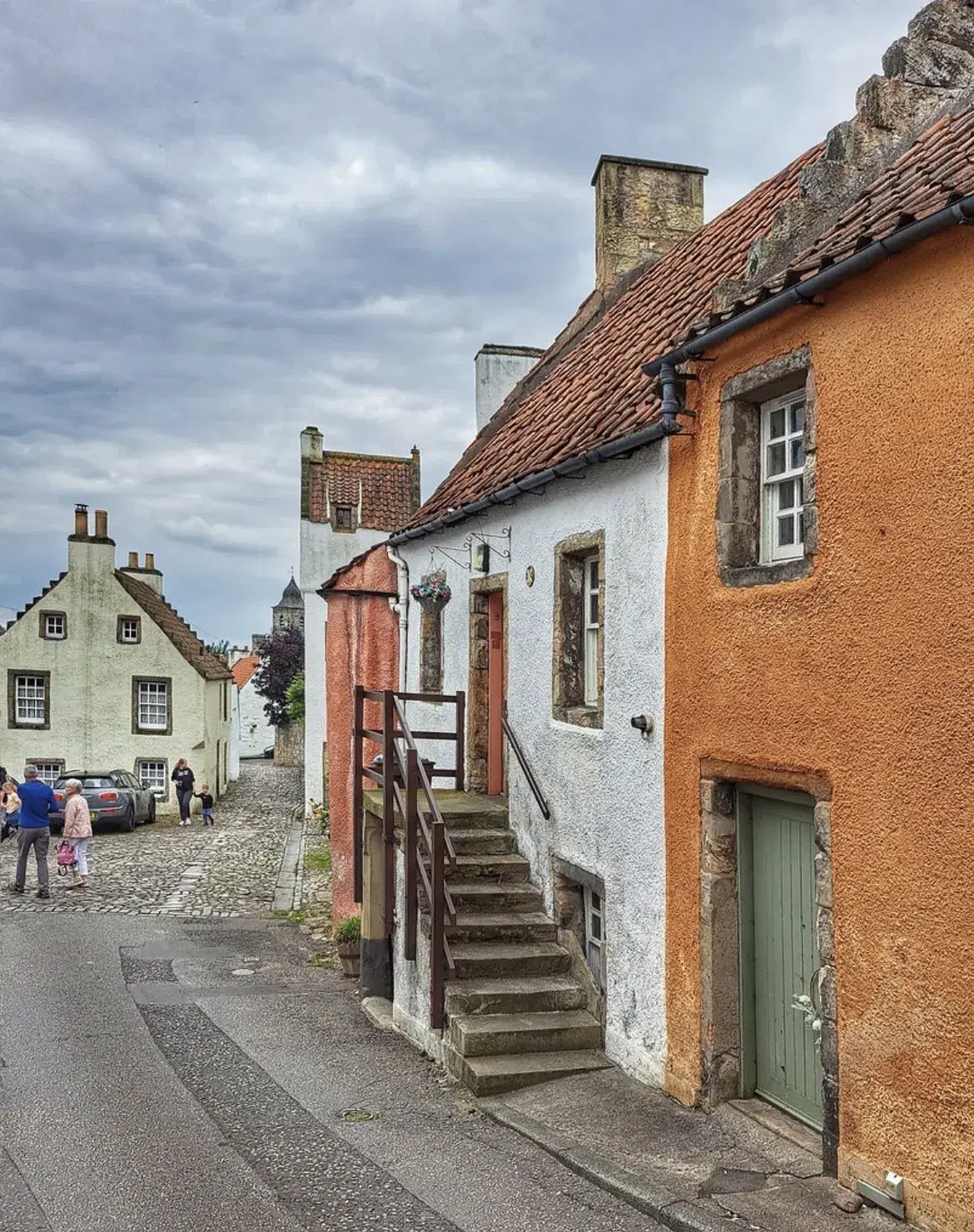
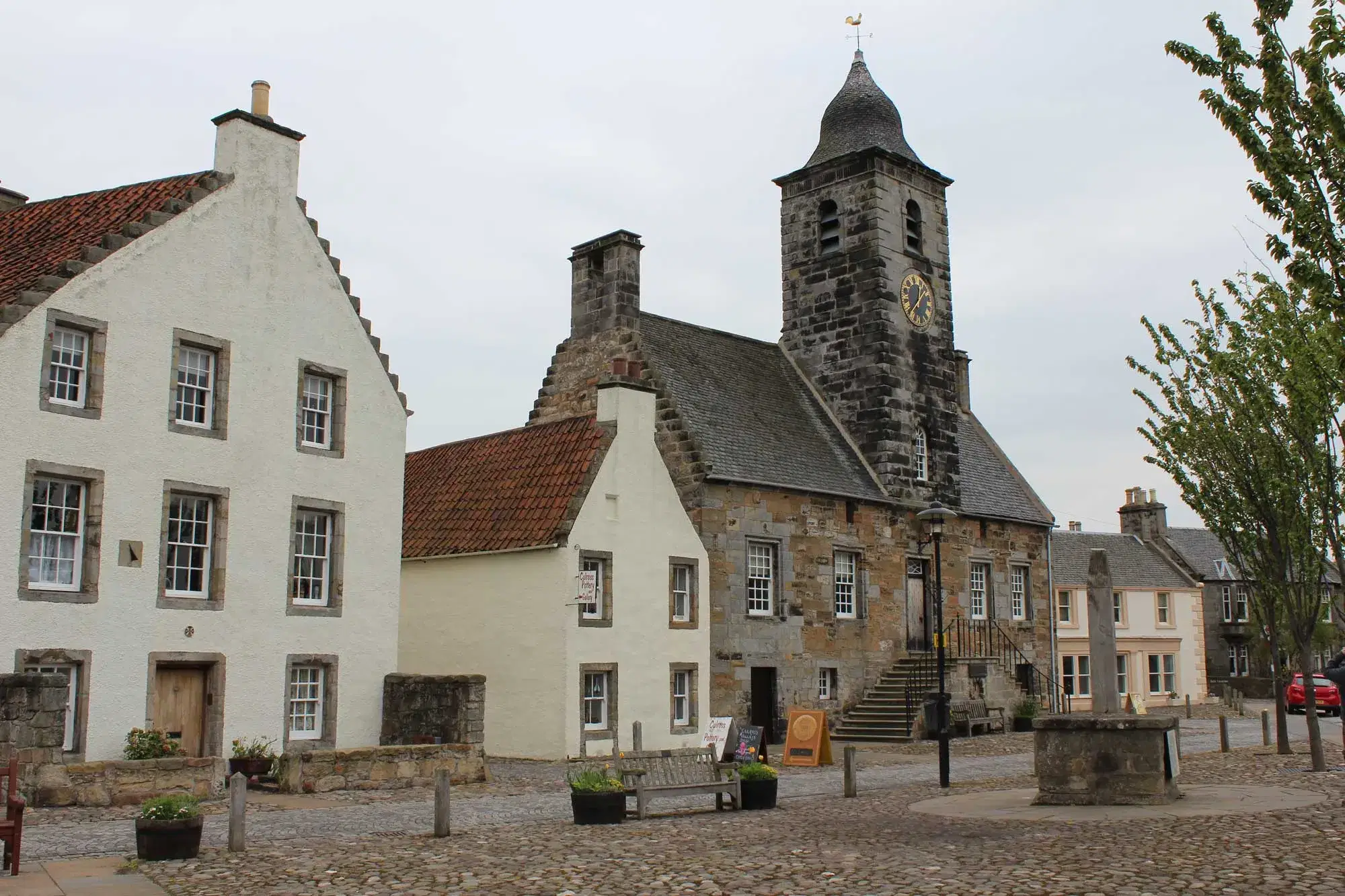
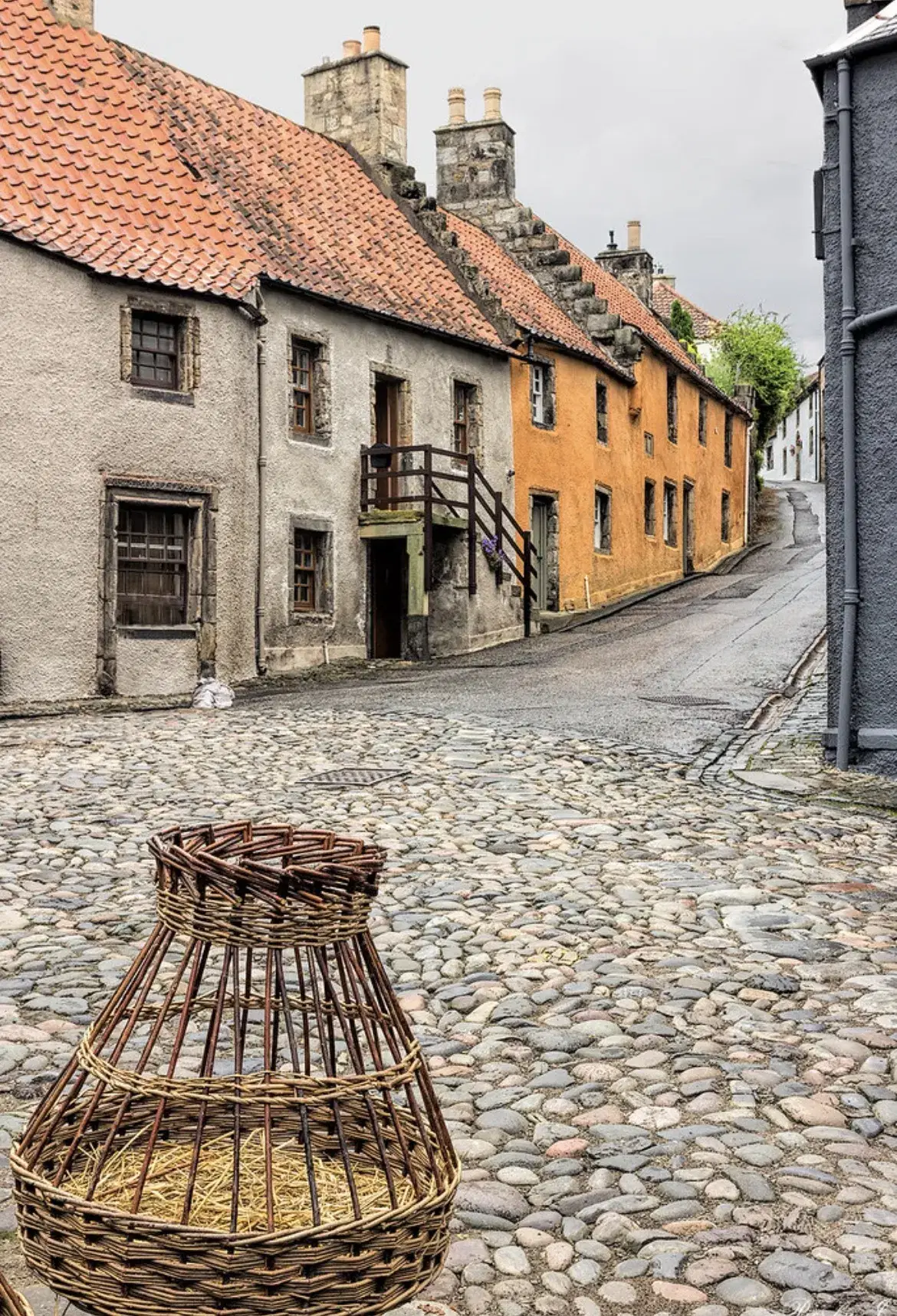
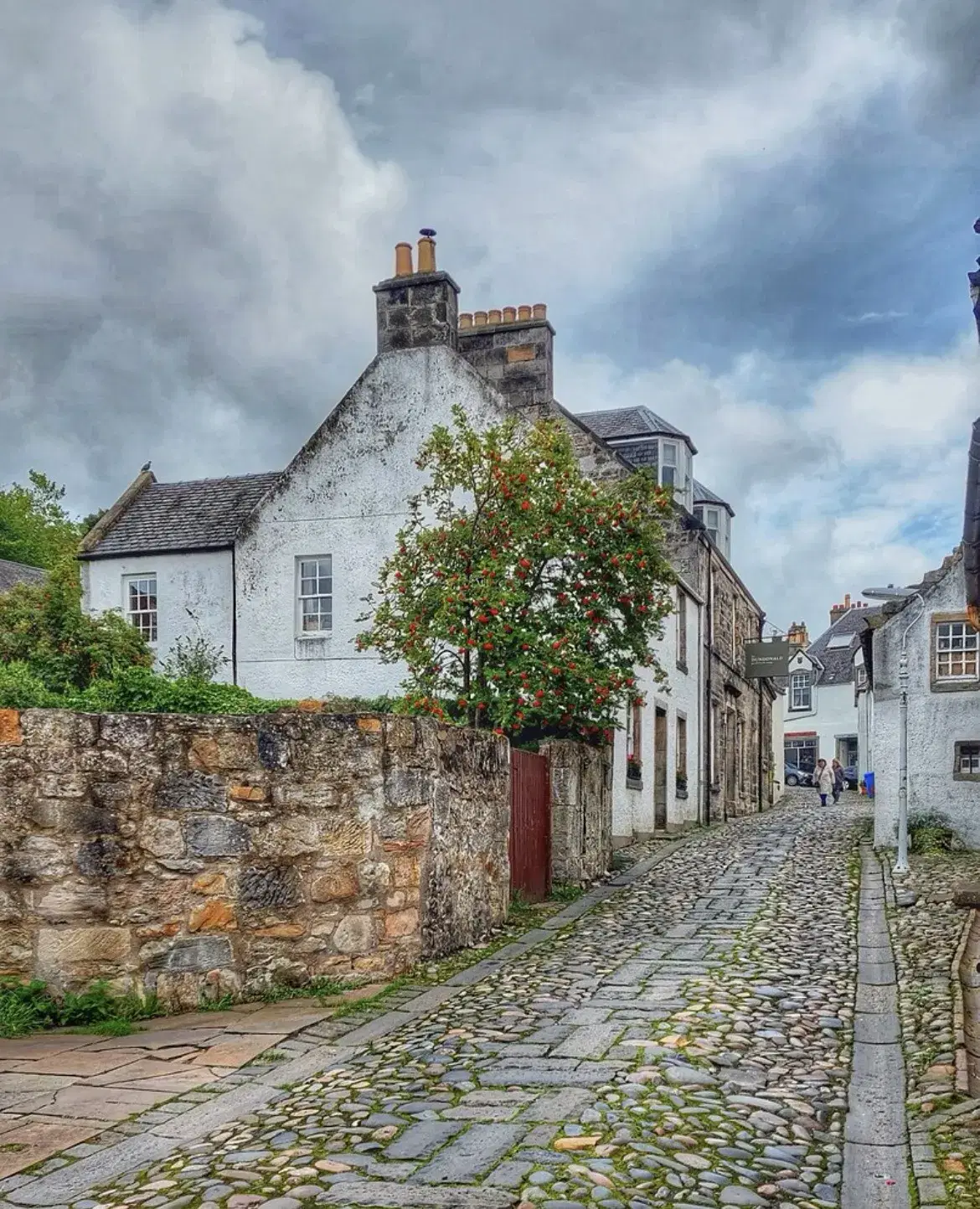
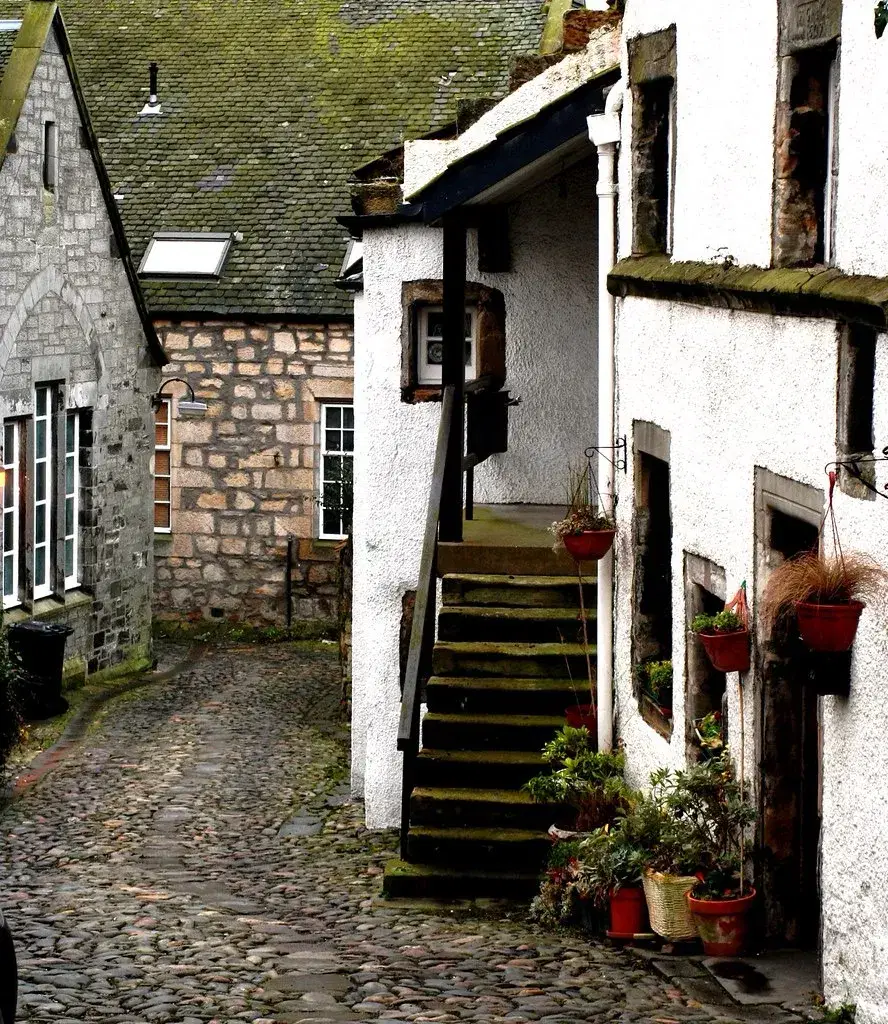
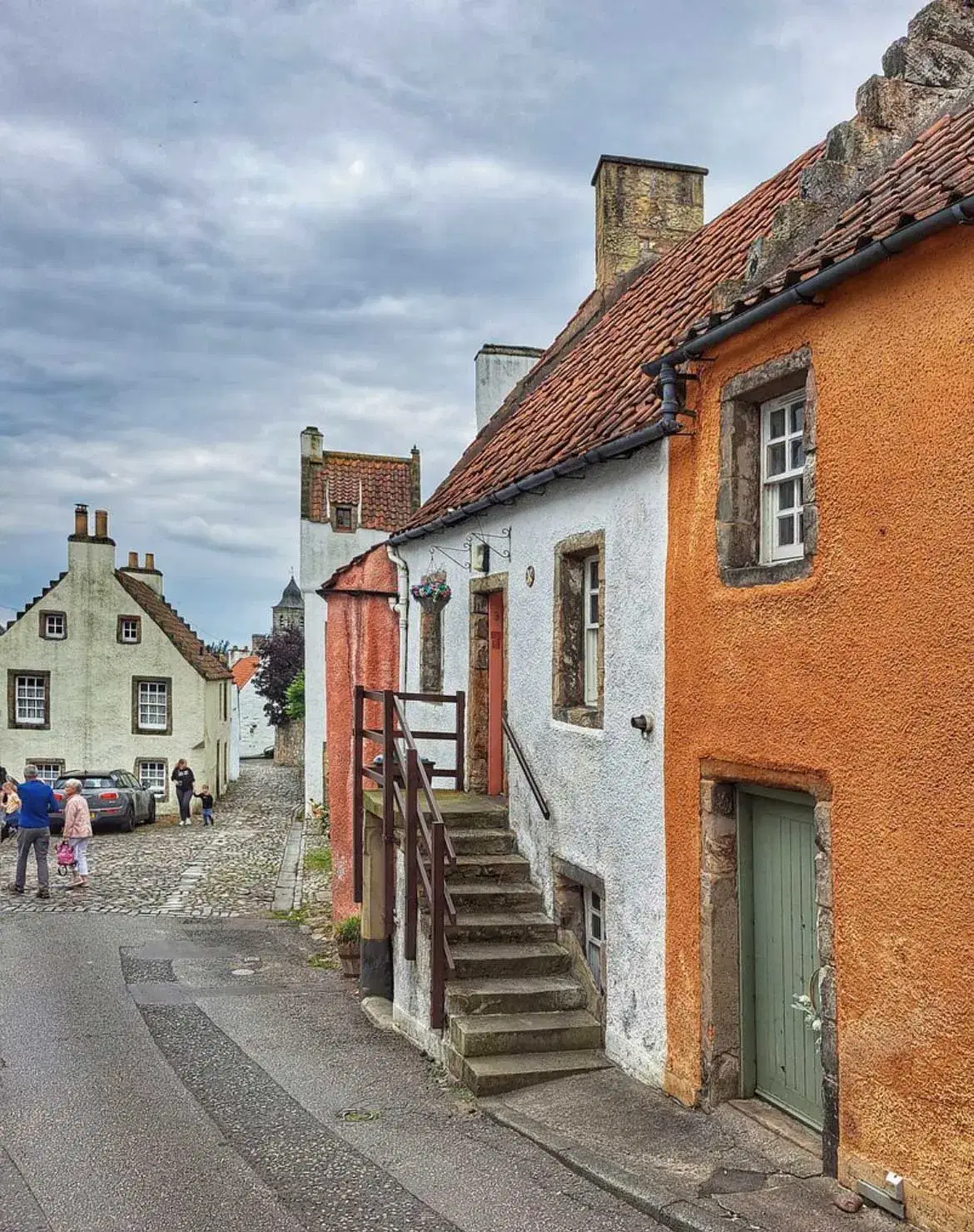
Drop down to the Fife shore of the Forth estuary and the royal burgh of Culross — the most completely preserved 16th and 17th-century town in Scotland, its cobbled streets, whitewashed and ochre-painted merchants’ houses, and the Culross Palace — built between 1597 and 1611 for Sir George Bruce, whose coal-mining and salt-panning enterprises made him one of the wealthiest men in Scotland — surviving in a state of remarkable completeness that no other Scottish town of comparable age can match. The National Trust for Scotland has been quietly restoring Culross since the 1930s, and the result is a town that feels genuinely inhabited rather than preserved — residents live in the historic buildings, cats sit in the wynds, and the harbour gives onto the Forth with the same view it has offered for four centuries.
Outlander fans will recognise Culross immediately: the town served as the fictional village of Cranesmuir throughout the first series, with the Mercat Cross appearing as the site of the witch trial and the Palace garden serving as Claire’s herb garden at Castle Leoch. But Culross earns its place on this tour entirely independently of its television connections — it is simply one of the most beautiful and most atmospheric small towns in Scotland, and an hour spent walking its streets is an hour that rewards fully.
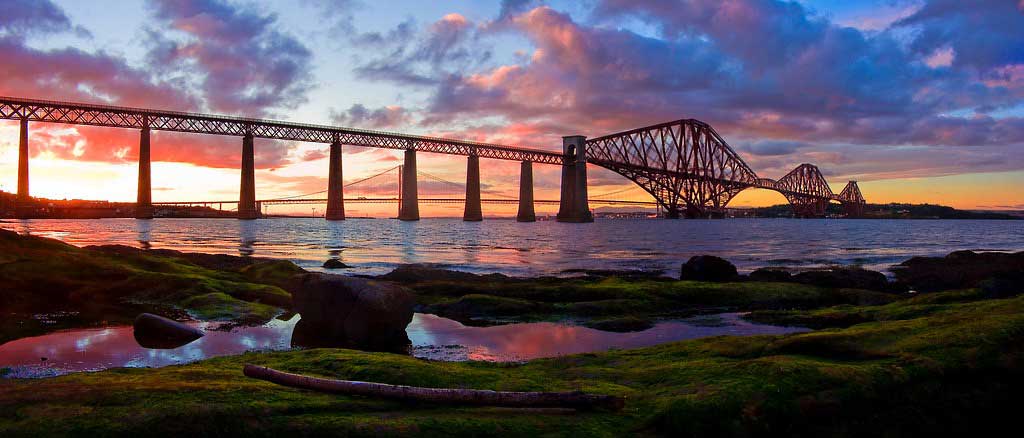
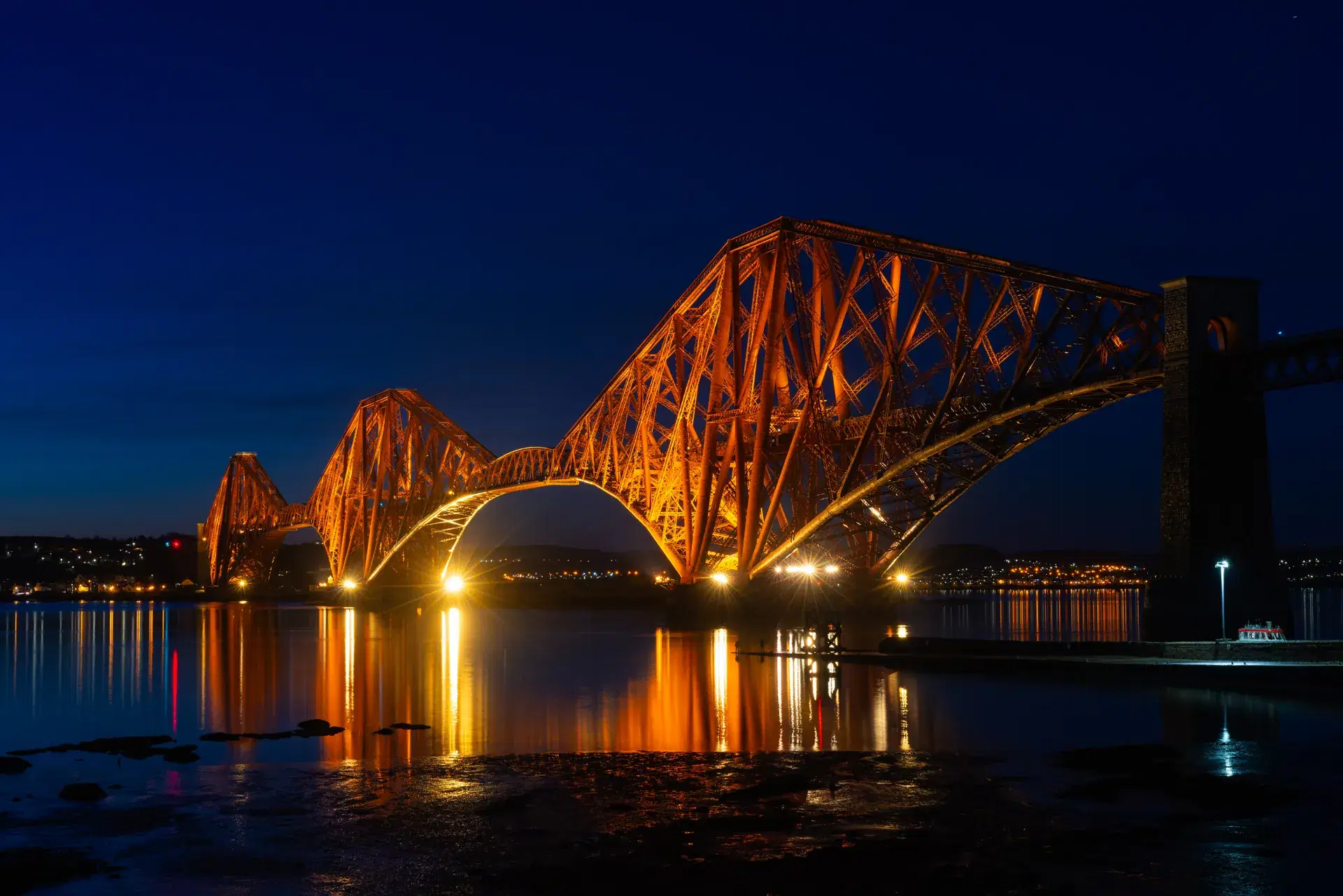
The final miles bring you to South Queensferry and the three Forth crossings — three centuries of Scottish engineering genius standing side by side above the Firth. The Forth Rail Bridge — completed in 1890, UNESCO World Heritage Site, and still one of the most recognisable structures on earth — pioneered the cantilever construction technique that transformed bridge-building worldwide. The Forth Road Bridge (1964) and the cable-stayed Queensferry Crossing (2017) complete a trio whose combined span covers 130 years of Scottish innovation. Crossing the Queensferry Crossing on the final approach to Edinburgh — with the iconic red lattice of the Rail Bridge to your left and the city ahead — is a fitting conclusion to four days of Scottish history, landscape, and island life at its finest.
Arrive back in Edinburgh — where four days of castles, islands, prehistoric mysteries, coastal whisky, and Highland drama began. Johnny will answer any final questions, share recommendations for the rest of your time in Scotland, and ensure your seamless drop-off at your Edinburgh accommodation. Four days. One island. Scotland’s entire western story.
Ready to experience the very best of Scotland on your own terms? Tell us when you’d like to travel, how many are in your party, and where you’d like your journey to begin. We’ll check availability for your preferred dates and craft a bespoke multi-day itinerary shaped around your interests, pace, and must‑see places. Share a few details below and our expert driver‑guide will be in touch with a personalised proposal, pricing, and suggestions to make your time in Scotland unforgettable.
Max 6 persons
Max 5 suitcases
We look forward to welcoming you to Scotland — personally.