Beyond the Mainland
5-Day Private Journey to the Orkney Islands from Edinburgh
Max 6 persons
Max 5 suitcases
Prices from £650 per day for a group of six persons. T&Cs apply.
Travelling with a larger group? Get in touch5-Day Private Journey to the Orkney Islands from Edinburgh
Max 6 persons
Max 5 suitcases
Prices from £650 per day for a group of six persons. T&Cs apply.
Travelling with a larger group? Get in touchThere is a moment on the ferry crossing from John O’Groats to Burwick — the Pentland Firth opening around you, the Orkney archipelago rising from the sea ahead, the Scottish mainland receding behind — when it becomes clear that this is not an ordinary journey. Orkney is not simply a remote corner of Scotland. It is a separate world: an archipelago of 70 islands shaped more by Norse culture than Scottish, presiding over a concentration of Neolithic monuments so extraordinary that UNESCO has designated the Heart of Neolithic Orkney a World Heritage Site. Skara Brae, the Ring of Brodgar, Maeshowe, and the Stones of Stenness together constitute one of the most important prehistoric landscapes on earth — and they are experienced here, on this tour, not as a day trip but with three full days of island time that allow them to be properly understood and properly felt.
The journey north from Edinburgh is itself a significant part of the experience — travelling through the wooded gorges of Perthshire, the gleaming turrets of Blair Castle, the living Highland township of Newtonmore, and the extraordinary east coast drive through Caithness past Dunrobin Castle and the 365 carved cliff steps of Whaligoe. The return south gives you the Great Glen at its most dramatic — Loch Ness, Urquhart Castle, and Glencoe — completing a journey that covers more of Scotland’s story, more of its landscape, and more of its deep prehistory than almost any other five-day itinerary available.
Every mile is guided by Johnny Dreczkowski MBE — honoured by His Majesty The King in June 2025, a proud Scot and professional driver-guide renowned for his storytelling, heritage knowledge, and warm Scottish hospitality — from the seamless comfort of your private new Mercedes V-Class Avantgarde. Five days. Seventy islands. Five thousand years of human history — experienced properly, privately, and at its very best.
Approximately 9 hours | Edinburgh to Inverness | Overnight: Inverness (Night 1)
The journey to Orkney begins by heading north through the Highland heartland — past the wooded gorges of Perthshire, into the grandest privately occupied castle in Scotland, through a living Highland township where four centuries of island life have been meticulously reconstructed, and on to Inverness as evening settles over the river. Day One is a Highland day of considerable depth and variety — and by the time you arrive in the Highland capital, the north of Scotland has already begun to reveal its extraordinary character.
Depart Edinburgh via South Queensferry and the three Forth crossings — where three centuries of Scottish engineering genius stand side by side above the Firth of Forth. The Forth Rail Bridge, completed in 1890 and now a UNESCO World Heritage Site, pioneered the cantilever construction technique that transformed bridge-building worldwide. Cross into the ancient Kingdom of Fife and travel north through Perthshire — the landscape opening progressively into the broader, more dramatic country of the central Highlands.
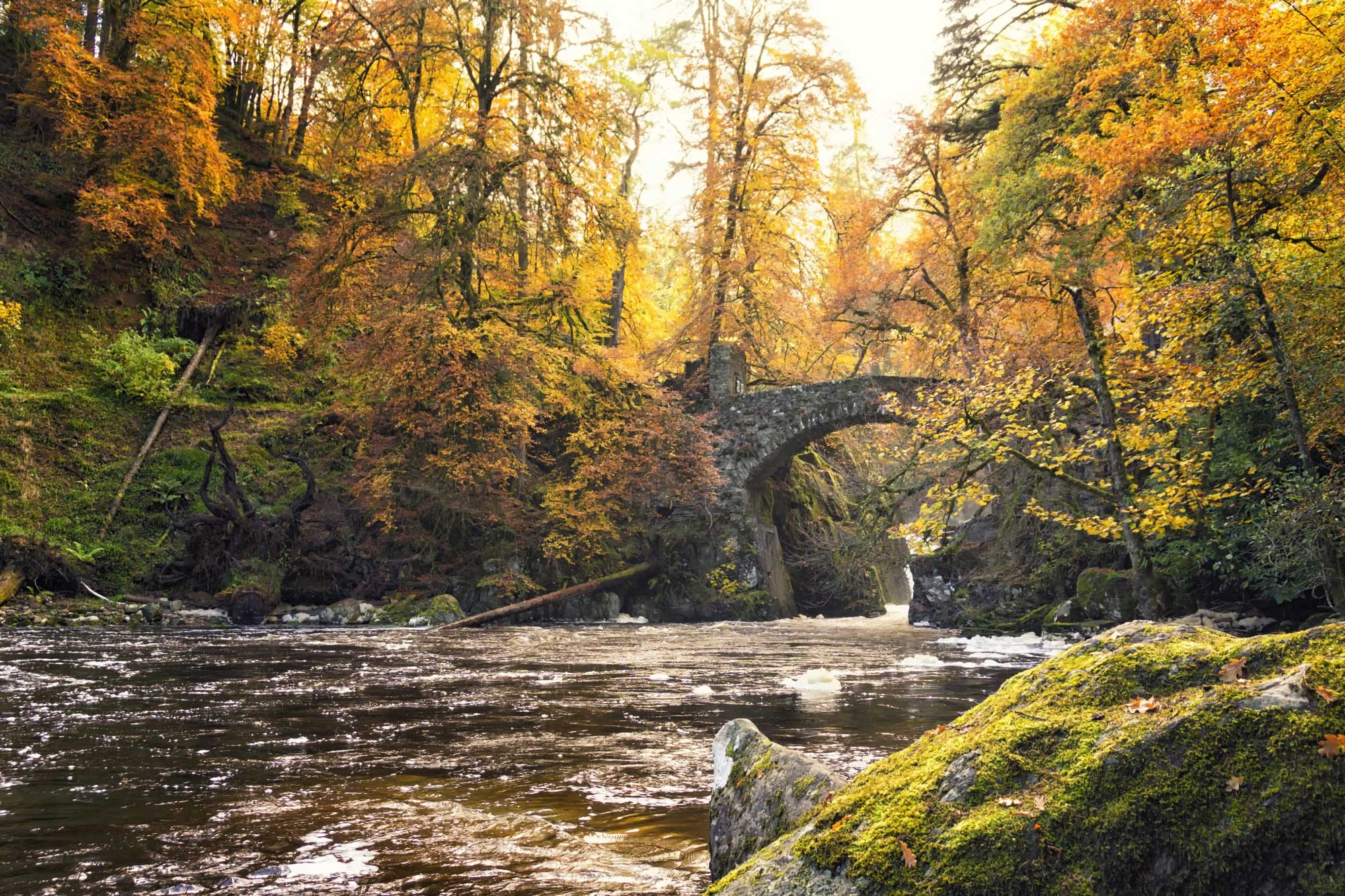
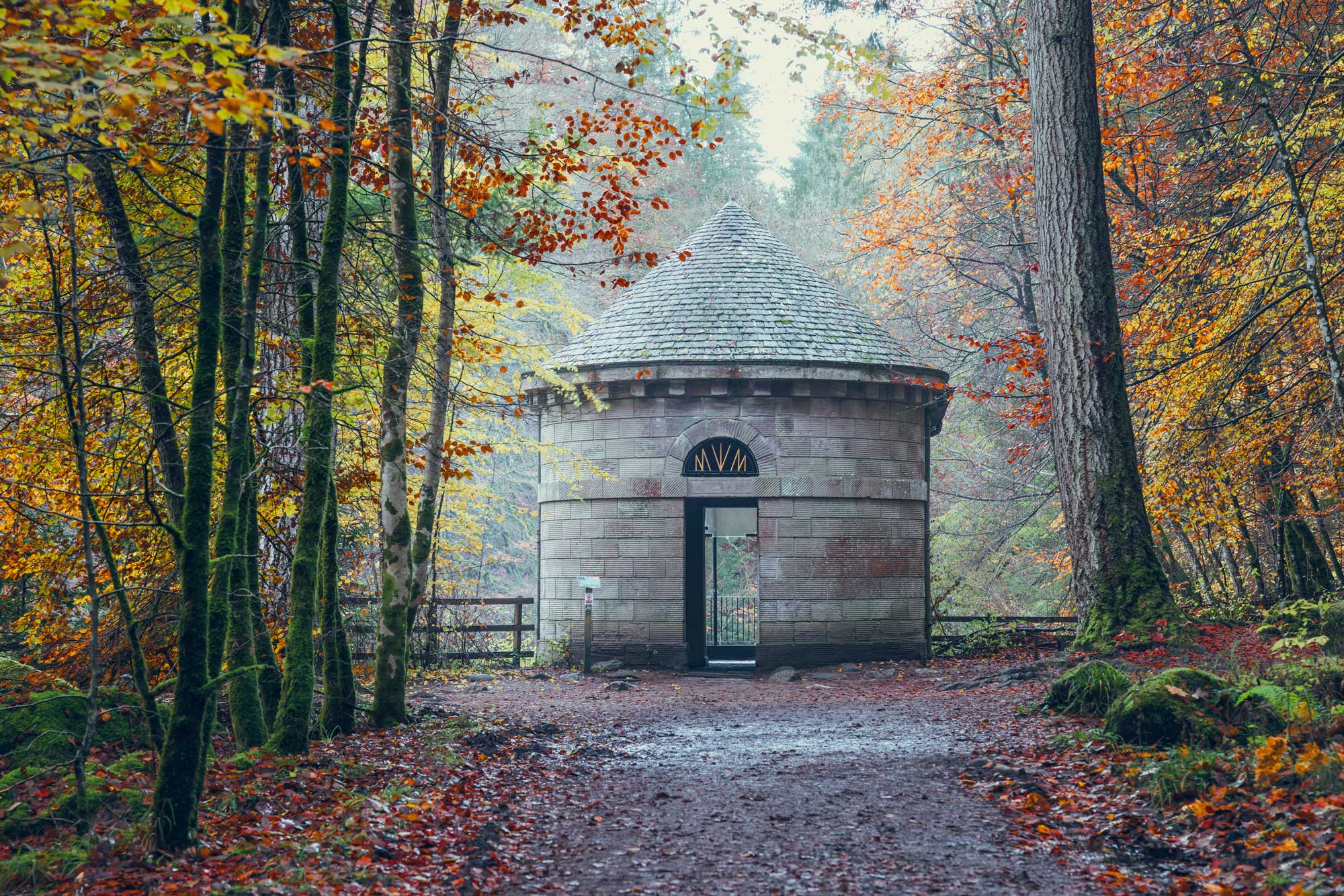
Stop in the Perthshire woodland at the Hermitage — one of Scotland’s oldest managed forests, where towering Douglas firs form cathedral canopies above the gorge of the River Braan. The short walk leads to Ossian’s Hall above the Black Linn Falls — named for the legendary Gaelic bard whose poems, whether genuinely ancient or brilliantly fabricated by James Macpherson in the 1760s, caused a sensation across Romantic Europe and made Highland Scotland its most fashionable destination. This is where Scottish tourism was born — in these very trees, above these very falls.
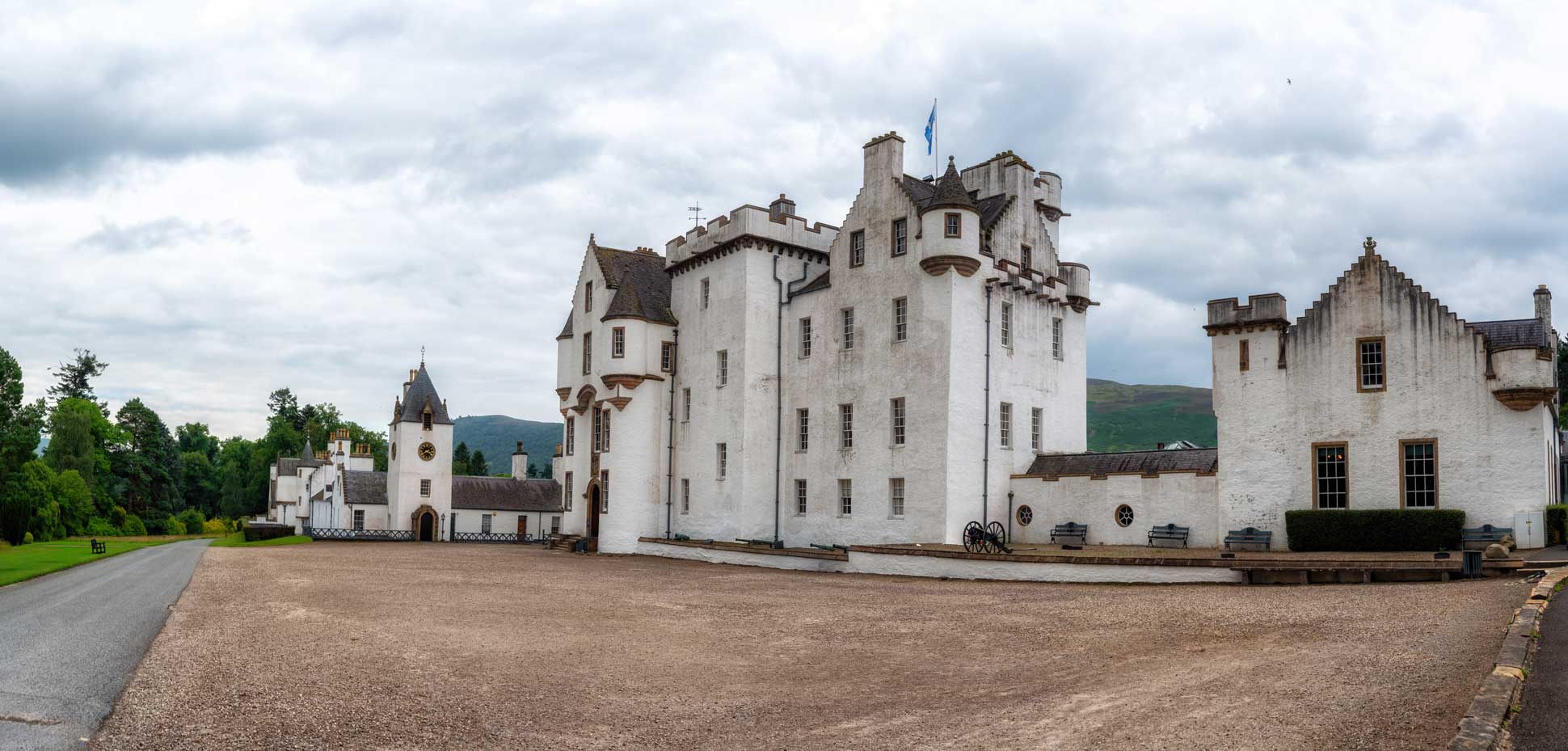
Continue north to Blair Castle — one of the most impressive and most loved castles in Scotland, the ancestral seat of Clan Murray and the family home of the Dukes of Atholl for over 700 years. The gleaming white turreted fortress rises from the wooded floor of the Tay valley with the Grampian Mountains towering behind it in a composition of such immediate visual drama that it appears almost too perfect to be real. Explore 30 remarkable rooms spanning seven centuries of Scottish history — from the medieval great hall to the Victorian state rooms crammed with Jacobite relics, weapons, porcelain, and portraits.
The Duke of Atholl holds the unique and extraordinary distinction of being the only British subject permitted to maintain a private army — the Atholl Highlanders — a privilege granted by Queen Victoria in 1844 and still honoured to this day. The regiment parades annually on the castle grounds, its kilted soldiers drilling with a precision that makes the whole improbable, magnificent tradition feel entirely natural. This is one of those details that makes a place permanently unforgettable.
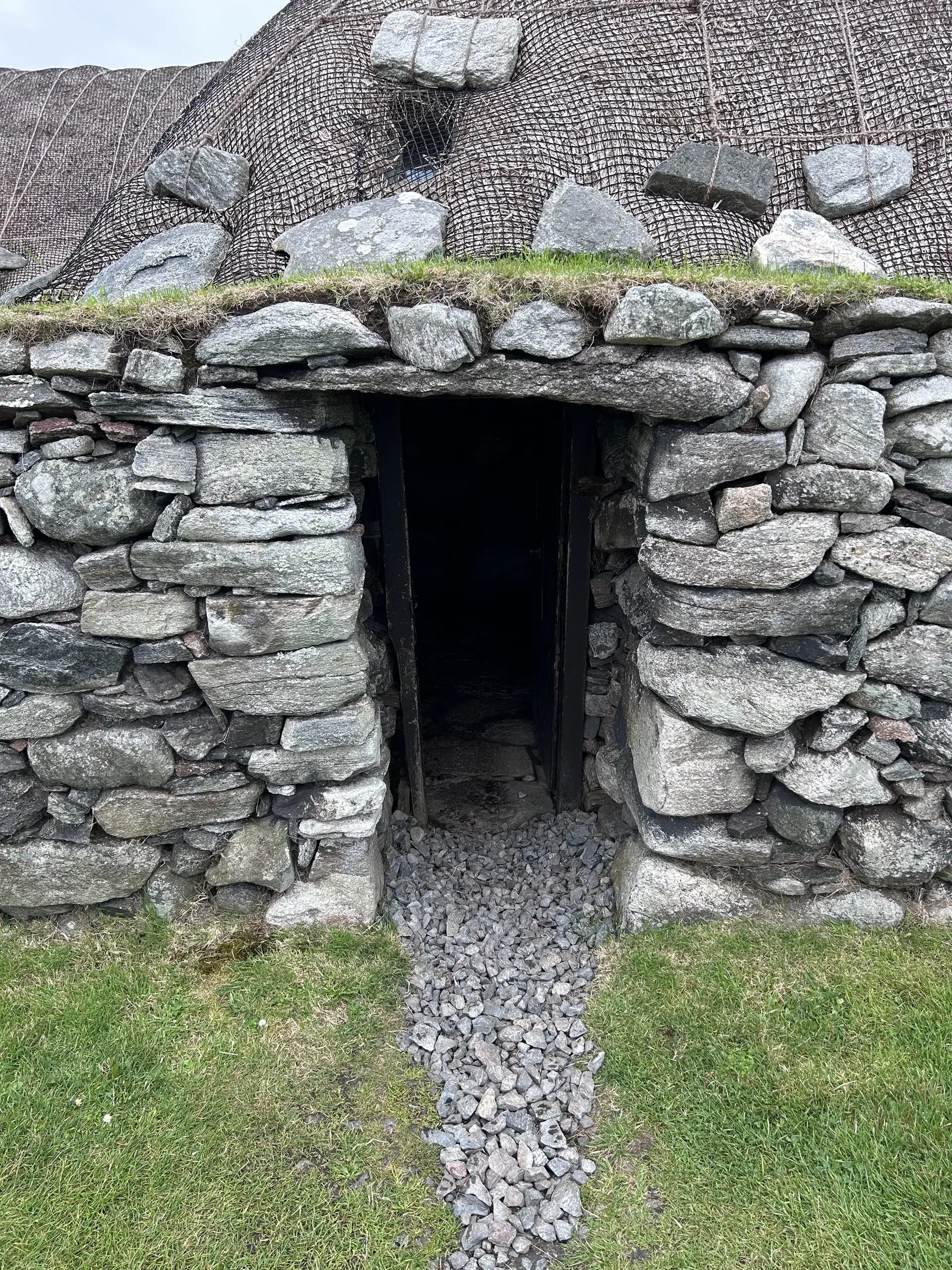
Continue to the Highland Folk Museum at Newtonmore — one of the most immersive and most affecting heritage experiences in Scotland, and one that the majority of visitors to the Highlands never discover. This open-air museum recreates a complete Highland township across 80 acres, bringing together reconstructed buildings spanning four centuries of Highland life: a turf-walled blackhouse township of around 1700, a Victorian schoolhouse, a working 1950s farm with Highland cattle in the yard, and dozens of other structures built using traditional methods with peat fires burning in the hearths.
Costumed interpreters bring each era to life with demonstrations of traditional crafts, cooking, and daily routines that paint a vivid and deeply moving picture of how ordinary Highland people lived and endured across the centuries of clearance, hardship, and quiet resilience that shaped this landscape. This is the human story of the Highlands — and it is one of the most affecting stops on the entire five days.
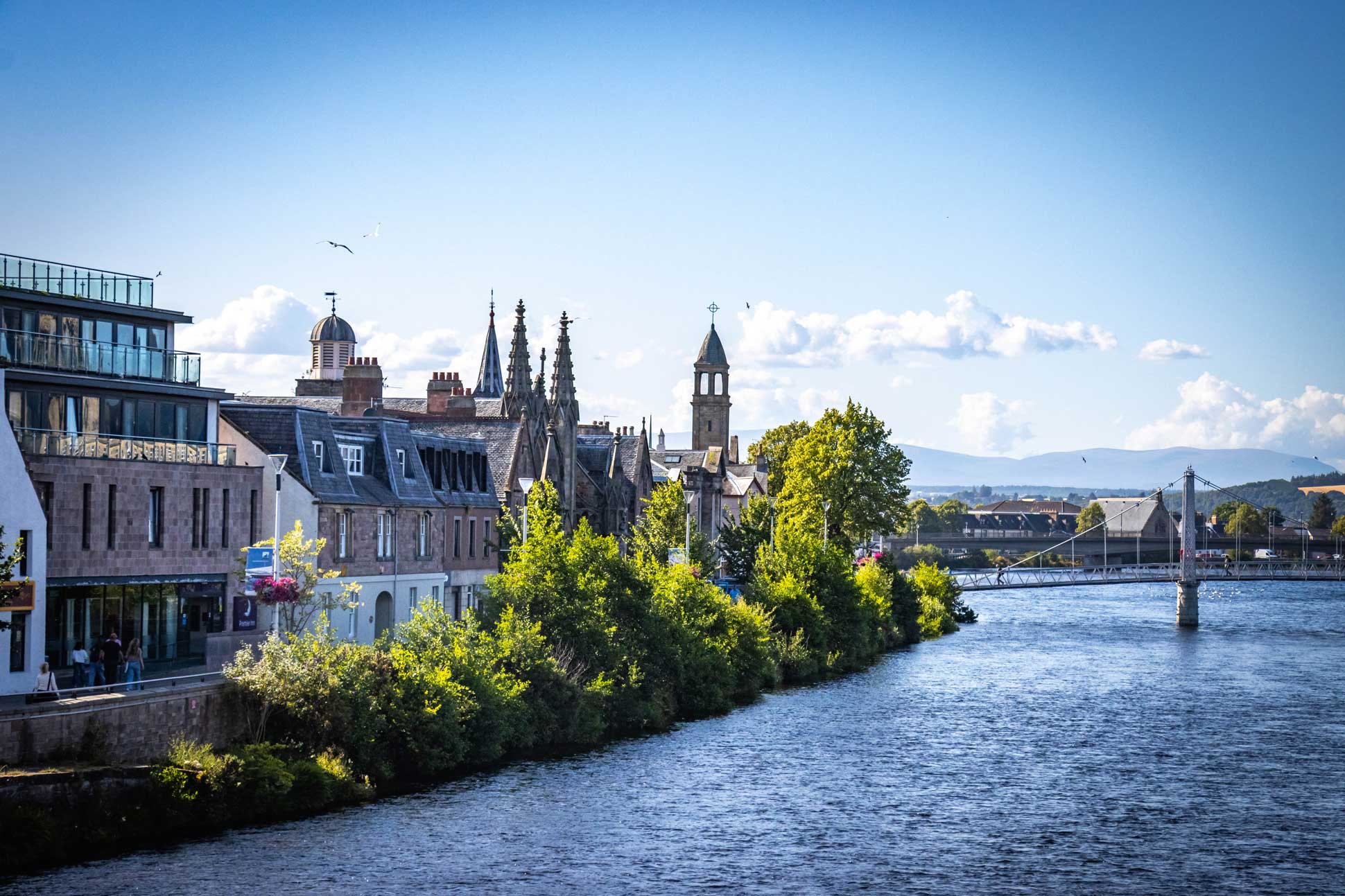
Arrive in Inverness for your first overnight — Scotland’s most northerly city, where the River Ness meets the Beauly Firth and the warmth of Highland hospitality is as genuine as the guidebooks promise. Dine well, rest well, and prepare for the long drive north tomorrow — because the road to Orkney passes through landscapes that few visitors to Scotland ever see.
Approximately 10 hours including ferry | Inverness to Orkney via Caithness | Overnight: Orkney (Night 2)
Day Two travels the full length of the Scottish mainland from Inverness to its northern extremity — through the extraordinary east coast landscape of Sutherland and Caithness, past the most northerly stately home in Britain, down 365 cliff-carved steps to a herring harbour that sustained a community for two centuries, and to the very tip of mainland Scotland before the ferry carries you across the turbulent Pentland Firth to the archipelago that has been waiting at the top of the map. This is one of the great Scottish drives — and it ends with one of the great arrivals.
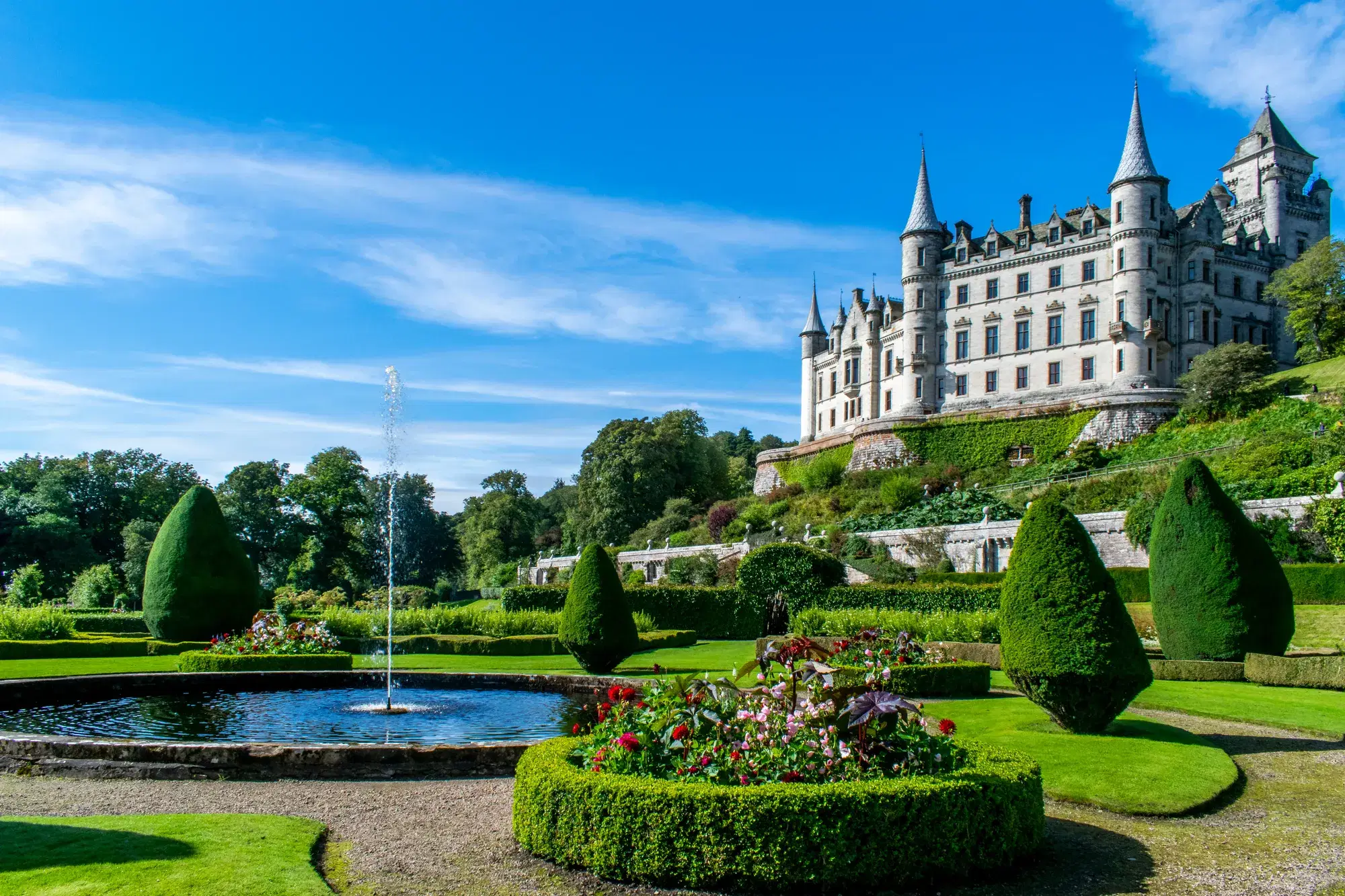
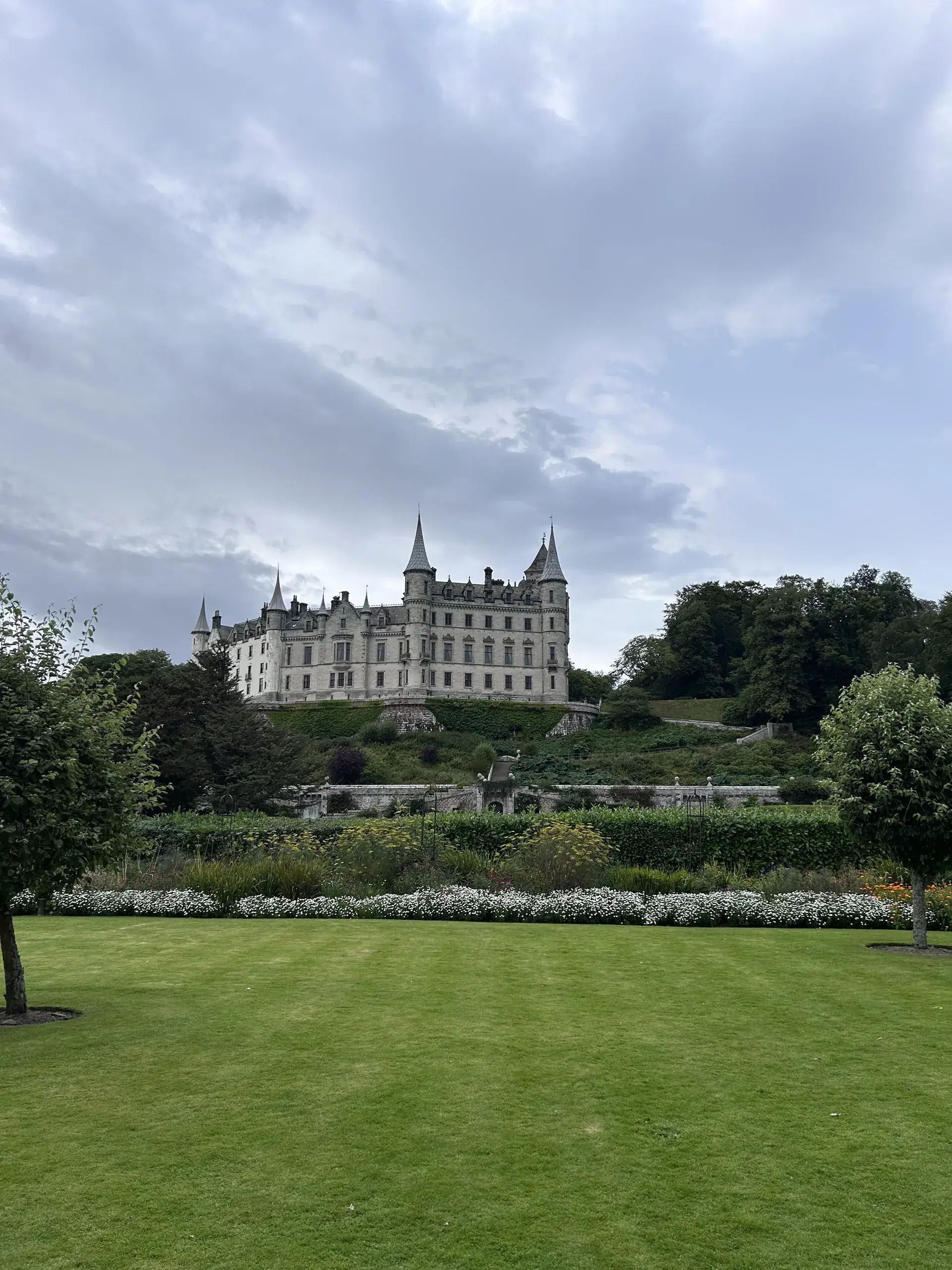
Drive north from Inverness along the east coast to Dunrobin Castle — the seat of the Earls and later Dukes of Sutherland, the northernmost stately home in the United Kingdom, and one of the most visually dramatic castle buildings in Scotland. With origins in the 13th century, Dunrobin has been expanded and remodelled over seven centuries to produce a building that in its current form — largely the work of Sir Charles Barry, architect of the Houses of Parliament, who remodelled it in the 1840s in a French chateau style — resembles nothing so much as a Scots-Baronial Loire Valley chateau transported to a clifftop above the Dornoch Firth.
The interior is extraordinary: 189 rooms furnished with the accumulated treasures of one of Scotland’s grandest aristocratic dynasties, including paintings by Sir Joshua Reynolds and Allan Ramsay, Meissen porcelain, and a remarkable museum in a former summer house containing Pictish carved stones, big game trophies, and artefacts from six centuries of Sutherland history. The formal gardens, modelled on Versailles, descend in terraces to the shore below the castle in a display of aristocratic ambition that seems almost surreal in this remote Highland landscape.
Continue north to Whaligoe in Caithness — one of the most remarkable and least known heritage sites on the entire Scottish mainland. Cut into the sheer cliff face above a natural harbour of extraordinary geological drama, the Whaligoe Steps descend 365 hand-carved stone stairs to a tiny harbour at the base of the cliffs, used by herring fisherwomen from the late 18th century to carry creels of fish weighing up to 60 kilograms up these same steps to the top. The women of Whaligoe — known as ‘fishwives’ — made this climb multiple times a day, in all weathers, for generations, as the herring industry that sustained the community demanded. The steps are steep and narrow, the harbour at the bottom protected on three sides by towering cliffs, and the views from the top across the North Sea coastline are exceptional. It is one of those places that prompts an immediate, instinctive respect for the people who lived and worked here.
Continue to the northernmost tip of the British mainland — not, as is commonly supposed, John O’Groats, but Dunnet Head, a short detour to a dramatic clifftop lighthouse from which, on clear days, the Orkney Islands are visible on the horizon across the Pentland Firth. The distinction matters: John O’Groats, three miles east, is the end-to-end landmark familiar from charity cyclists and walkers, but Dunnet Head is the genuine geographical extremity of the British mainland, and the view from its clifftop — the Pentland Firth churning below, Orkney hovering on the horizon, nothing but open Atlantic to the north and west — is one of the most elemental in Scotland. Stop at both: Dunnet Head for the geography, John O’Groats for the sense of arrival at a journey’s end that millions before you have felt.
Board the ferry across the Pentland Firth — one of the most treacherous stretches of water in the North Atlantic, where the Atlantic Ocean and the North Sea meet between the Scottish mainland and Orkney in a collision of currents, tidal races, and standing waves that has claimed ships and sailors for millennia. The crossing is now made safely and regularly by the Pentland Ferries service, but the passage retains its drama: the mainland receding, the open sea all around, and the low green outline of Orkney rising ahead. Harbour seals, grey seals, puffins, and gannets are regular companions on the crossing; in summer, harbour porpoises and minke whales are frequently sighted in the Firth.
Arrive on Orkney’s Mainland — the largest of the 70 islands — and drive directly to the Stones of Stenness, the oldest henge monument in the British Isles, dating from around 3100 BC. Four enormous standing stones — the tallest rising to nearly six metres — remain of an original circle of twelve, arranged within a massive circular ditch cut from solid bedrock in an act of collective labour whose scale still astonishes archaeologists. The stones themselves are of a lean, almost architectural elegance quite different from the blocky megaliths of Stonehenge — thin slabs of Orcadian flagstone tapering to points against the vast Orkney sky, framing views across the isthmus between the Lochs of Stenness and Harray in a landscape whose sacred character is immediately, powerfully apparent even five thousand years after the last ceremony was conducted here.
✝️ The Heart of Neolithic Orkney: Chapel, Skara Brae & the Ring of Brodgar
Full day on Orkney | Overnight: Orkney (Night 3)
Day Three moves through five thousand years of human history in a single extraordinary day — from the wartime miracle of the Italian Chapel to the Neolithic village hidden beneath a sand dune for four millennia, from the greatest stone circle in Scotland to the chambered cairn whose winter solstice alignment has spoken to every civilisation that has encountered it. This is the day that gives the tour its UNESCO World Heritage character — and it is, in Johnny’s view, one of the most remarkable single days of touring available anywhere in the British Isles.
Begin at the Italian Chapel on Lamb Holm — one of the most moving and most extraordinary small buildings in Scotland, created between 1943 and 1945 by Italian prisoners of war held on Orkney to work on the Churchill Barriers, the concrete causeways built to protect Scapa Flow after the sinking of HMS Royal Oak in 1939. The prisoners, seeking a place of worship and an expression of their faith and their humanity in the bleak conditions of their captivity, transformed two standard-issue Nissen huts into a chapel of remarkable beauty — fashioning an ornate facade, intricate internal plasterwork, trompe l’oeil brickwork, elaborate metalwork, and devotional paintings of genuine artistic quality from salvaged materials, scrap metal, and whatever could be obtained from the camp’s meagre resources.
The artist Domenico Chiocchetti, a trained painter from Moena in the Italian Dolomites, was the principal creative force behind the interior — and the face of the Madonna above the altar is believed to be modelled on his mother. Chiocchetti returned to Orkney in 1960 to restore the chapel he had helped create fifteen years earlier, and again in 1964. He died in 1999, and the chapel — maintained by a local preservation committee — stands today exactly as he left it: a testament to the endurance of faith, beauty, and human dignity in conditions designed to deny all three.
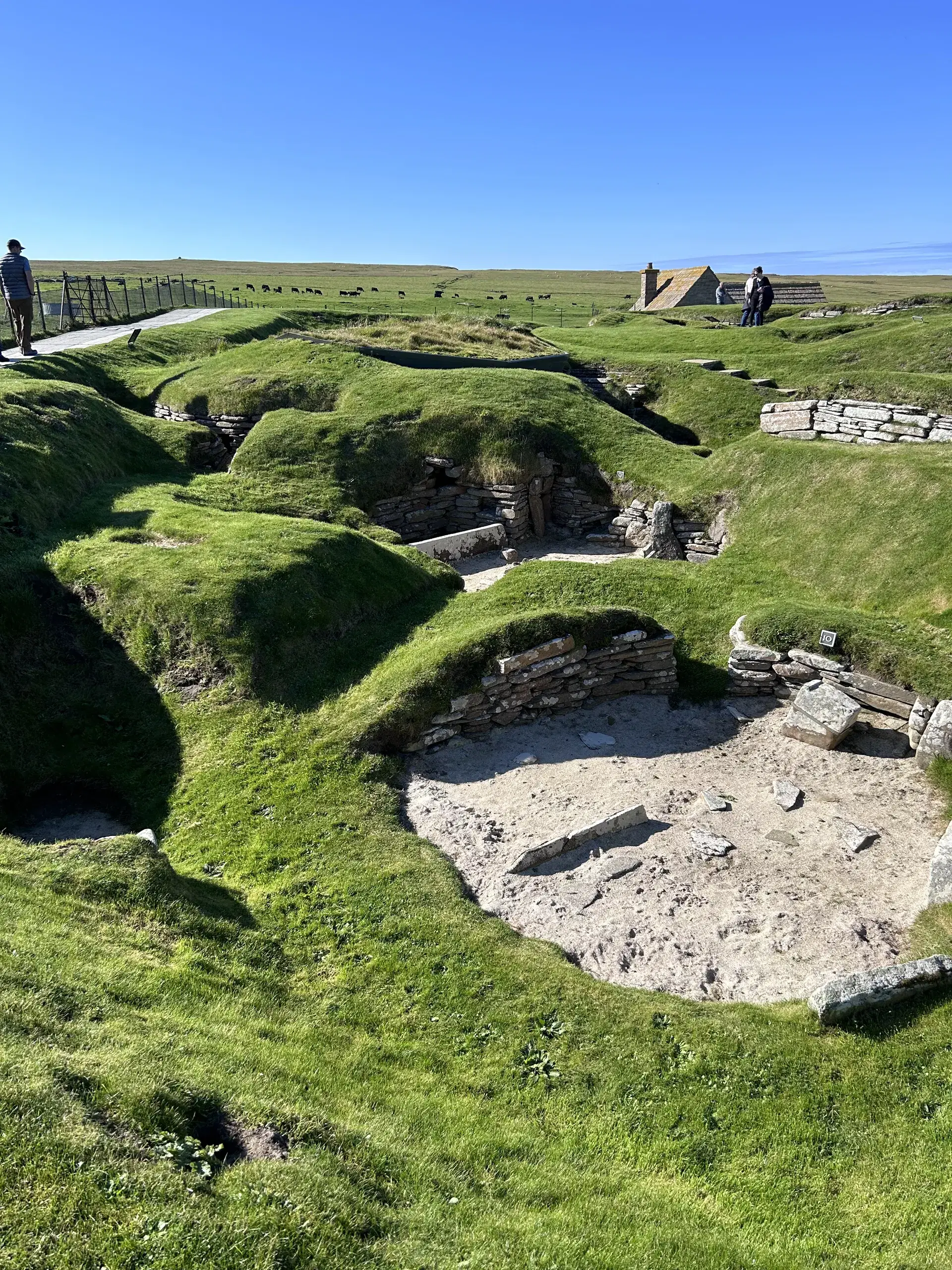
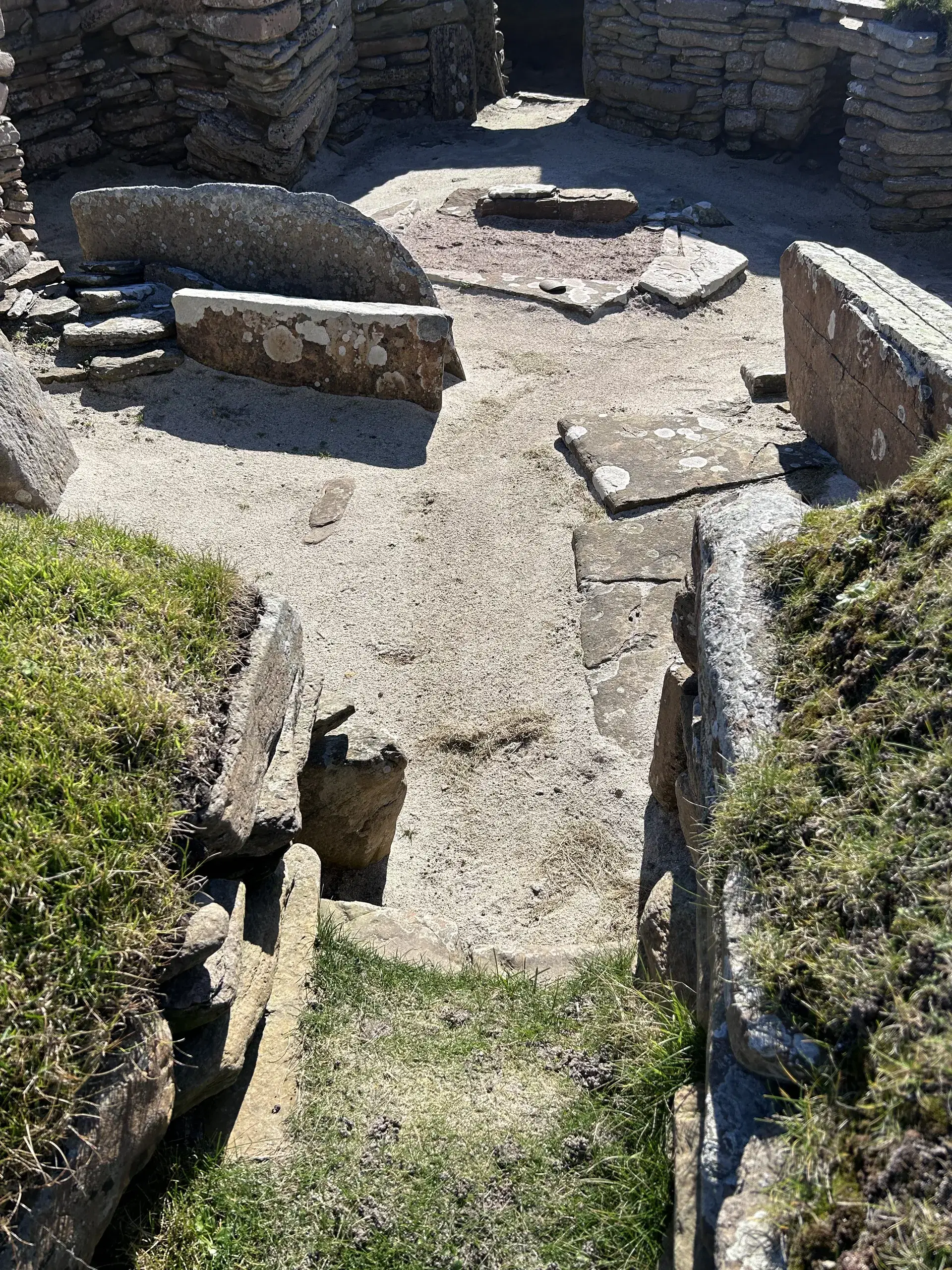
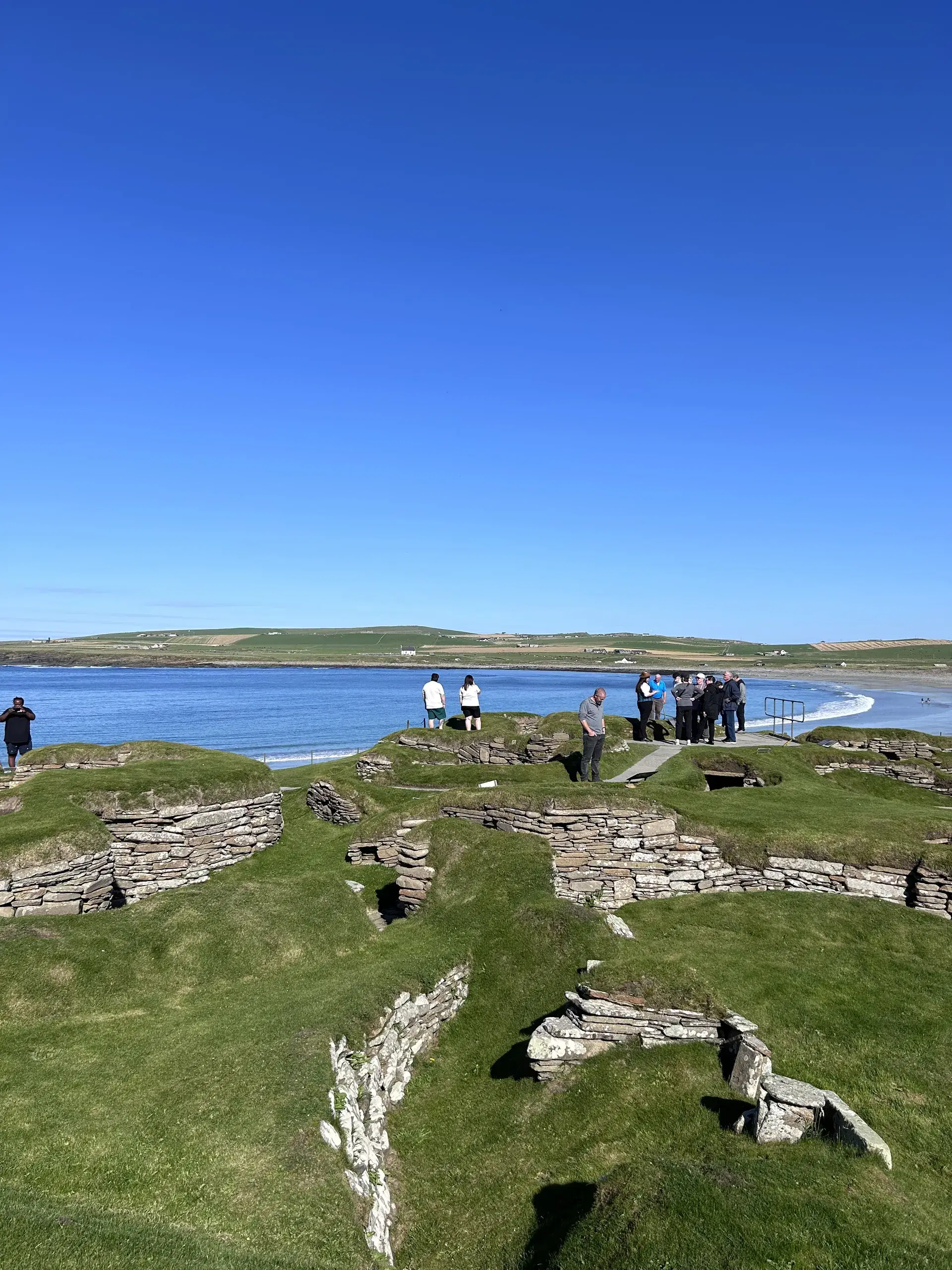
Drive to the Bay of Skaill on Orkney’s Atlantic coast — where the great beach of shell sand curves between headlands in a sweep of exceptional beauty, and where, at its southern end, the most remarkable Neolithic site in Europe emerges from the dunes. Skara Brae was buried beneath a sand dune for four thousand years until a great storm in 1850 stripped away the covering and revealed a complete Stone Age village of eight interconnected stone houses, their contents undisturbed, their stone furniture — beds, dressers, shelves, hearths, and storage boxes — intact exactly as their inhabitants left them around 2500 BC.
The ‘furniture’ of Skara Brae is what makes it unique among Neolithic sites worldwide: because the island’s trees had been exhausted millennia before the village was built, its inhabitants constructed everything from the one material Orkney has in inexhaustible supply — flat-splitting Orcadian flagstone. The result is that we can see, in extraordinary detail, how a Stone Age family arranged their home, where they slept, where they stored their food, and what objects they considered worth keeping on a shelf. The dresser opposite the entrance of each house — the first thing you see when you enter — has prompted the suggestion that it was positioned to display objects of significance to ancestors or spirits watching from outside. Five thousand years later, it still carries that quality of presence.
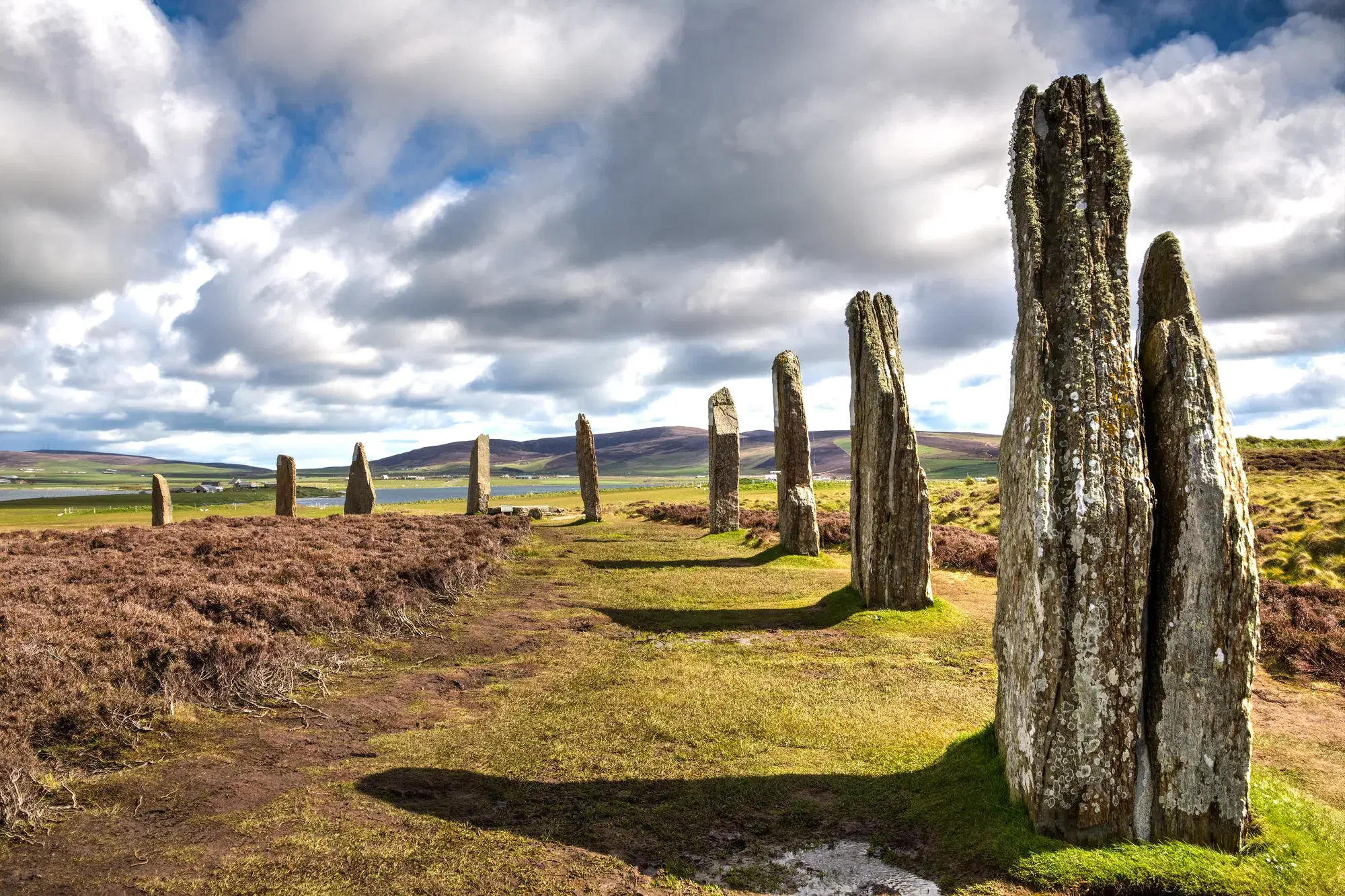
Continue to the Ring of Brodgar — the largest stone circle in Scotland and one of the most impressive in the world, a ring of 60 original stones (27 still standing) arranged in a circle of 104 metres diameter within a rock-cut circular ditch of extraordinary scale. Dating from between 2500 and 2000 BC, the Ring stands on a narrow isthmus between the Lochs of Stenness and Harray in a landscape so evidently sacred — with the Stones of Stenness, Maeshowe, and dozens of smaller monuments all within sight — that archaeologists now refer to this whole area as the Heart of Neolithic Orkney. The Ring of Brodgar was the ceremonial and social gathering point for the whole of Neolithic Orkney — a place where communities came from across the islands to mark the turning points of their shared calendar, to conduct whatever rituals sustained their understanding of life, death, and the cosmos, and perhaps simply to be together in a place of acknowledged power.
End the day at Maeshowe — a chambered cairn built around 2800 BC that is, in terms of construction quality and architectural ambition, one of the most remarkable prehistoric buildings in the world. The entrance passage, precisely aligned with the setting midwinter sun so that on the days around the winter solstice the last light of the shortest day shines directly down the 11-metre passage and illuminates the back wall of the central chamber, is an astronomical alignment of extraordinary precision — a deliberate architectural achievement by builders who understood the movements of the heavens with a sophistication that commands genuine respect.
Inside the central chamber, however, Maeshowe contains a second and entirely unexpected layer of history: the largest collection of Viking runic inscriptions in the world, carved into the walls by Norse explorers who broke into the cairn in the 12th century — over 2,000 years after it was built — and left a remarkable record of their visit. The inscriptions range from the boastful to the banal: ‘Crusaders broke into this mound’, ‘Ingigerd is the most beautiful of women’, ‘Hakon alone bore treasure from this mound’ — and several explicit carvings whose translation guides typically deliver with a certain careful discretion. The combination of Neolithic astronomical engineering and Norse graffiti makes Maeshowe the most layered and most compelling single monument on Orkney.
Full day on Orkney | Overnight: Orkney (Night 4)
The fourth day explores the western and northern reaches of Orkney Mainland — beginning in the most characterful town in the islands, moving to the most spectacular seabird cliffs, and ending at a castle whose story is one of the most quietly moving in the entire Royal Family’s long relationship with Scotland. A day of salt air, extraordinary wildlife, and an intimacy with the recent past that complements the deep prehistory of Day Three perfectly.
Begin the morning in Stromness — Orkney’s second town and, in the view of many who know the islands well, its most atmospheric. Built along a single winding main street that follows the natural curve of the harbour — too narrow in places for two people to pass side by side — Stromness grew to prominence as a provisioning port for ships of the Hudson’s Bay Company in the 18th and 19th centuries, and later for Arctic and Antarctic expeditions. John Rae, the Orkney-born Arctic explorer who discovered the fate of the Franklin Expedition and mapped more of the Canadian Arctic than any other man, was born near Stromness. The town’s Pier Arts Centre houses one of the most surprising and distinguished collections of 20th-century British art outside London — and the harbour itself, with its stone piers and flagstone waterfront, has a quality of unhurried, weathered beauty that is entirely its own.
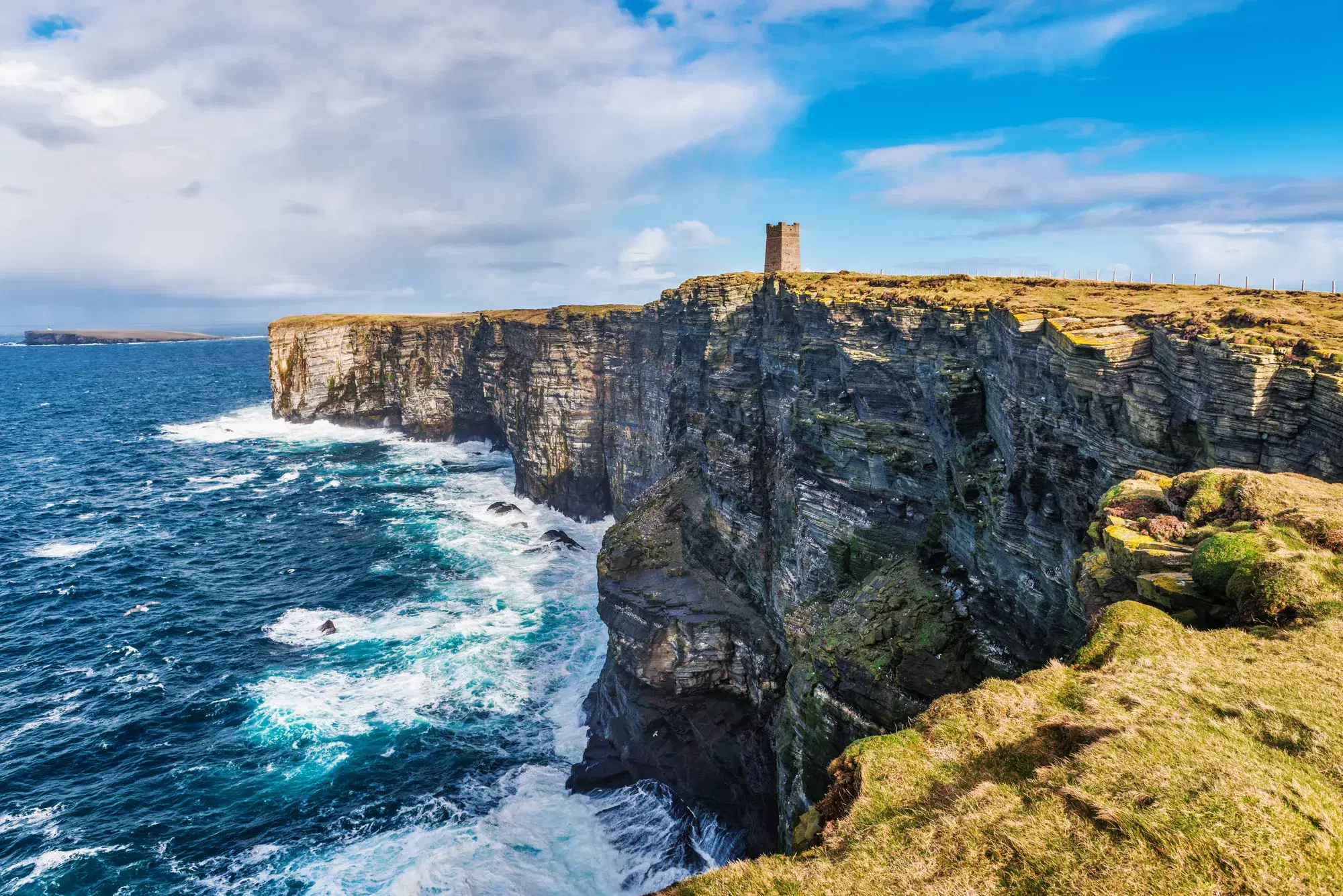
Drive north to Marwick Head RSPB Nature Reserve — the site of the largest cliff-nesting seabird colony in Orkney, and one of the most spectacular wildlife experiences available anywhere in the British Isles. The clifftop trail leads along the edge of sheer red sandstone cliffs dropping 90 metres to the Atlantic below, their ledges packed from May to July with tens of thousands of nesting guillemots, razorbills, kittiwakes, and fulmars in a density and noise of life that is genuinely overwhelming. Puffins nest in burrows along the clifftop — comically endearing at close quarters, improbably aerobatic in flight — and peregrine falcons patrol the cliff faces with the authority of apex predators. The Kitchener Memorial at Marwick Head commemorates the sinking of HMS Hampshire in June 1916, struck by a German mine just offshore with the loss of Lord Kitchener and 736 men — a sobering reminder that these beautiful waters have not always been peaceful.
Cross to the Caithness mainland for the final Orkney-era stop at the Castle of Mey — the most personally beloved of all the Royal Family’s Scottish properties and the only one ever purchased and restored by a member of the family using their own private funds. Built between 1566 and 1572 by George Sinclair, 4th Earl of Caithness, the castle had fallen into disrepair by 1952 when Queen Elizabeth The Queen Mother, recently widowed and seeking a private retreat of her own, visited it on impulse during a drive through Caithness and found it so immediately enchanting that she purchased it and began an extensive programme of restoration.
The Castle of Mey became the Queen Mother’s private sanctuary — far from the formalities of royal life, close to the people of Caithness and Orkney whom she genuinely loved, surrounded by a walled garden that she tended personally with particular devotion. She visited every summer until her death in 2002 at the age of 101, and the castle passed to a charitable trust with the express purpose of preserving it exactly as she left it. The rooms are arranged as though she has simply stepped out for a walk — her personal possessions, her china, her books, and her pictures all exactly in place. The visit carries a quality of private, unhurried intimacy with a remarkable woman’s private life that is unlike any other royal property in Scotland.
Approximately 9 hours | Orkney/Caithness to Edinburgh via Loch Ness & Glencoe | Return to Edinburgh
The final day makes the long journey south through the full length of the Scottish Highlands — along the dark, legendary shores of Loch Ness, through the solemn drama of Glencoe, and back to Edinburgh through a landscape that looks entirely different now from how it appeared five days ago. You have been to the edge of Scotland and beyond. The country looks different when you know what lies at its northern end.
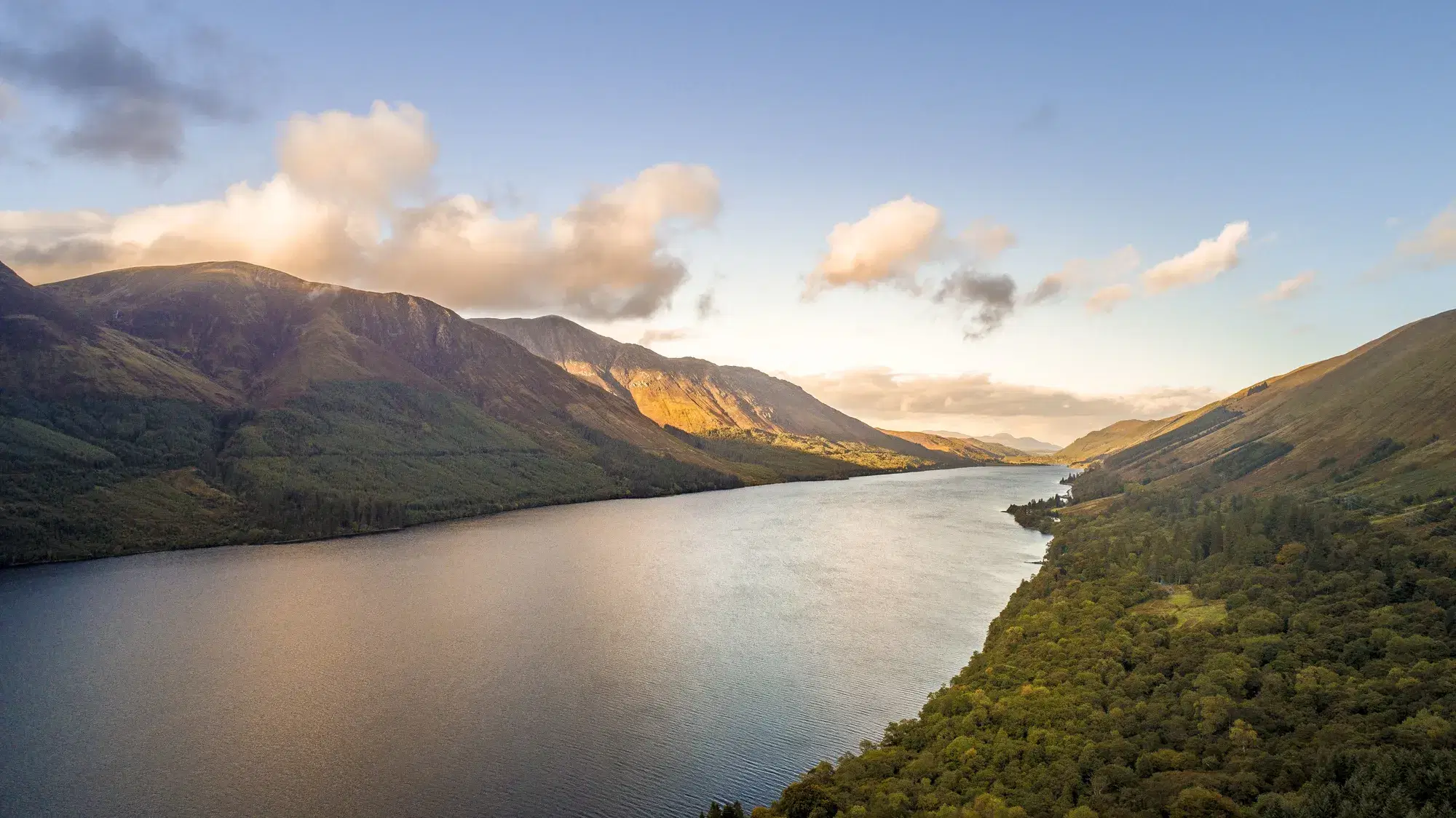
Travel south from Inverness along the western shore of Loch Ness — 37 kilometres of the deepest, darkest, and most legendary loch in Scotland, holding more fresh water than all the lakes of England and Wales combined and plunging to 230 metres at its deepest point. It is the largest body of fresh water in Scotland by volume — a distinction that matters, because the loch’s extraordinary depth is precisely what has sustained the Nessie legend since Saint Columba reputedly encountered a fearsome creature in the River Ness in 565 AD. No sonar survey, underwater camera deployment, or satellite surveillance programme has managed to extinguish the possibility — and the dark, peat-stained water of the loch, absorbing light rather than reflecting it, maintains an air of impenetrable mystery that no amount of rational investigation has entirely dissolved.
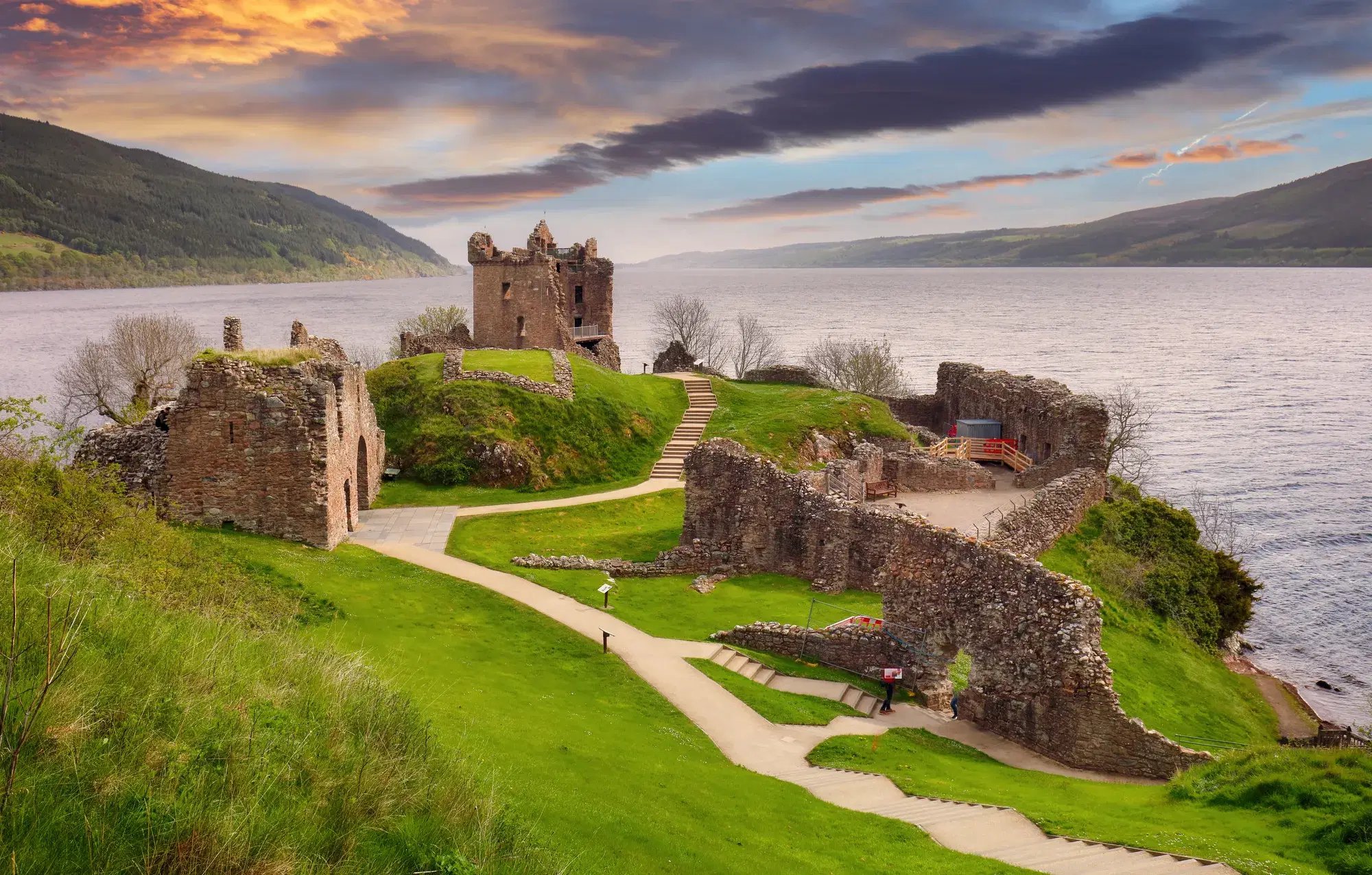
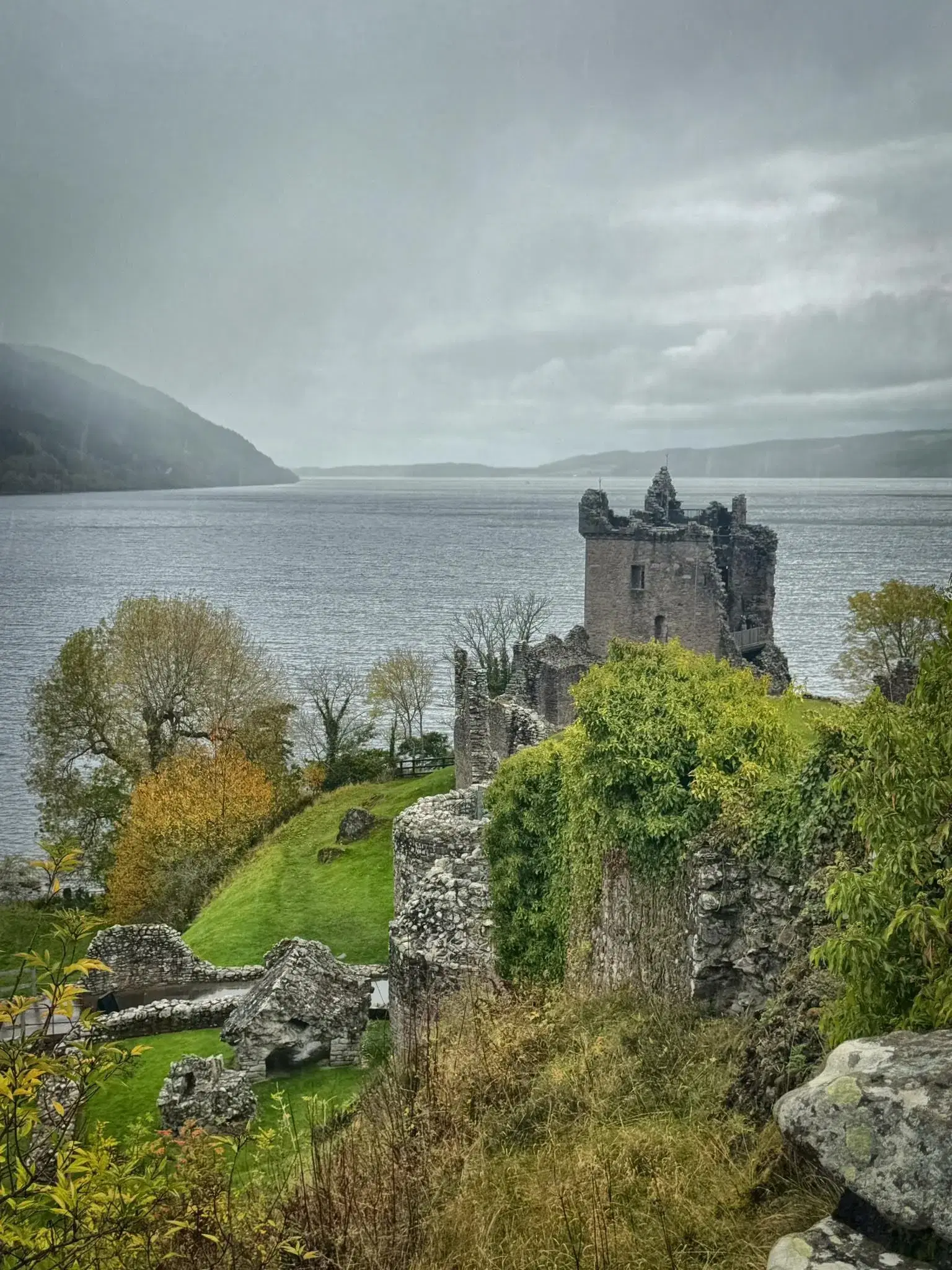
Stop at Urquhart Castle — the dramatic medieval ruins on a rocky headland above Loch Ness, commanding the finest view across the water in either direction and carrying a history of siege, occupation, and destruction that spans the full eight centuries of Scottish medieval conflict. The castle was blown up by its own garrison in 1692 to prevent its capture by Jacobite forces — an act of deliberate demolition that produced, entirely accidentally, one of the most photogenic ruins in Scotland. The Grant Tower, the most intact surviving structure, rises above the loch shore with an authority that the complete castle must have possessed in even greater measure. An optional 30-minute cruise from the castle jetty gives a perspective on the loch’s extraordinary scale that the road cannot provide.
Continue south through the Great Glen and into Glencoe — where the mountains close in on every side and the valley carries the weight of one of the most infamous acts of treachery in Highland history. On 13 February 1692, government soldiers of Clan Campbell, having accepted twelve days of MacDonald hospitality — eating at their hosts’ tables and sleeping beneath their roofs — rose before dawn on government orders and murdered 38 sleeping members of Clan MacDonald. The rest fled into a February blizzard; many more died of exposure in the surrounding mountains.
The Three Sisters — Gearr Aonach, Aonach Dubh, and Beinn Fhada — rise from the valley floor in one of Scotland’s most immediately recognisable and most photographed mountain panoramas, their scale and drama exactly matching the gravity of the history that unfolded beneath them. Johnny tells the full story here, in the glen where it happened — the politics, the personalities, the precise sequence of events, and the long shadow the massacre cast over relations between the Highland clans and the government in Edinburgh for generations. The mountains listen.
The final miles carry you south through the Trossachs and back to Edinburgh — where five days and the full length of Scotland ago, this journey began. Johnny will answer any final questions, share recommendations for any remaining time in Scotland, and ensure your seamless drop-off at your Edinburgh accommodation. Five days. Seventy islands. Five thousand years of human history — and a country experienced all the way from its ancient capital to its very northern edge.
Ready to experience the very best of Scotland on your own terms? Tell us when you’d like to travel, how many are in your party, and where you’d like your journey to begin. We’ll check availability for your preferred dates and craft a bespoke multi-day itinerary shaped around your interests, pace, and must‑see places. Share a few details below and our expert driver‑guide will be in touch with a personalised proposal, pricing, and suggestions to make your time in Scotland unforgettable.
Max 6 persons
Max 5 suitcases
We look forward to welcoming you to Scotland — personally.