On the Edge of Europe
5-Day Private Journey from the Highlands to the Hebrides
Max 6 persons
Max 5 suitcases
Prices from £650 per day for a group of six persons. T&Cs apply.
Travelling with a larger group? Get in touch5-Day Private Journey from the Highlands to the Hebrides
Max 6 persons
Max 5 suitcases
Prices from £650 per day for a group of six persons. T&Cs apply.
Travelling with a larger group? Get in touchStand at the Butt of Lewis on a clear morning — the northernmost tip of the Outer Hebrides, the Atlantic crashing against the cliffs below, no land between you and Canada — and you understand immediately why this tour is called what it is. This is Scotland at its furthest and most elemental: a country stripped back to wind, water, ancient stone, and a sky so vast it changes the way you think about scale.
This five-day private journey travels the full arc of Scotland’s northwestern story — from the wooded gorges of Perthshire and the solemn ground of Culloden, to the dramatic canyon of Corrieshalloch and the wild ferry crossing of the Minch, to the turquoise Atlantic bays of Harris and the prehistoric megalithic monuments of Lewis that predate Stonehenge by a thousand years. It then returns through the geological wonder of the Northwest Highlands and the legendary valley of Glencoe before Edinburgh reappears in the south and the journey draws to its close.
Every mile is guided by Johnny Dreczkowski MBE — honoured by His Majesty The King in June 2025, a proud Scot and professional driver-guide renowned for his storytelling, heritage knowledge, and warm Scottish hospitality — from the seamless comfort of your private new Mercedes V-Class Avantgarde. This is Scotland’s wild northern edge — and there is nothing else in Europe quite like it.
🏰 Day One — Edinburgh to Inverness: Into the Heart of the Highlands
Approximately 9 hours | Edinburgh to Inverness | Overnight: Inverness (Night 1)
The journey north from Edinburgh begins gently — through the wooded gorges and fast rivers of Perthshire — before the landscape opens into the vast mountain plateau of the Cairngorms and the road delivers you, stop by stop, into the full emotional weight of Highland history. By the time Inverness appears in the early evening, you will have walked a prehistoric forest, tasted the Highlands’ highest whisky, and stood on the most quietly devastating battlefield in Britain.
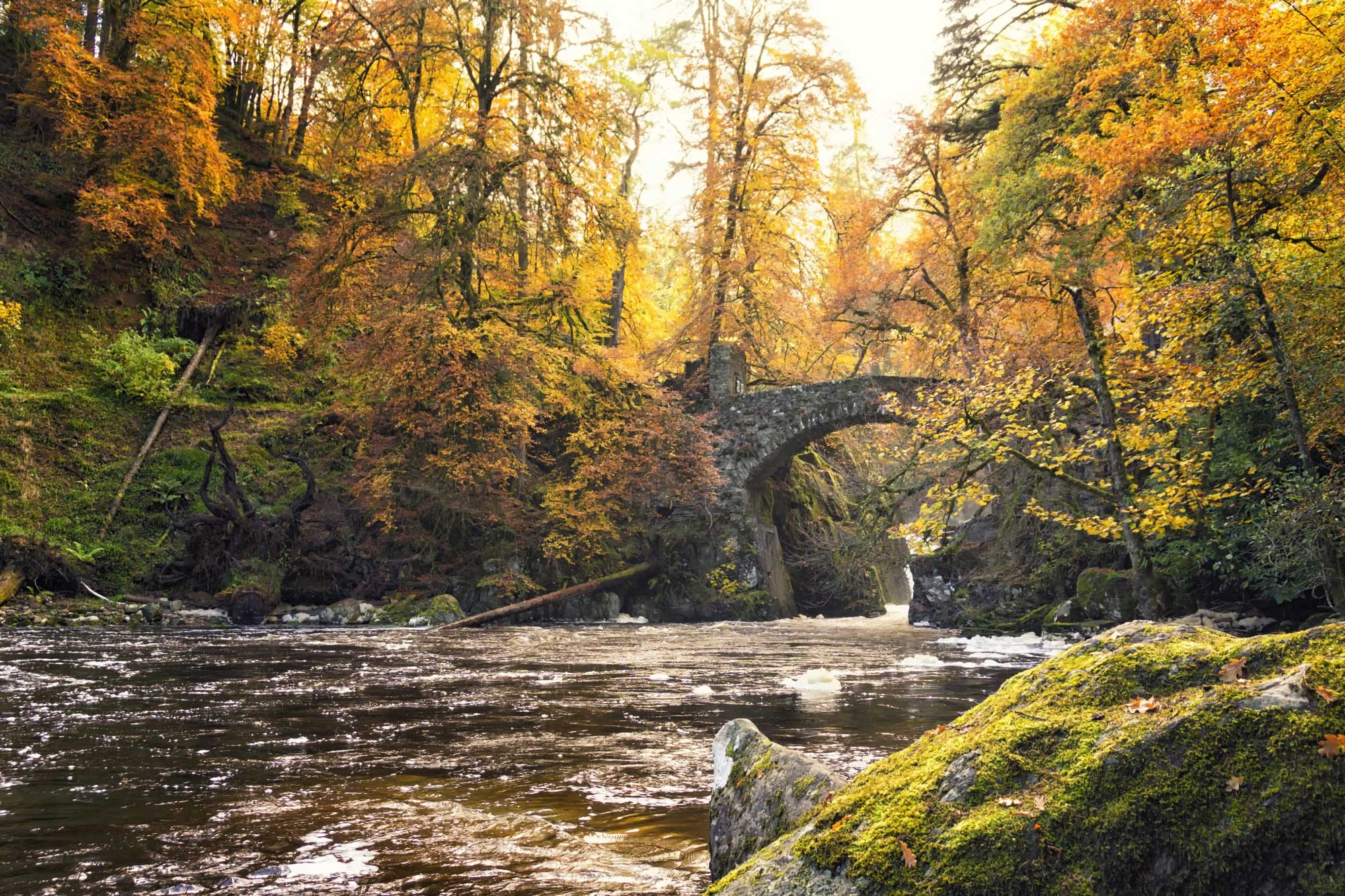
🌲 The Hermitage – Ancient Trees & the Black Linn Falls
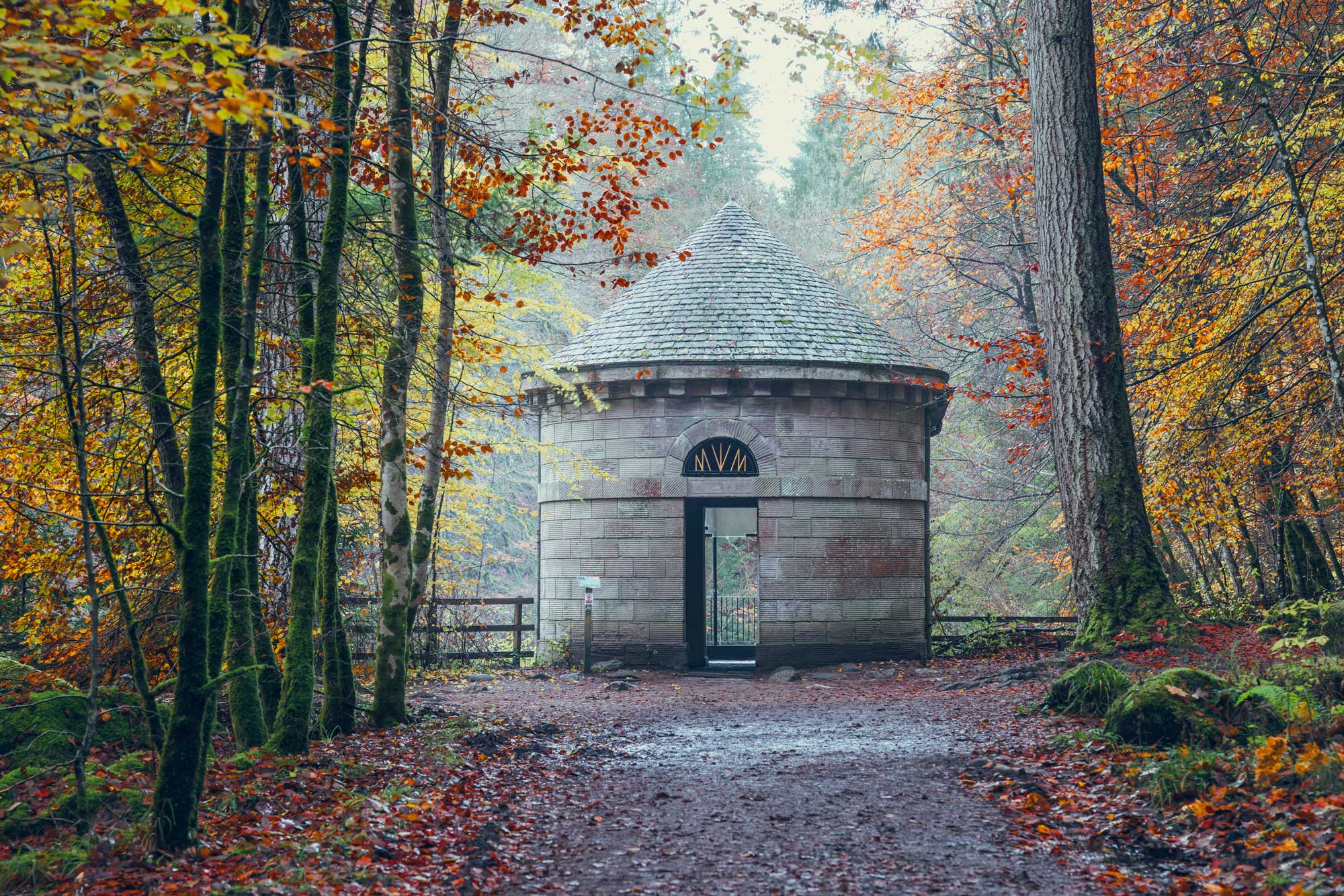
Begin in the Perthshire woodland at the Hermitage — one of Scotland’s oldest and most atmospheric managed forests, where towering Douglas firs planted in the 18th century form cathedral canopies above the gorge of the River Braan. The short walk leads to Ossian’s Hall, a Georgian folly perched above the Black Linn Falls where the river crashes through a narrow rock channel in a fury of white water. The falls are named for Ossian — the legendary 3rd-century Gaelic bard whose poems, whether genuinely ancient or brilliantly fabricated by James Macpherson in the 1760s, caused a sensation across Europe and made Highland Scotland the Romantic era’s most fashionable destination. This is where Scottish tourism began — in these very trees, with these very falls.
🥃 Dalwhinnie Distillery – Scotland’s Highest Whisky
Continue north over the Drumochter Pass — at 462 metres the highest point on the British main road network — to Dalwhinnie Distillery, sitting at over 1,000 feet above sea level in a landscape of open moorland and enormous Highland sky. Scotland’s highest distillery produces a whisky of notable elegance: light, honeyed, with a delicacy that reflects the clean mountain air and the pure water of the Allt an t-Sluic burn that flows through the site. The visitor experience includes tastings and, uniquely among Highland distilleries, chocolate pairings that illuminate the whisky’s sweeter character with genuine originality.
🏔️ Aviemore & the Cairngorms – Lunch in the Mountain Capital
Descend into the broad valley of Strathspey and stop in Aviemore — the vibrant mountain town at the heart of the Cairngorm National Park, the largest national park in the United Kingdom. The high Cairngorm plateau rises to the east — home to reindeer, snow buntings, ptarmigan, and Britain’s only Arctic mountain ecosystem. An excellent choice of cafés and restaurants, an unhurried lunch stop, and the particular quality of mountain air that arrives when the Cairngorms are around you.
⚔️ Culloden Battlefield – The Last Battle on British Soil
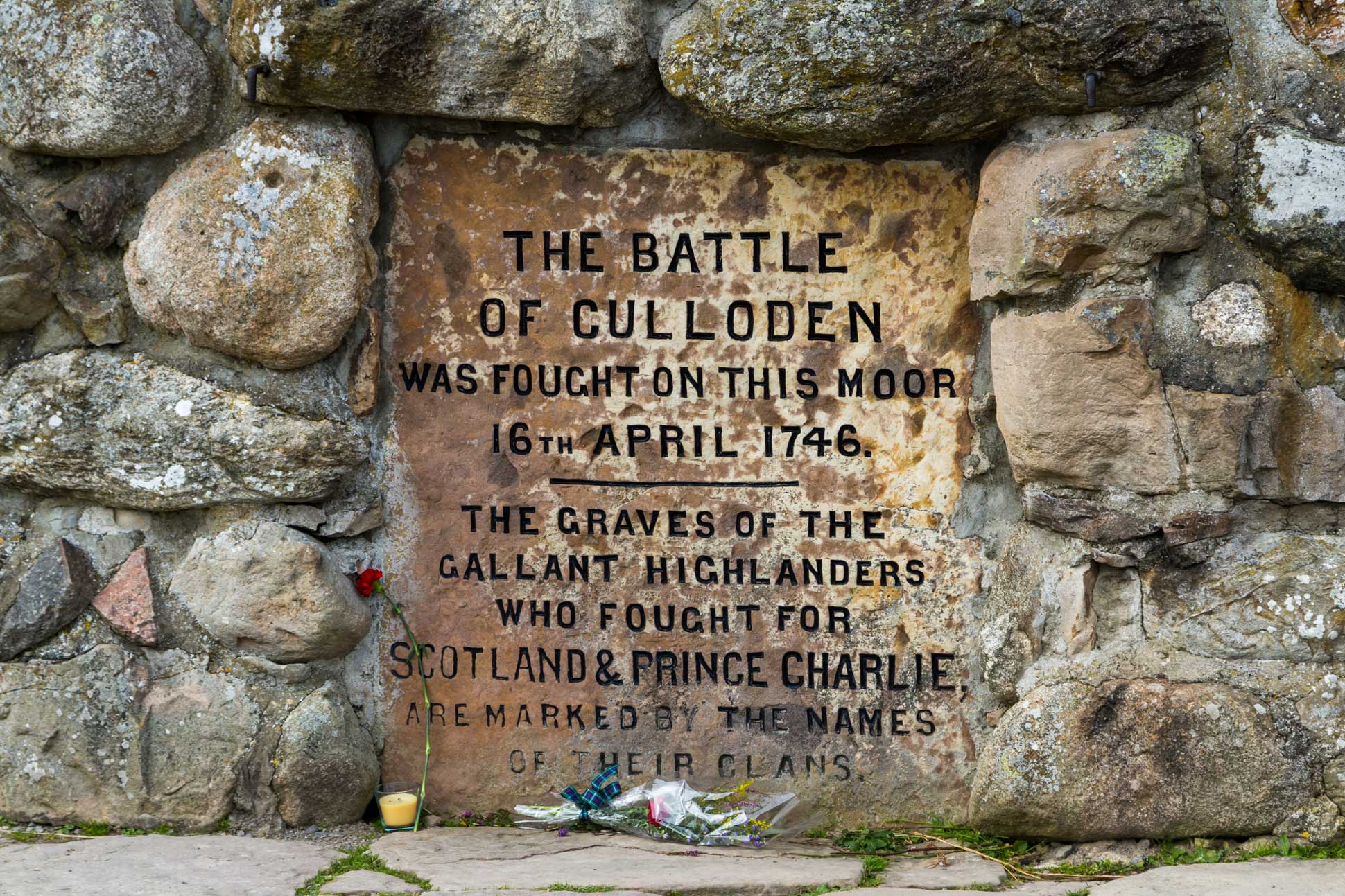
Arrive at Culloden Moor — where on 16 April 1746 the last pitched battle ever fought on British soil was decided in under sixty minutes. The Jacobite army of Bonnie Prince Charlie — exhausted, hungry, and outnumbered — was shattered by the Duke of Cumberland’s government forces in a defeat that ended the Jacobite cause, destroyed the Highland clan system, and set in motion the Clearances that would empty the glens of their people for generations. Walk among the clan grave markers, each bearing a family name that left sons on this moor, and visit the outstanding National Trust for Scotland visitor centre. Few places in Britain carry such palpable, quiet grief.
🪨 Clava Cairns – 4,000 Years of Prehistoric Scotland
A short drive from Culloden brings you to Clava Cairns — a complex of Bronze Age passage graves and standing stone circles dating from around 2000 BC, positioned with extraordinary astronomical precision: the largest cairn aligned so that the midwinter sun shines directly through its entrance passage to illuminate the chamber within. This deliberate architectural achievement — by a people who understood the movements of the heavens with a sophistication that still astonishes archaeologists — sits in a quiet field just minutes from the battlefield, placing 4,000 years of Scottish history within a single afternoon’s reach. Outlander fans will recognise Clava Cairns as the direct inspiration for the standing stones through which Claire Randall passes into the 18th century in the opening episode of the series.
🏙️ Inverness – First Night in the Highland Capital
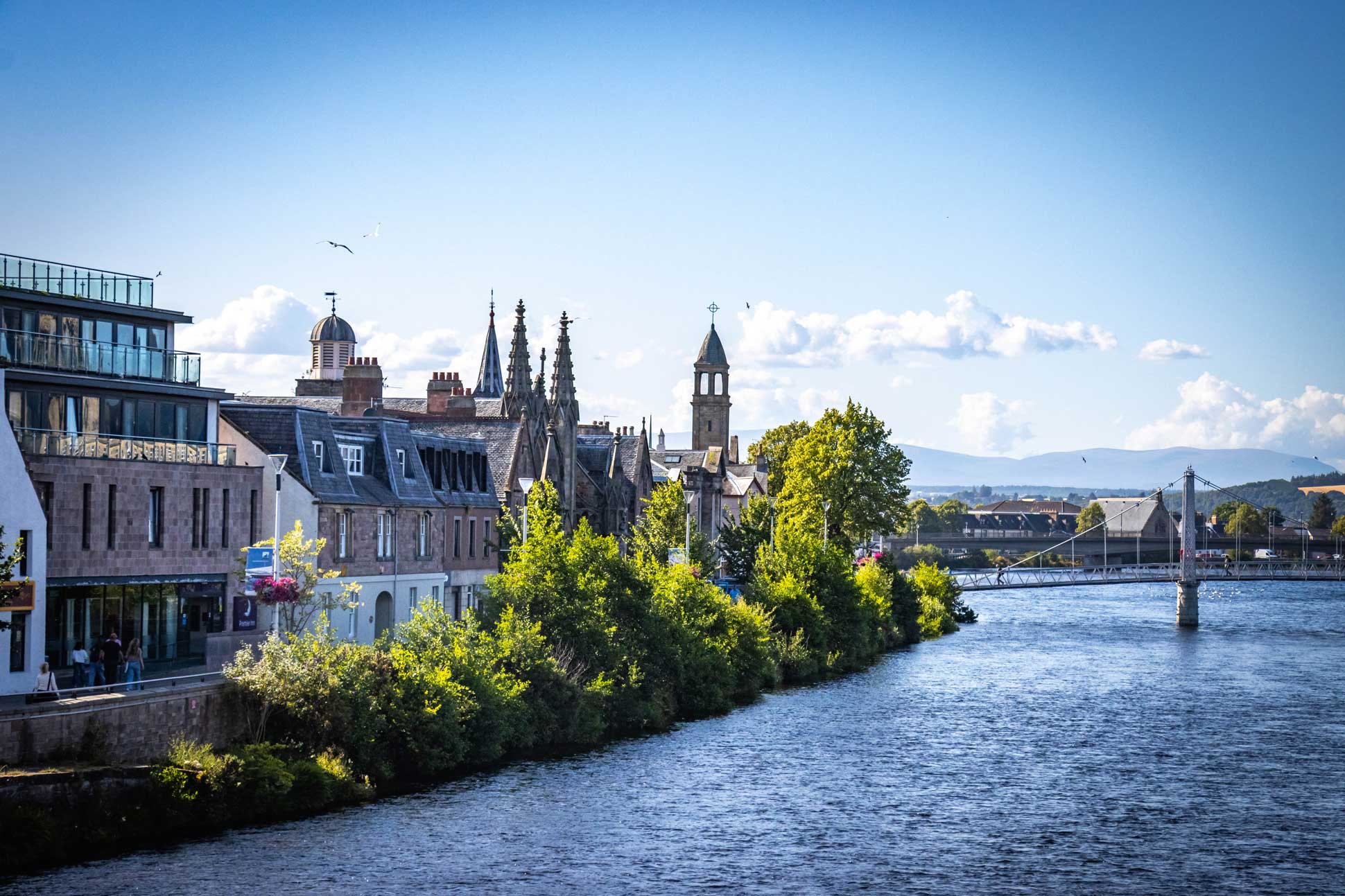
Arrive in Inverness for your first overnight — Scotland’s most northerly city, the Highland capital, a place of genuine warmth and civic pride where the River Ness meets the Beauly Firth. Explore the Victorian riverside, dine at one of the city’s excellent restaurants, and rest well. Tomorrow, the road turns northwest — and the Atlantic awaits.
⛵ Day Two — The Road to the Isles: Gorge, Ferry & the Isle of Harris
Approximately 10 hours including ferry | Inverness to Harris via Ullapool | Overnight: Harris (Night 2)
Day Two is the journey’s great departure — the day Scotland’s familiar Highland landscape gives way to something altogether wilder, more ancient, and more remote. The road northwest from Inverness passes through the extraordinary geological landscape of Wester Ross, drops into the dramatic chasm of Corrieshalloch, and arrives at the small fishing town of Ullapool — where the CalMac ferry crosses the Minch to the Outer Hebrides and the world changes completely.
🏔️ The Road Northwest – Wester Ross & the Assynt Mountains
Depart Inverness and head northwest through the landscape of Wester Ross — one of the most geologically extraordinary regions in Europe, where mountains of Torridonian sandstone and Lewisian gneiss rise from flat peatland in shapes so eccentric and isolated that they seem to have arrived from another continent. Cul Mor, Stac Pollaidh, Suilven, Canisp — these mountains stand alone, untouched by the last Ice Age’s glacial smoothing, preserving a landscape that looks much as the Scottish Highlands did 300 million years ago. No other scenery in Britain prepares you for this.
🌊 Corrieshalloch Gorge – A Victorian Canyon Above Ancient Rock
Stop at Corrieshalloch Gorge — a spectacular natural chasm one mile long and 200 feet deep, carved by glacial meltwater at the end of the last Ice Age and now a National Nature Reserve. A Victorian suspension bridge spans the gorge at its most dramatic point, suspended above the Falls of Measach where the River Droma drops 46 metres in a rush of white water visible from the bridge deck. The gorge is so narrow and so deep that the air temperature drops perceptibly as you cross — a genuinely startling moment of natural drama in a landscape already full of them. The bridge itself, built in 1874 by Sir John Fowler — co-designer of the Forth Rail Bridge — swings gently as you cross it.
⛵ Ullapool & the Ferry to Stornoway – Crossing the Minch
Arrive in Ullapool — a planned fishing village established by the British Fisheries Society in 1788, beautifully situated on the shore of Loch Broom with the mountains of Wester Ross rising steeply behind it. Board the CalMac ferry to Stornoway on the Isle of Lewis — a crossing of approximately two hours and forty-five minutes across the Minch, the stretch of open Atlantic between the mainland and the Outer Hebrides. The Minch is one of the most reliably productive wildlife corridors in Scottish waters: common and bottlenose dolphins regularly ride the bow wave, Minke whales are frequently spotted between April and October, and gannets, fulmars, and storm petrels accompany the crossing throughout the year. Keep your eyes on the water.
🏖️ Luskentyre Beach – The Most Beautiful Beach in Scotland
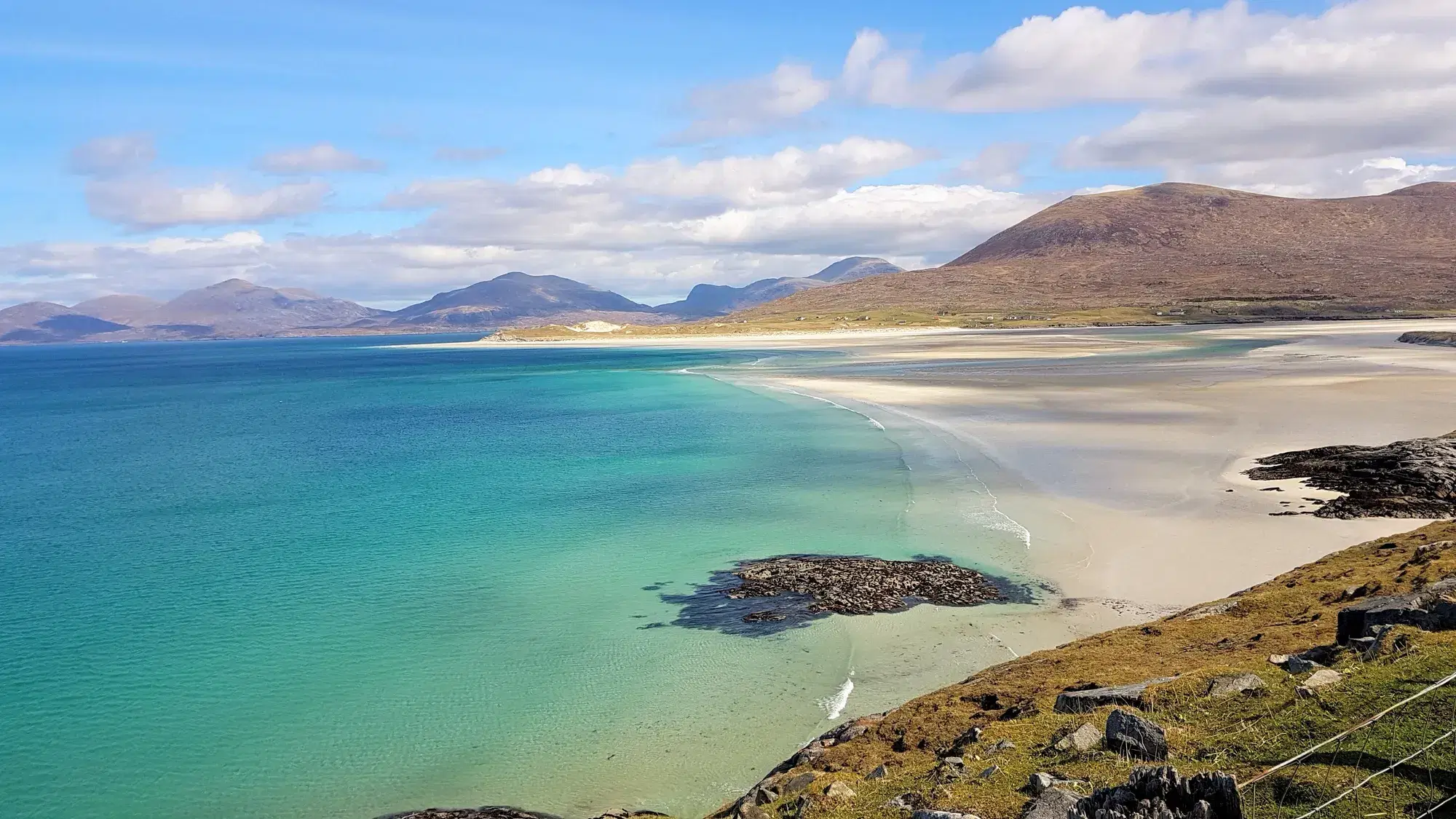
Drive south from Stornoway through the Isle of Lewis and across the boundary into the Isle of Harris — a separate island in character, geology, and landscape if not in strict geography — and arrive at Luskentyre. Consistently voted one of the most beautiful beaches in the world and the most beautiful in Scotland and the British Isles, Luskentyre is a revelation even to those who have seen many photographs of it: three miles of powder-white shell sand bordering water of such improbable turquoise clarity that the Caribbean comparison is not merely promotional. The machair behind the beach — the rich coastal grassland unique to the Atlantic fringe of Scotland and Ireland, carpeted with wildflowers in summer — and the mountains of North Harris rising behind it complete a scene of almost impossible perfection.
🧶 Harris Tweed & The Isle of Harris Distillery – Tarbert
Continue to Tarbert — the main settlement of Harris, set on a narrow isthmus between East and West Loch Tarbert — to discover two of the island’s most celebrated and distinctive products. Harris Tweed is the only fabric in the world whose authenticity is protected by Act of Parliament: every yard must be handwoven by islanders in their own homes from pure virgin Scottish wool, dyed and finished in the Outer Hebrides. The resulting cloth — available in hundreds of patterns — is among the most sought-after luxury textiles in the world, worn by everyone from Highland estate owners to the most prestigious fashion houses in London, Milan, and New York. The Isle of Harris Distillery, opened in 2015 in a striking coastal building, produces Harris Gin — one of the most celebrated craft spirits to emerge from Scotland in a generation, built around sugar kelp harvested from the surrounding Atlantic waters and already famous far beyond the island’s shores.
🗿 Day Three — Ancient Lewis: Blackhouses, Brochs & Standing Stones
Full day on Lewis | Overnight: Lewis (Night 3)
Day Three belongs entirely to the Isle of Lewis — and to the 5,000 years of human history that have accumulated on this island at the edge of the Atlantic world. This is a landscape that has been inhabited, farmed, defended, worshipped, and sung about continuously since the Neolithic period — and it wears that history openly, in stone circles and ancient brochs and restored blackhouse villages that stand exactly where they have always stood, looking out over the same grey Atlantic they have always faced.
🏚️ Gearrannan Blackhouse Village – Life on the Edge of the World
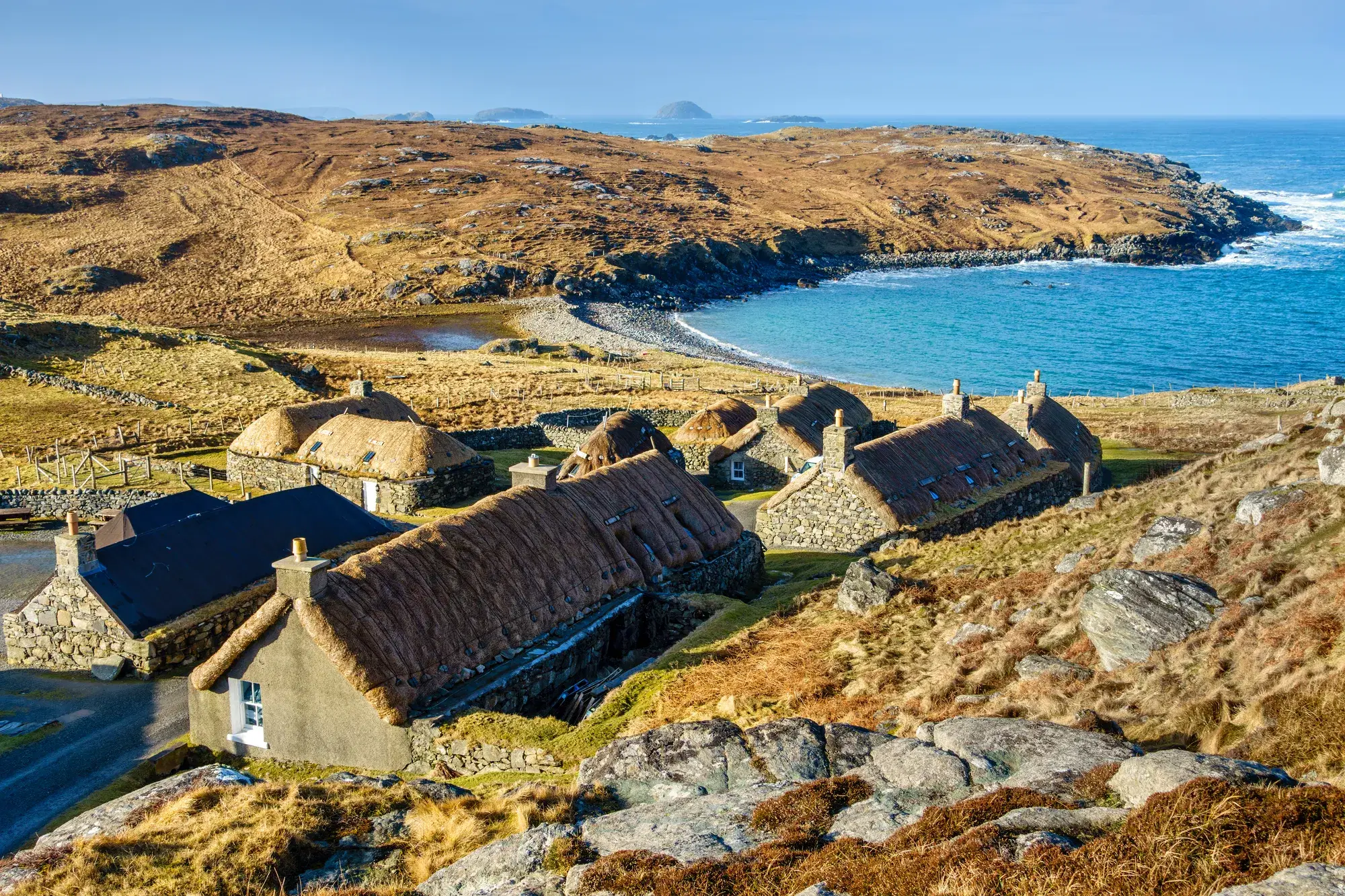
Begin at Gearrannan — a restored 19th-century crofting village on the Atlantic coast of Lewis whose cluster of traditional blackhouses stand exactly as they did when the last residents left in 1974. These remarkable structures — built from the island’s own stone, with walls up to six feet thick to resist the Atlantic gales, and roofs of thatch weighted with stones and ropes — housed both families and their livestock under the same roof throughout the long Hebridean winters, the shared warmth keeping both alive. The restoration of Gearrannan is among the finest heritage projects in Scotland: the village feels lived-in rather than museumified, and the view from its stone walls across the Atlantic — knowing that the next land in that direction is Newfoundland — is one of the most affecting on this entire journey.
🏛️ Dun Carloway Broch – Iron Age Engineering Above Loch Roag
Continue to Dun Carloway — one of the best-preserved Iron Age brochs in Scotland, a circular drystone tower of extraordinary construction dating from around 2,000 years ago. These towers — unique to Scotland and built nowhere else in the world — represent one of the most impressive achievements of prehistoric architecture: the double-walled construction technique, with a hollow cavity between inner and outer walls containing internal galleries and staircases, allowed brochs to rise to heights of up to 13 metres without mortar, surviving intact for two millennia. Dun Carloway stands over Loch Roag on a rocky promontory, its remaining walls still rising to over nine metres — a monument to the skill and ambition of a people building for eternity in stone at the very edge of the known world.
🪨 The Calanais Standing Stones – Older Than Stonehenge
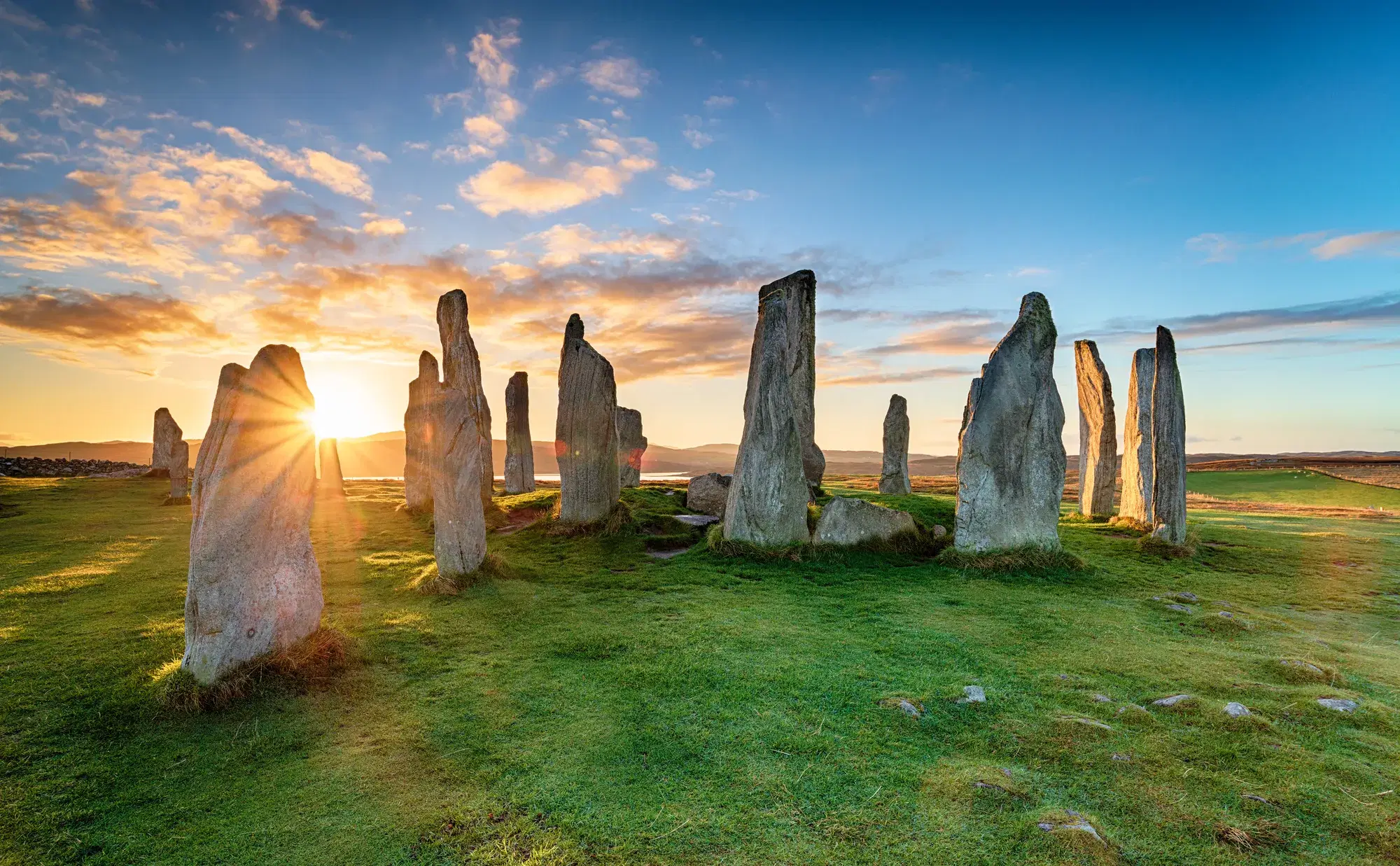
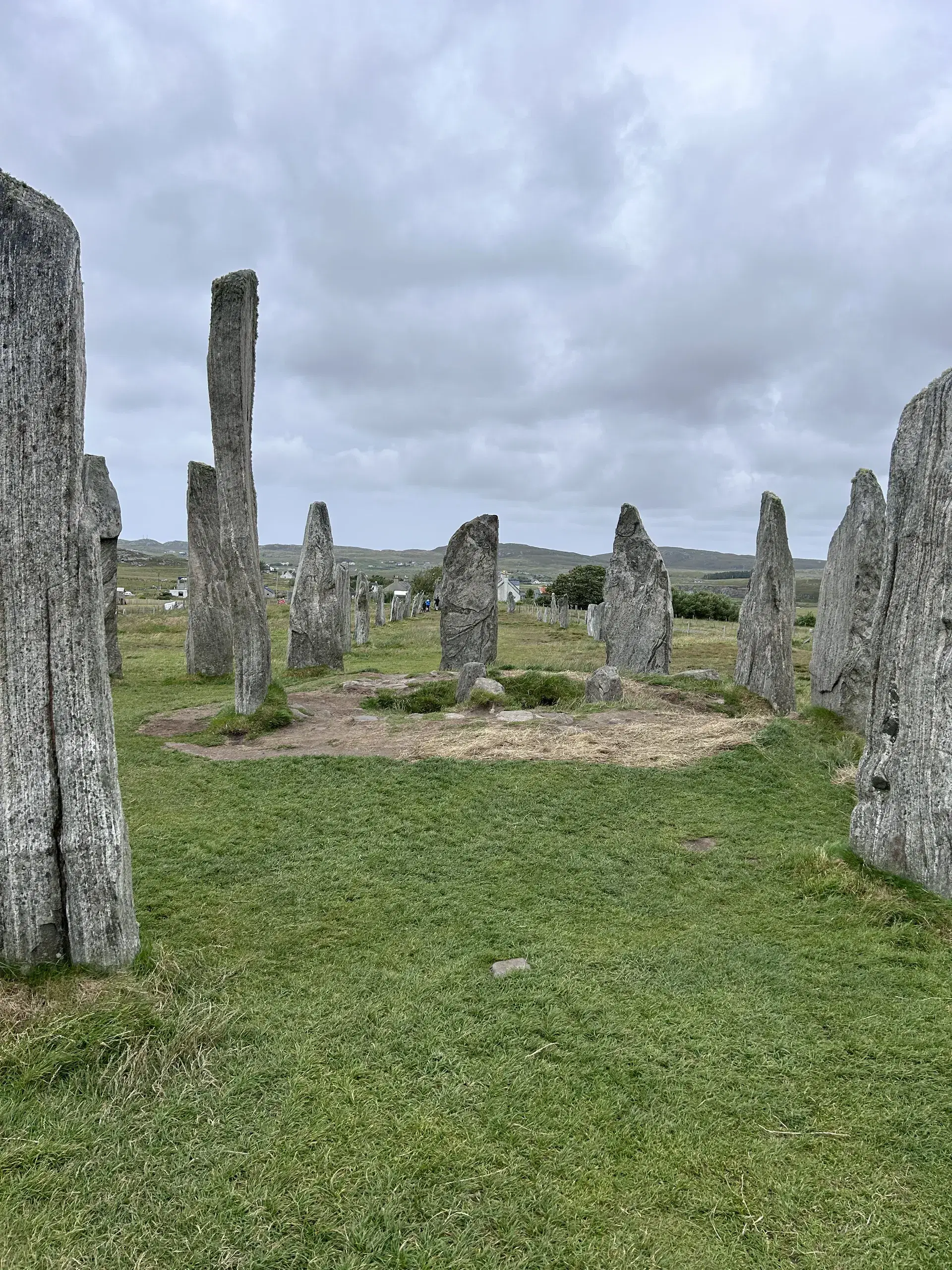
Arrive at the Calanais Standing Stones — one of the most important and most extraordinary prehistoric sites in Europe, and the highlight of Day Three. Erected around 2900 BC — older than Stonehenge by at least 500 years, older than the Egyptian pyramids — the Calanais stones form a cruciform arrangement of 50 standing stones radiating from a central stone circle, with a small chambered cairn at its heart. The tallest stone rises to nearly five metres; the full complex extends over a considerable area of open moorland, its stones weathered by five millennia of Atlantic wind and rain to a texture of extraordinary beauty.
The astronomical alignments at Calanais have been studied for over a century. The avenue of stones is oriented toward the north celestial pole; at the major lunar standstill — a phenomenon that occurs every 18.6 years — the full moon appears to skim along the Sleeping Beauty ridge on the southern horizon, then rises within the stone circle itself in a display that the prehistoric builders clearly designed their monument to frame. What ritual, what belief, what understanding of the cosmos drove the construction of this extraordinary monument, we cannot know — but standing among these stones on the open Lewis moorland, with the Atlantic light changing everything around you every few minutes, the question feels alive rather than academic.
🌊 The Butt of Lewis – The End of Europe
Drive to the northernmost tip of the Outer Hebrides — the Butt of Lewis, where the land ends abruptly at sheer cliffs above an Atlantic that stretches uninterrupted to Canada and Greenland. The lighthouse here, built by David Stevenson in 1862 — uncle of Robert Louis Stevenson, whose family built most of Scotland’s lighthouses — marks one of the most dramatic meeting points of land and sea in the British Isles. The seas around the Butt are among the most turbulent in the Atlantic, the collision of the North Atlantic, the North Sea, and the currents of the Minch creating conditions that earned this headland a formidable reputation among generations of sailors and fishermen. In summer the cliffs are alive with puffins, razorbills, guillemots, and fulmars; in winter the waves are a demonstration of raw oceanic power that makes the claim of standing at the edge of Europe feel entirely literal.
🌍 Day Four — Back to the Mainland: Geology, Falls & Inverness
Approximately 9 hours including ferry | Lewis to Inverness via Ullapool | Overnight: Inverness (Night 4)
Day Four makes the return crossing of the Minch and re-enters the Scottish mainland through some of its most geologically significant and visually dramatic landscapes — a region so ancient and so scientifically important that it has given its name to a chapter of geological time studied in universities worldwide. The day ends in Inverness with a newly opened experience that brings the full story of the Highlands together in one extraordinary place.
⛵ Stornoway to Ullapool – The Return Crossing
Board the CalMac ferry at Stornoway for the return crossing of the Minch — two hours and forty-five minutes of open Atlantic, with the islands receding behind you and the mountains of Wester Ross drawing closer ahead. The return crossing carries its own particular feeling: the Outer Hebrides have given you something — a sense of scale, a quality of silence, an understanding of how the world looks when it has been stripped back to its essentials — and the mainland arrival marks a genuine transition back into a landscape that, by comparison, feels almost populated.
🪨 Knockan Crag – Where Continents Collided
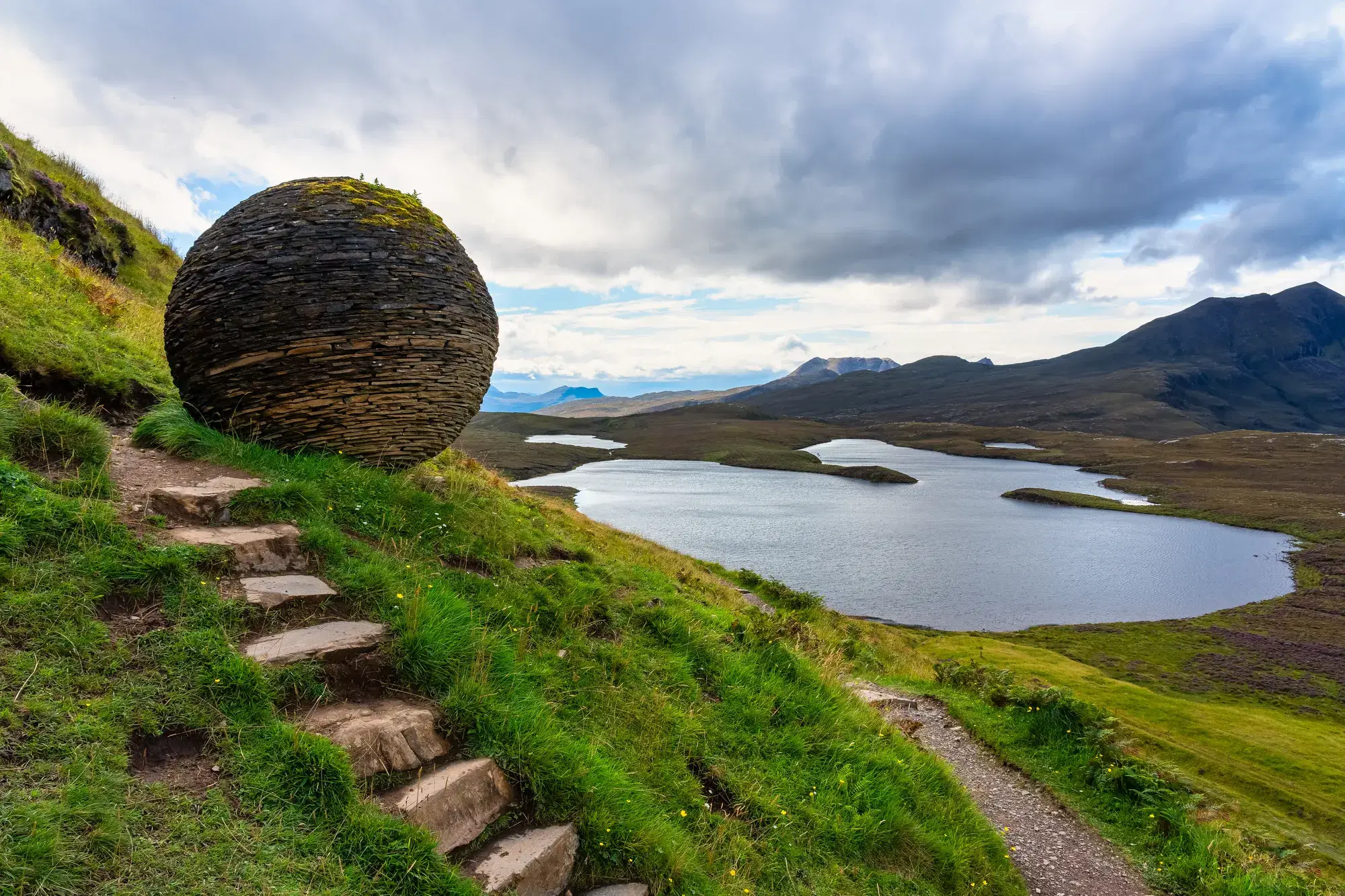
Stop at Knockan Crag National Nature Reserve — a site of global geological significance whose rocky outcrops tell a story that overturned nineteenth-century science and gave geologists a new understanding of how mountains are built. In 1907, geologists Ben Peach and John Horne proved here that older rocks — ancient Moine schists, formed over 800 million years ago — lay on top of younger Cambrian limestone, the reverse of what every geological theory of the time predicted. Their explanation: a phenomenon called thrust faulting, in which ancient continental collisions had pushed vast sheets of rock westward over younger formations over hundreds of miles. The Moine Thrust — the geological feature they identified — is now recognised as one of the most important geological structures in the world, and Knockan Crag is the site where it was first understood. The interpretive trail explaining this story, set against the sweeping Assynt skyline, is one of the most thought-provoking walks in Scotland.
💦 Rogie Falls – Salmon on the Highland River
Continue east to Rogie Falls near Strathpeffer — a woodland walk leading through ancient oak and birch to a suspension bridge above a series of cascading falls where the Black Water drops over a rock step in a rush of peat-brown Highland water. In late summer and autumn, Atlantic salmon and sea trout can be seen leaping the falls on their upstream spawning migration — one of the great wildlife spectacles of the Highland year, and one of those moments of pure natural drama that needs no commentary.
🏰 The Inverness Castle Experience – The Highlands in Full
Arrive back in Inverness and visit the newly opened Inverness Castle Experience — a major new visitor attraction occupying the restored Victorian castle above the city centre, with panoramic views across the River Ness and the surrounding Highland landscape. The experience uses immersive storytelling, interactive exhibitions, and the castle’s extraordinary hilltop vantage point to tell the full story of the Scottish Highlands: its clans, its battles, its landscape, its people, and its culture. A fitting and genuinely impressive way to gather the threads of four days of Highland exploration into a single coherent narrative before the journey’s final chapter tomorrow.
⛰️ Day Five — Loch Ness, Glencoe & Home: A Highland Finale
Approximately 9 hours | Inverness to Edinburgh via Loch Ness & Glencoe | Return to Edinburgh
The final day of this extraordinary journey is Scotland’s greatest Highland road — south from Inverness along the legendary dark shores of Loch Ness, through the solemn beauty of Glencoe, past a field of Highland cattle near Kilmahog, and back to Edinburgh across a landscape that looks entirely different now from how it looked when you left it five days ago. You have been to the edge of Europe and returned. Scotland looks different when you know what lies at its northern end.
🏰 Urquhart Castle & Loch Ness – The Legend of the Deep
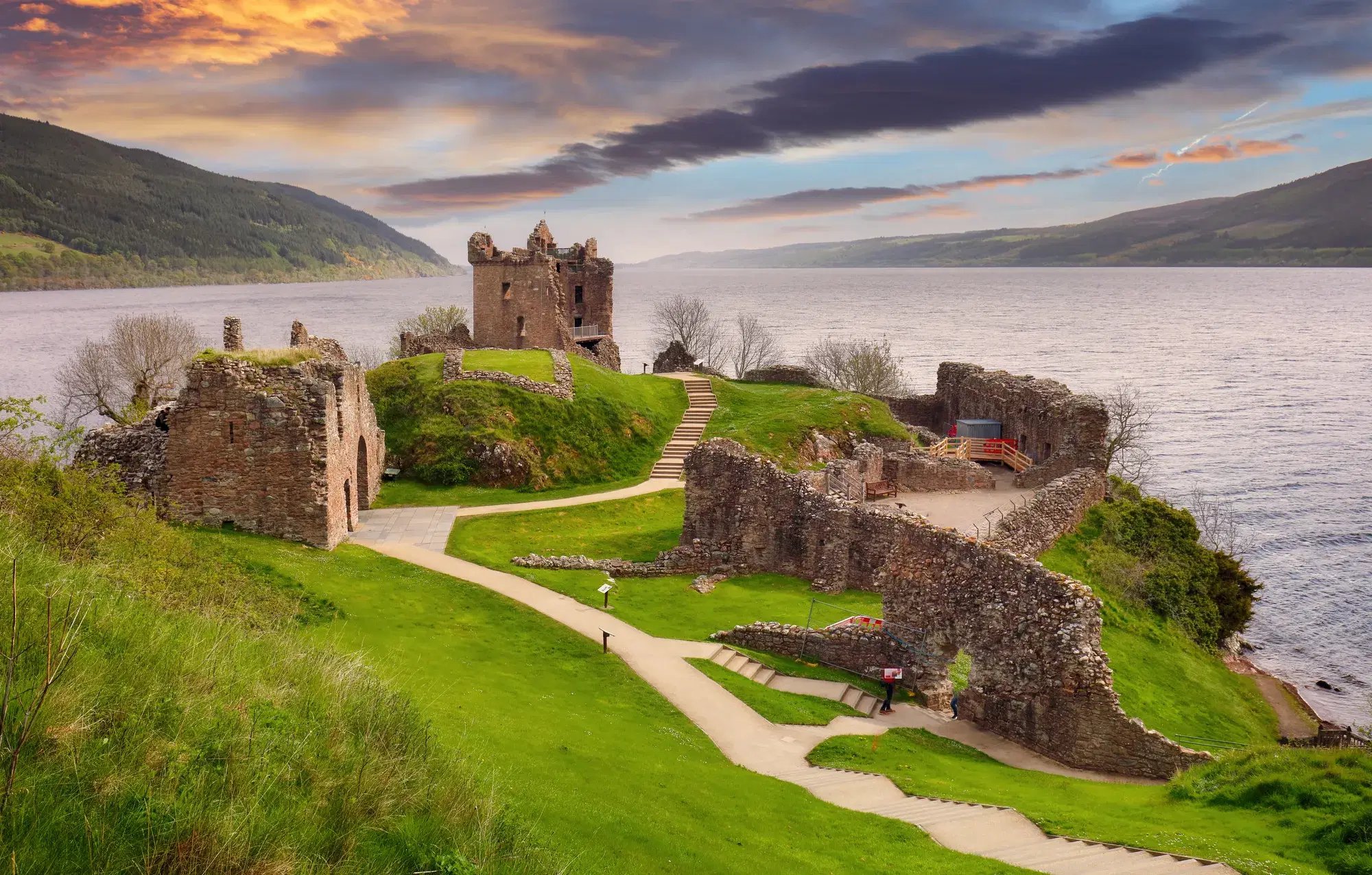
Depart Inverness south along the shores of Loch Ness — 37 kilometres of the deepest, darkest, and most legendary loch in Scotland, holding more fresh water than all the lakes of England and Wales combined, plunging to 230 metres at its deepest point. The legend of the Loch Ness Monster stretches back to 565 AD, when Saint Columba reputedly encountered a fearsome creature in the River Ness — and no amount of sonar surveys, underwater cameras, or satellite surveillance has managed to extinguish it. Stop at Urquhart Castle — the dramatic medieval ruins on a rocky headland above the loch, blown up by its own garrison in 1692 to prevent Jacobite occupation — for the finest view across the water in either direction, and a history of sieges, occupation, and betrayal that makes even Nessie seem like a footnote.
🏔️ Glencoe – Betrayal in the Mountains
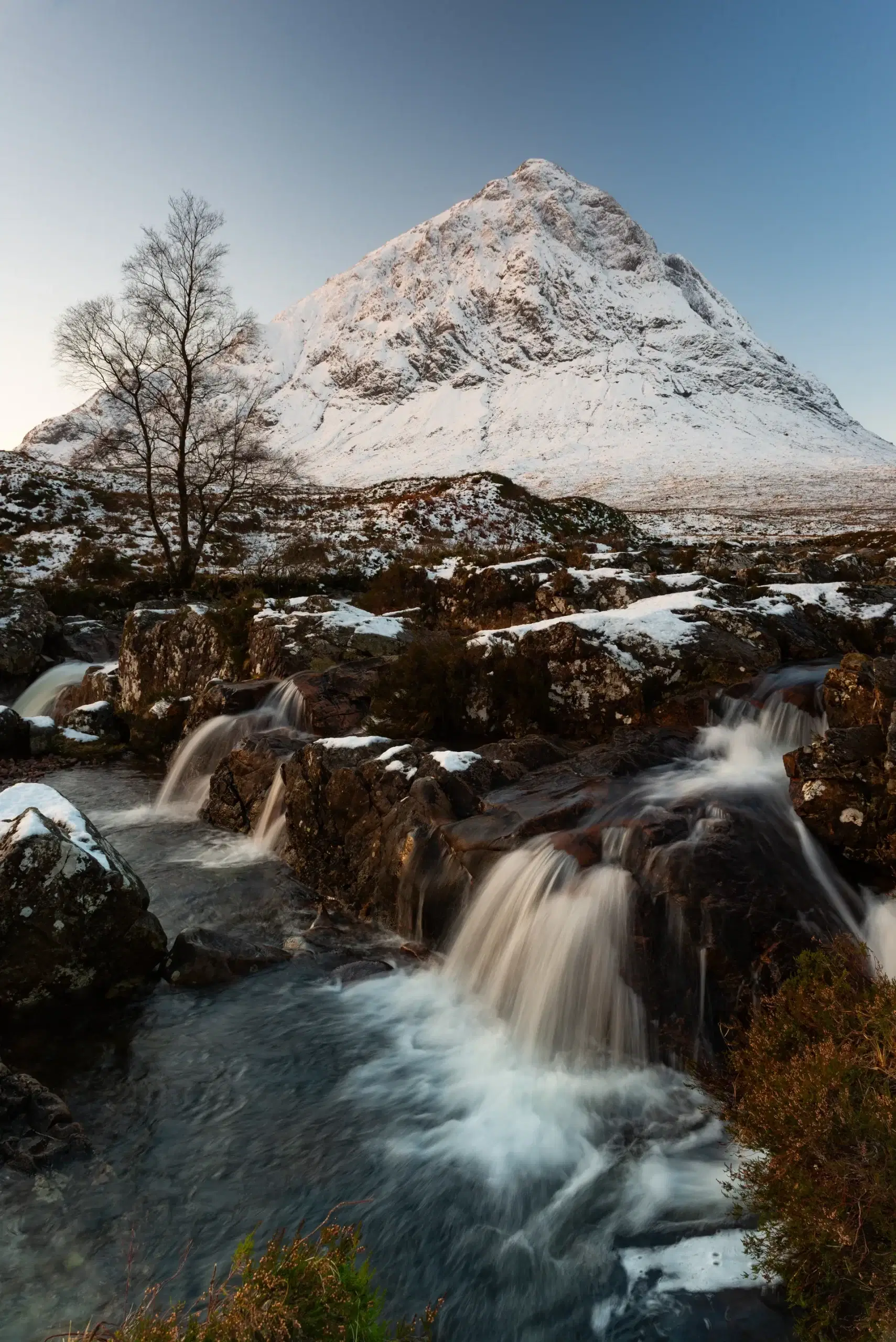
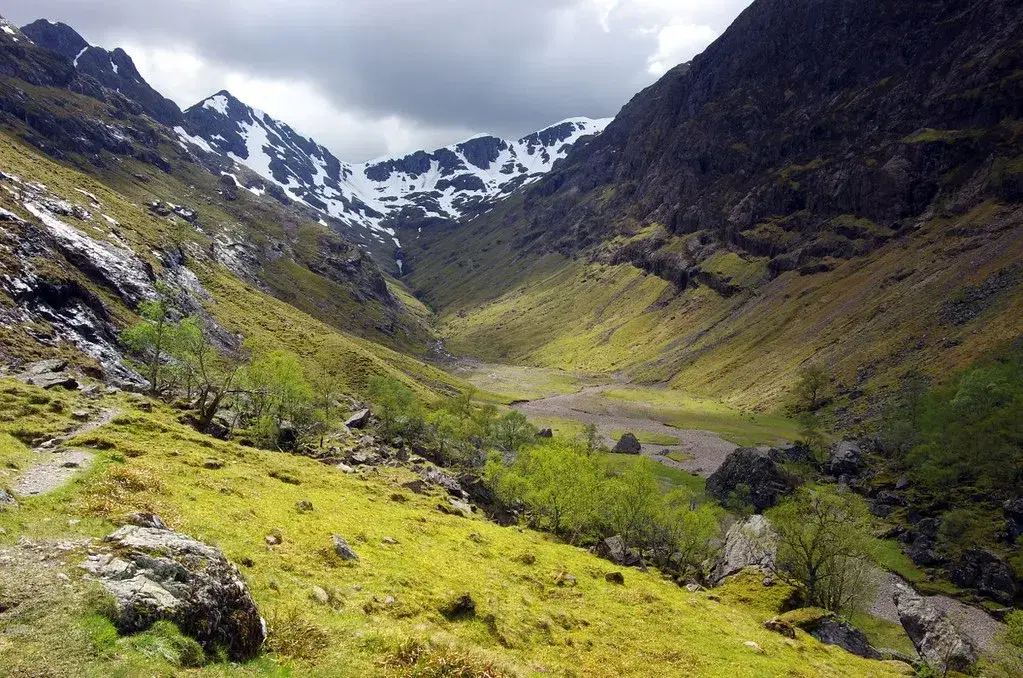
Continue south through the Great Glen to Glencoe — where the mountains close in on every side and the valley carries the weight of one of the most infamous acts of treachery in Highland history. On 13 February 1692, government soldiers of Clan Campbell — having accepted twelve days of MacDonald hospitality in this very glen, eating at their hosts’ tables and sleeping beneath their roofs — rose before dawn and murdered 38 sleeping members of the MacDonald clan on orders from the government in Edinburgh, acting under instructions ultimately approved by King William III. The rest fled into a blizzard; many more died of exposure in the surrounding mountains. The massacre was not the largest atrocity of its era, but its particular horror — the violation of the sacred Highland code of hospitality, the killing of those who had welcomed you as guests — gave it a weight in Scottish consciousness that it has never lost.
🐄 The Three Sisters & Kilmahog – Mountain Drama & Highland Cattle
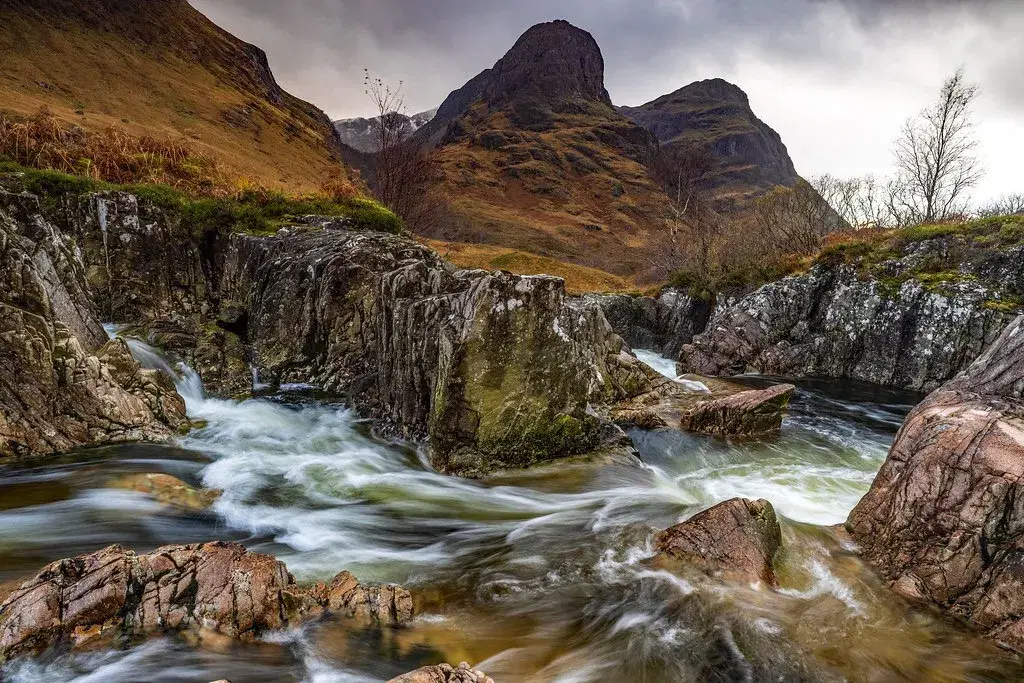
Stop to take in the Three Sisters of Glencoe — Gearr Aonach, Aonach Dubh, and Beinn Fhada — the three dramatic ridges rising from the valley floor on the south side of the glen in one of Scotland’s most photographed and most immediately recognisable mountain panoramas. Then, as the road winds south through the Trossachs toward Kilmahog, watch the roadside fields for Highland cattle — Scotland’s most ancient and most photographed breed, their long reddish-brown coats and sweeping horns an unmistakable presence in the Highland landscape. These are not a tourist attraction but a practical reality: Highland cattle have grazed these hills and glens since at least the 6th century AD, their double coat protecting them from weather that would defeat any other domestic breed. A genuine encounter with one of them — unhurried, at the roadside, on the last afternoon of five extraordinary days — is one of those small, warm, memorable moments that stays with you long after the dramatic landscapes have begun to blur.
🏴 Return to Edinburgh – Journey’s End
The final miles bring you south through Stirlingshire and back into Edinburgh — where the journey began five days ago in a city that, whatever its considerable merits, now feels undeniably indoor and urban after the scale of what you have seen. Johnny will answer any final questions, share recommendations for the rest of your time in Scotland, and ensure your seamless drop-off at your Edinburgh accommodation. Five days. Two islands. One country — experienced all the way to its edge.
Ready to experience the very best of Scotland on your own terms? Tell us when you’d like to travel, how many are in your party, and where you’d like your journey to begin. We’ll check availability for your preferred dates and craft a bespoke multi-day itinerary shaped around your interests, pace, and must‑see places. Share a few details below and our expert driver‑guide will be in touch with a personalised proposal, pricing, and suggestions to make your time in Scotland unforgettable.
Max 6 persons
Max 5 suitcases
We look forward to welcoming you to Scotland — personally.